15 Best Budget Utility Lands for Commander Under $2
By ElderArticles · Updated 11/12/2026 · 19 min read
Upgrade your Commander mana base with 15 utility lands under $2, ranked with dated prices, useful synergies, color identities, and honest drawbacks.
Table of contents
Your opponent is about to bring back half their graveyard. You look at your hand, then at your lands. Six sources of mana. Not a single answer.
That is where a good utility land earns its slot. The right one can interrupt a combo, recover a key artifact, or turn a stalled attacker into a real threat without taking up a spell slot. And you do not need an expensive mana base to get those jobs done.
There is a catch, of course. A land that does something clever but leaves you unable to cast your commander is not an upgrade. These are fifteen budget utility lands worth considering, ranked for useful effects, manageable costs, and how much work they ask of the rest of your deck.
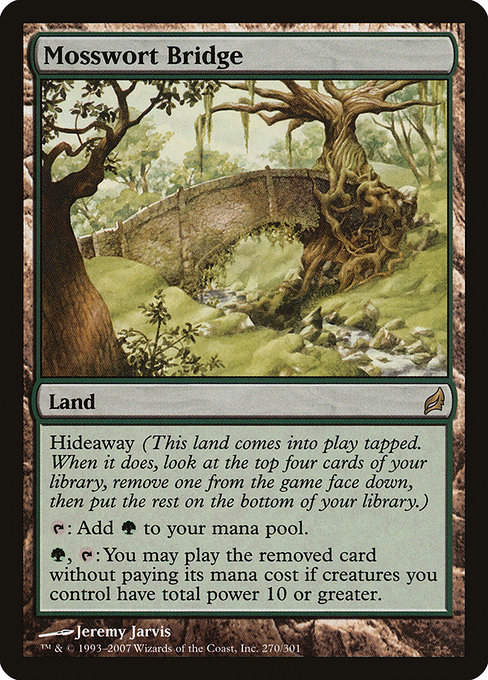
Mosswort Bridge | Illustration by Jeremy Jarvis
How We Ranked These Budget Utility Lands
This is an original editorial ranking for multiplayer Commander, not a tournament tier list or a claim of personal playtesting. We value relevant interaction, repeatable resources, broad usefulness, and a low cost to include the card. Entering tapped, producing only colorless mana, expensive activations, and narrow setup requirements all count against a land.
For this article, a utility land provides something beyond straightforward mana fixing. That includes removal, graveyard interaction, card selection, recursion, combat support, and ramp. It does not mean every deck should run every entry. A specialized land can be the best card for your particular strategy even when it ranks lower here.
Budget means an English, paper, nonfoil printing priced below $2 USD in Scryfall's price data on November 11, 2026. Each entry links the exact priced printing. These are reference prices, not guaranteed retailer offers or inventory checks; condition, seller, tax, and shipping can change your total. Illustrations may show a different printing. Synergy cards are suggestions, not promises that the entire package costs under $2.
All fifteen lands were checked against current Scryfall Oracle text, color identity, and Commander legality. The color identity noted below tells you which commanders can legally include the card, not necessarily which decks should.
#15. Mortuary Mire
AI-generated article, published by an ElderDecks editor.
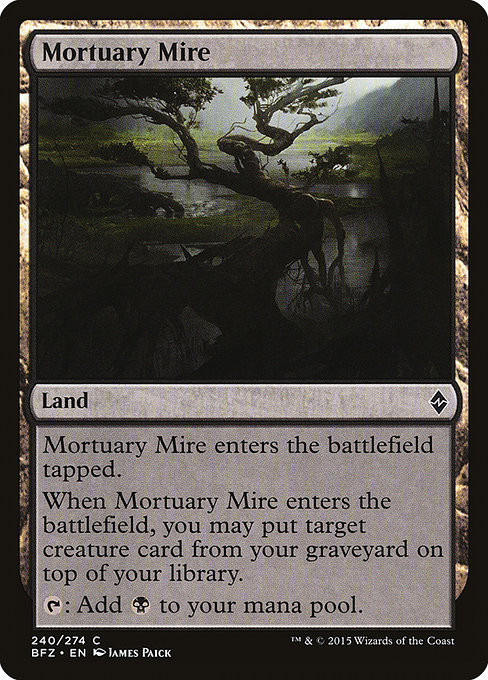
Mortuary Mire makes a very modest promise: your next creature can be one you already lost. When it enters, you may put a creature card from your graveyard on top of your library. It is a useful late land drop when the best card for the next turn is sitting in the graveyard rather than somewhere in your deck.
The important word is top. You have not drawn an extra card, and you have not reanimated anything. You have exchanged an unknown future draw for a known creature while accepting a tapped land now.
Muldrotha, the Gravetide can replay Mire from the graveyard on your turn, within your land-play allowance. That is a useful recovery option, although Muldrotha can often cast the creature directly instead. Life from the Loam can return a sacrificed Mire to your hand, while The Gitrog Monster provides an additional land play to help fit it into your turn.
Play it if: your black deck has a few creatures it strongly wants back and can tolerate another tapped land. Skip it when keeping mana available immediately matters more than selecting the next draw.
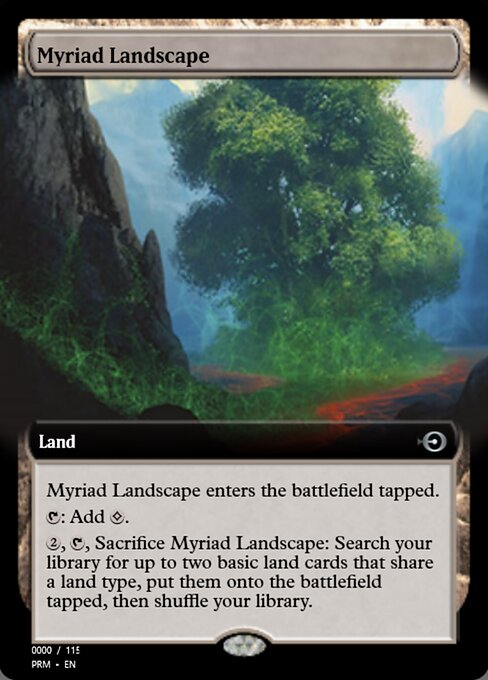
Myriad Landscape is ramp tucked into a land slot, with the speed limit clearly posted. It enters tapped, makes colorless mana, and later asks for two mana, a tap, and a sacrifice to find up to two basic lands that share a land type. Those lands enter tapped too.
Finding two basics turns one land into two, so you finish one land ahead. But you spend the activation turn waiting for that investment to pay off. This is not an excuse to keep a slow hand with no early plays.
It is most appealing in basic-heavy decks that want another route to extra lands. Sun Titan can return the sacrificed Landscape, allowing another activation after it untaps. Tatyova, Benthic Druid turns the two incoming basics into two landfall triggers if both enter under your control.
Play it if: you can afford a deliberate ramp turn and have enough matching basics. Do not expect it to fetch an Island and a Forest together; those two do not share a land type.
Sometimes you have removal. The problem is that the creature wearing all the expensive Equipment refuses to be targeted.
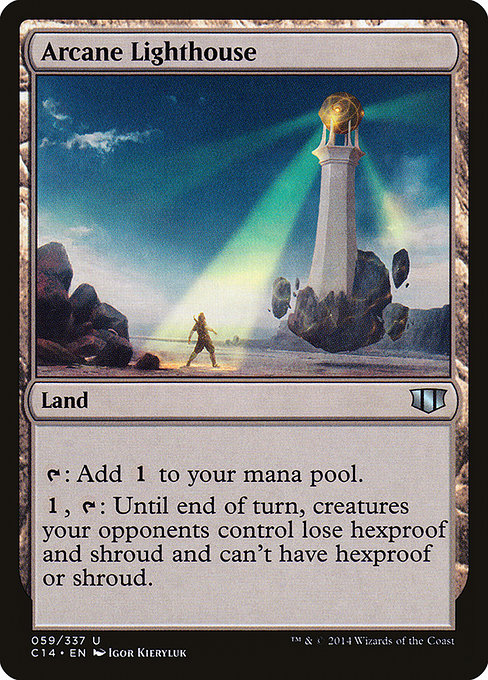
Arcane Lighthouse costs one mana and a tap to strip hexproof and shroud from opposing creatures for the turn, and stops them from having those abilities during that window. Your Swords to Plowshares can then do its job. Because the effect affects your opponents' creatures rather than just your own spells, it can also open a window for another player to help.
This is a support card, not removal by itself. You still need the answer and the mana to cast it. It does not remove ward, indestructible, or protection, and it does not remove hexproof from an opponent personally.
Play it if: difficult-to-target creatures regularly cause trouble at your table and your deck runs targeted interaction. If they rarely appear, you are paying a colored-mana opportunity cost for an ability you may never activate.
A tapped five-color fixer is not automatically exciting. Repeatedly improving your next draw is a better sales pitch.
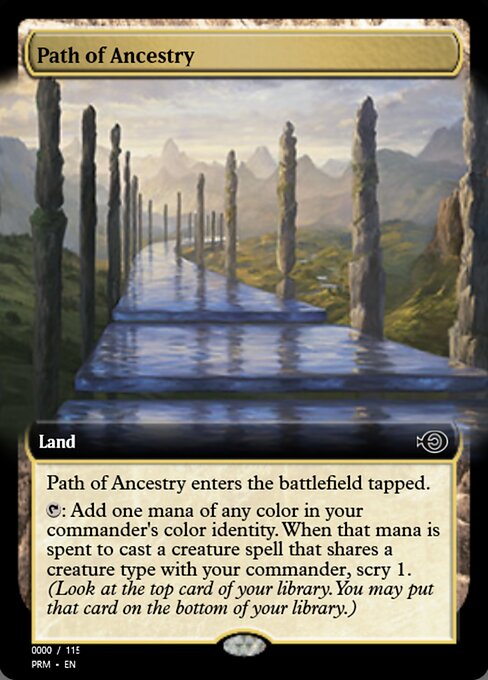
Path of Ancestry makes mana of any color in your commander's color identity. If you spend that mana to cast a creature sharing a creature type with your commander, you scry 1. The mana itself is not restricted to those creatures; you simply miss the scry when you spend it on something else.
A Krenko, Mob Boss deck full of Goblins has a clear reason to consider it. So does a Tatyova, Benthic Druid list with enough Merfolk or Druids to make the shared-type clause relevant. Count the actual matches in your deck before assuming the ability will happen often.
Play it if: your creature base repeatedly overlaps your commander's types and the tapped entry fits your curve. Scrying is selection, not card draw; it makes future draws better without putting additional cards into your hand.
Mosswort Bridge asks you to do something green decks often wanted to do anyway: put ten power onto the battlefield. Its hideaway ability stores one of your top four cards face down. Later, one green mana and a tap can let you play that card without paying its mana cost if your creatures' total power is at least ten.
Xenagos, God of Revels helps a single attacker contribute a large chunk of that total. Titania, Protector of Argoth and her Elemental tokens can build the required board through a land-sacrifice plan. Neither makes the hidden card guaranteed value, but both give you a plausible route to unlocking it.
The power check happens as the activated ability resolves. Opponents can remove creatures in response and leave you below ten. And if your board never develops, you are left with a tapped green source and an inaccessible card.
Play it if: substantial creature power is a normal part of your game plan, not a best-case scenario. The land rewards a board; it does not build one for you.
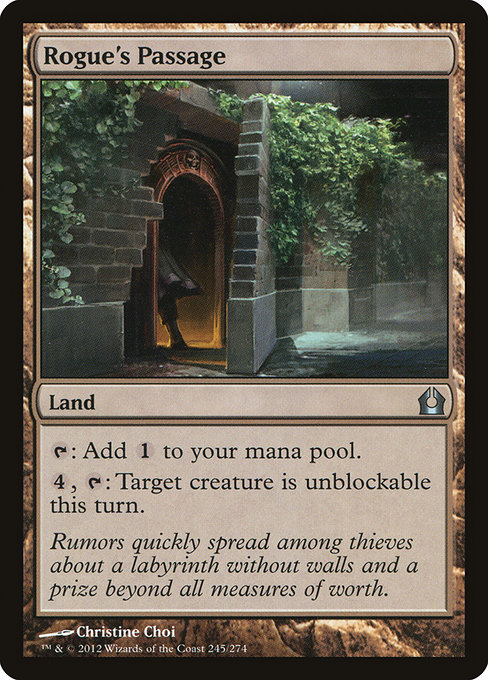
An enormous commander can spend an embarrassing number of turns staring at disposable blockers. Rogue's Passage solves that particular problem: four mana and a tap make one target creature unable to be blocked for the turn.
That is excellent when a single connection matters. Brago, King Eternal wants combat damage to a player so its blink ability can trigger. An Equipment-heavy Sram, Senior Edificer deck can use Passage to deliver a large commander hit. Activate it before blockers are declared; making a creature unblockable afterward does not undo blocks already made.
The real cost is access to five mana-producing lands if Passage is one of them: four pay for the ability, and Passage taps instead of producing mana. It also does nothing against removal or combat-damage prevention.
Play it if: your deck needs one creature to connect. If your plan is to attack with twenty small creatures, spending this much on one attacker usually misses the point.
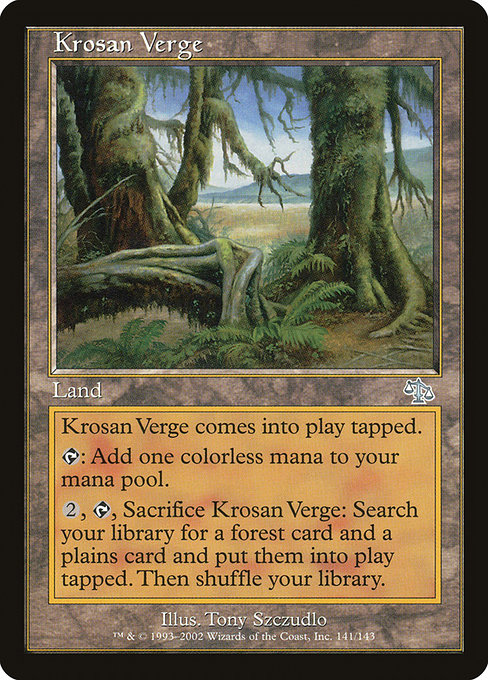
Read the search instruction carefully: Krosan Verge finds a Forest card and a Plains card, not necessarily basic lands. That makes it an interesting budget ramp tool for decks with lands carrying those types.
For example, Canopy Vista has both the Forest and Plains types, so it can fill either search requirement. You still need two separate cards to get two lands; one card does not count as both finds. The cards you include must also obey your commander's color identity, regardless of what Verge can search for.
A Zacama, Primal Calamity deck appreciates reaching its expensive commander, while Sun Titan can return the sacrificed Verge for another future activation. The cost is patience: Verge enters tapped, produces colorless mana, and its two-mana activation brings the searched lands in tapped.
Play it if: your deck has suitable targets and enough time to convert a land drop into ramp. Its colorless identity makes it broadly legal, but its search requirements make it much narrower in practice.
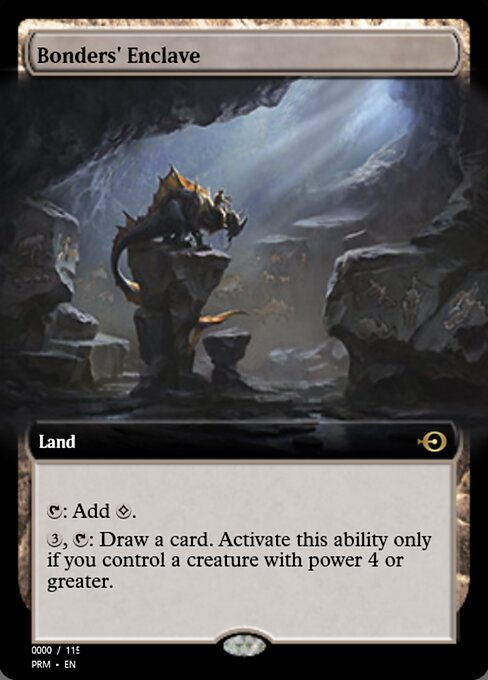
Bonders' Enclave is for the player who can produce a large creature more easily than another card. Pay three mana and tap it to draw, provided you control a creature with power four or greater.
Titania, Protector of Argoth qualifies herself, and her 5/3 tokens give you additional ways to meet the condition. A creature that Xenagos, God of Revels has enlarged may qualify during that turn as well. The requirement checks when you activate the ability; removing your qualifying creature afterward does not by itself stop the draw.
You still have to reserve three mana plus the Enclave's tap. This is a way to use spare resources, not efficient early-game draw. And following a board wipe, the land may be least helpful precisely when you need to rebuild.
Play it if: four power is a reliable baseline for your board. Skip it if your commander and most of your creatures are small, even when the deck occasionally assembles one impressive attacker.
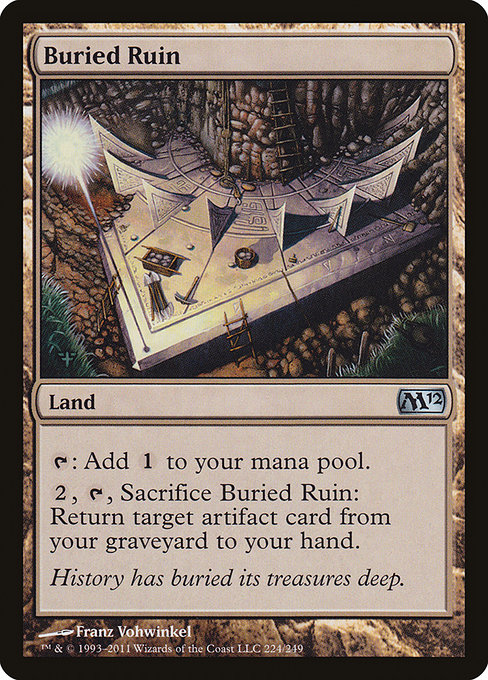
Your best artifact getting destroyed does not have to end the conversation. Buried Ruin lets you pay two mana, tap, and sacrifice the land to return an artifact card from your graveyard to your hand.
That last destination matters. You still need to cast the artifact, and you have just lost a land. Use it to recover something worth that investment, not automatically the first mana rock that falls over.
Teshar, Ancestor's Apostle gives the recovered artifact an additional purpose: casting a historic spell triggers Teshar's creature-recursion ability. Sun Titan can recover Buried Ruin itself, turning a one-shot land into a recurring resource. In a slower game, retrieving Nevinyrral's Disk can also restore access to a reset button, though the Disk enters tapped and gives opponents warning.
Play it if: artifacts are important enough that getting a particular one back changes your game. A deck with only a handful of replaceable mana rocks has less reason to give up a colored source.
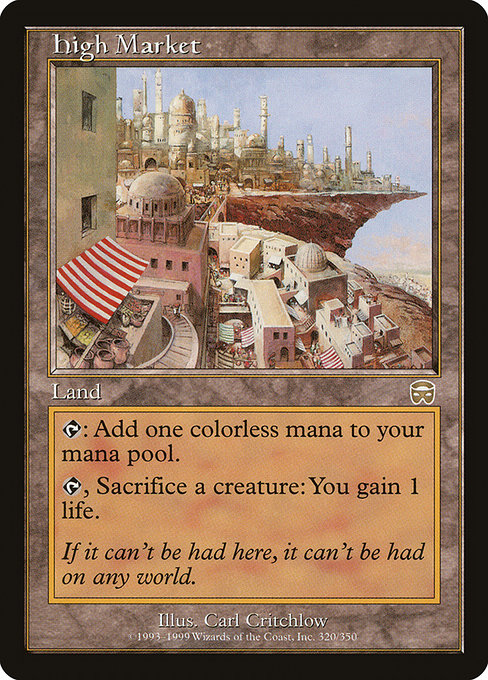
The one life is usually the least interesting part. High Market gives you a sacrifice outlet that asks for no mana, just a tap and a creature you control.
That can turn an exile-removal spell aimed at Atsushi, the Blazing Sky into a death trigger instead. Sacrifice Atsushi in response and its death ability triggers, even if you subsequently move your commander from the graveyard to the command zone. With Meren of Clan Nel Toth, sacrificing another creature can provide an experience counter and put a target where Meren can recover it later.
Do not confuse no mana cost with unlimited activations. High Market taps, so without an untap effect it is not a way to sacrifice a whole board at once. It cannot rescue something after the removal has already resolved, either.
Play it if: you want control over when a creature dies, or need a backup sacrifice outlet. Treat the life as a small extra, not the reason to include it.
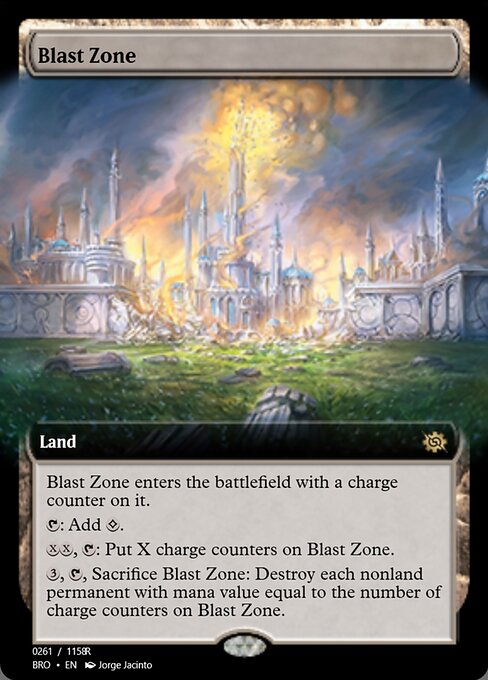
Blast Zone is a removal spell you can make a land drop with. It arrives untapped with one charge counter. For three mana, a tap, and its sacrifice, it destroys every nonland permanent with mana value exactly equal to its charge-counter total.
That can answer a cluster of cheap permanents without requiring access to a particular color. Titania, Protector of Argoth rewards sacrificing the land, and Life from the Loam can return it to your hand for another land drop. Neither prevents the explosion from hitting your own permanents at the chosen mana value.
The setup is easy to underestimate. Adding one counter costs two mana because the activation contains X twice, and adding counters taps the land. Normally you must wait to untap before detonating it. It starts at one and cannot lower its own counter count, so it is not a ready-made answer to ordinary zero-mana-value tokens.
Play it if: your deck needs a flexible answer to troublesome permanents. Budget time and mana for the detonation, and check your own battlefield first.
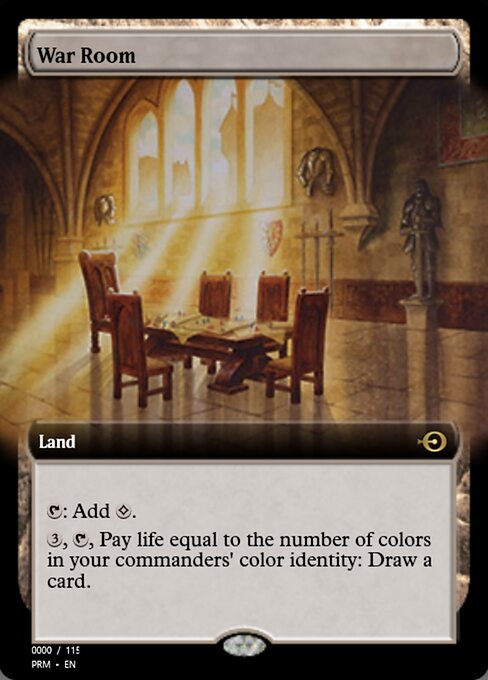
War Room is not glamorous. That is part of its appeal. Three mana, a tap, and life equal to the number of colors in your commanders' color identity buy a card, with no creature or hand-size condition attached.
A mono-white Sram, Senior Edificer deck pays one life. A red-white Zirda, the Dawnwaker deck pays two, and Zirda reduces the three-mana activation to one mana because it is not a mana ability. War Room still taps, and the life payment does not disappear. A colorless commander's identity makes the life payment zero.
This is a sensible fallback after a board wipe or when the hand runs dry. It is not a substitute for a functioning draw package: spending three mana plus your land's tap per card is too slow to carry most decks alone.
Play it if: you want dependable late-game draw, especially with fewer colors. In a color-hungry multicolor deck, the combination of colorless production and larger life payments deserves more scrutiny.
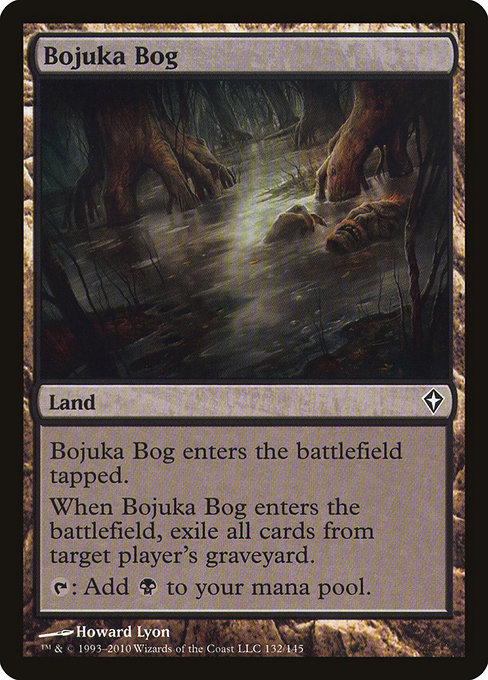
Bojuka Bog turns a routine land drop into an awkward conversation for the graveyard player. It enters tapped and exiles one target player's entire graveyard through its enters ability. No extra mana is needed.
That targeting lets you preserve your own graveyard while disrupting someone else's. Muldrotha, the Gravetide can replay a Bog that has reached your graveyard, and Sun Titan can return it in a deck whose color identity includes both white and black. Both lines give the enters trigger another chance to matter.
The limitation is timing. Drawing Bog is not the same as holding instant-speed interaction: under normal rules you must be able to play a land during your own main phase with an empty stack. If the graveyard combo is happening right now, a Bog in hand does not stop it by itself.
Play it if: your black deck wants graveyard interaction with a low spell-slot cost. Keep additional instant-speed answers when your table demands them, and remember that the tapped entry can delay an important spell.
#2. Demolition Field
Demolition Field | Illustration by Kamila Szutenberg
Some lands are engines, not scenery. Demolition Field gives a budget deck a clean way to challenge an opponent's problematic nonbasic land instead of hoping someone else brought an answer.
Two mana, a tap, and a sacrifice destroy the target nonbasic. Its controller may find a basic land, and you may find one as well; those basics do not enter tapped because of this ability. Only those two players get the searches. Keep a basic in your library if you want to replace the Field rather than simply go down a land.
Titania, Protector of Argoth rewards the sacrifice and can return the Field with her enters ability. Sun Titan can also bring it back. Those are useful recovery lines, not an invitation to turn every casual game into repeated land denial; discuss that plan with your group.
Play it if: you need an answer to utility lands or unusually productive nonbasics. If the target becomes illegal before resolution, the whole ability fails and neither player searches. Indestructible also stops the destruction, so choose the target carefully.
#1. Scavenger Grounds
Scavenger Grounds | Illustration by Steven Belledin
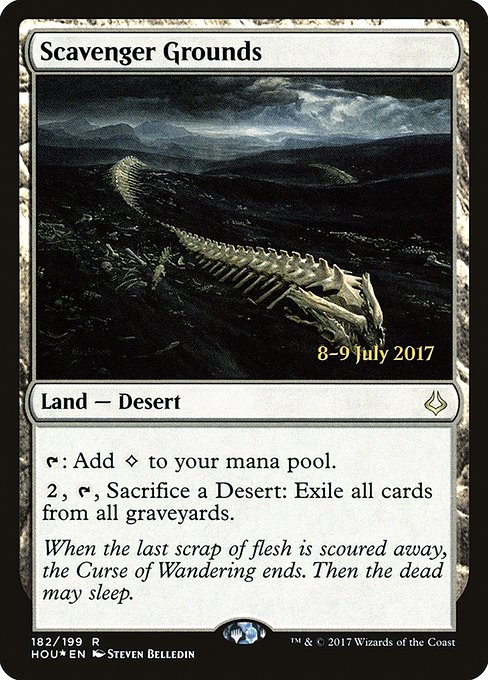
The top spot goes to an answer that can sit in almost any deck's mana base and threaten multiple graveyards at once. Scavenger Grounds enters untapped and produces colorless mana. Two mana, a tap, and the sacrifice of a Desert exile all graveyards.
Grounds is itself a Desert, so it supplies its own sacrifice. You can activate it in response to a reanimation spell or another graveyard-dependent play when you have priority. That ability to act outside your own turn is a substantial part of why it ranks so highly here.
The symmetry is not fine print: your graveyard is exiled too. In a Meren of Clan Nel Toth deck, that can dismantle your own plan. It is more comfortable in a creature or combat deck that does not rely heavily on recursion. Zirda, the Dawnwaker reduces its two-mana activation to one, while Titania, Protector of Argoth can reward the sacrificed land with an Elemental trigger if she is on the battlefield.
Play it if: you need flexible graveyard interaction and can tolerate one colorless source. Keep two mana available when the threat matters. An answer you tapped for mana at the wrong moment is not an answer you can activate.
How Many Utility Lands Should You Run?
Start with your colored-mana requirements, not a target number of clever lands. A two-color deck with easy costs has different room for colorless sources than a three-color deck trying to cast a double-colored spell early.
As a cautious starting exercise, try two or three utility lands whose jobs your deck actually needs. That is a testing suggestion, not a universal deckbuilding rule. Track whether they solve real problems and whether they prevent you from casting spells on time. Mono-color, colorless, and dedicated land decks may have room for more; demanding multicolor mana bases may have room for less.
Count activation costs honestly. A land that says three mana and tap generally occupies four potential mana sources for that activation. Sacrificing it adds a future cost unless the effect replaces the land. Do not cut an early untapped colored source without noticing what you have given up.
Most importantly, do not buy all fifteen and put them in the same deck. Choose a job: interaction, recursion, draw, or a way to finish combat. A land deserves its slot because it helps your plan, not because it appeared in a ranking.
Can a land have a color identity even though lands are usually colorless?
Yes. A card's color and its color identity are different concepts. Bojuka Bog has black color identity because of the black mana symbol in its rules text. Mosswort Bridge has green identity. A colorless-looking frame does not make every land legal in every Commander deck.
Is Path of Ancestry legal in any color identity?
Its color identity is colorless, so it is not excluded by a commander's colors. Its mana ability refers to that commander's identity rather than containing colored mana symbols. In a deck with a colorless commander, however, there are no colors for it to produce; that does not make it a useful mana source there.
Do utility lands replace spells or basic lands?
They are lands for deck construction, but their extra abilities can overlap jobs normally performed by spells. Preserve an appropriate land count and colored-source balance when swapping them in. A slow draw land is not automatically a replacement for an early draw spell, and a situational removal land is not a complete interaction package.
Can Myriad Landscape find two Wastes?
No. Wastes is basic but has no basic land type. The two basics found together must share a land type. You can search for a single basic Wastes because Myriad Landscape allows up to two cards, but two Wastes do not satisfy the shared-type requirement.
Why are the image and the priced printing sometimes different?
The image catalog may use a recognizable printing while the price link points to the specific English nonfoil version checked for this guide. Follow the linked set and collector number when comparing prices; do not assume an illustrated premium version meets the same budget.
Are these prices guaranteed to stay below $2?
No. They are a November 11, 2026 snapshot. Check the exact printing before buying, and include shipping and tax in your actual budget. A cheap card from a separate seller can be a poor purchase once delivery costs are added.
Give Each Land a Job
The best upgrade here might be a thirty-cent answer rather than a spectacular new threat. A graveyard check, an emergency sacrifice outlet, or one extra card at the end of a quiet turn can matter more than the text box suggests.
Pick the weakness you actually encounter, add a land that addresses it, and keep the mana base honest. Your deck still has to cast its spells. Once it can do that reliably, asking a few lands to contribute more is money well spent.
Sources and Price Method
Oracle text, color identities, Commander legality, and the listed USD nonfoil reference prices were checked using Scryfall's card database and its public card data on November 11, 2026. Exact printing links appear beside every price. Only released English paper printings were used for the budget checks; the quoted amounts do not include shipping or tax, and do not assert retailer stock.
The official Commander format guide supports the color-identity and deck-construction discussion. Wizards' The Brothers' War release notes clarify Blast Zone's counter cost and Demolition Field's targeting and search rules. Rankings and deck-fit recommendations are editorial judgments based on those card functions, not personal playtest results.
Card illustrations were selected through ElderDecks' image catalog. Individual artist credits accompany the images.
15 Best Budget Utility Lands for Commander Under $2
By ElderArticles · Updated 11/12/2026 · 19 min read
Upgrade your Commander mana base with 15 utility lands under $2, ranked with dated prices, useful synergies, color identities, and honest drawbacks.
Table of contents
Your opponent is about to bring back half their graveyard. You look at your hand, then at your lands. Six sources of mana. Not a single answer.
That is where a good utility land earns its slot. The right one can interrupt a combo, recover a key artifact, or turn a stalled attacker into a real threat without taking up a spell slot. And you do not need an expensive mana base to get those jobs done.
There is a catch, of course. A land that does something clever but leaves you unable to cast your commander is not an upgrade. These are fifteen budget utility lands worth considering, ranked for useful effects, manageable costs, and how much work they ask of the rest of your deck.
Mosswort Bridge | Illustration by Jeremy Jarvis
How We Ranked These Budget Utility Lands
This is an original editorial ranking for multiplayer Commander, not a tournament tier list or a claim of personal playtesting. We value relevant interaction, repeatable resources, broad usefulness, and a low cost to include the card. Entering tapped, producing only colorless mana, expensive activations, and narrow setup requirements all count against a land.
For this article, a utility land provides something beyond straightforward mana fixing. That includes removal, graveyard interaction, card selection, recursion, combat support, and ramp. It does not mean every deck should run every entry. A specialized land can be the best card for your particular strategy even when it ranks lower here.
Budget means an English, paper, nonfoil printing priced below $2 USD in Scryfall's price data on November 11, 2026. Each entry links the exact priced printing. These are reference prices, not guaranteed retailer offers or inventory checks; condition, seller, tax, and shipping can change your total. Illustrations may show a different printing. Synergy cards are suggestions, not promises that the entire package costs under $2.
All fifteen lands were checked against current Scryfall Oracle text, color identity, and Commander legality. The color identity noted below tells you which commanders can legally include the card, not necessarily which decks should.
Mortuary Mire makes a very modest promise: your next creature can be one you already lost. When it enters, you may put a creature card from your graveyard on top of your library. It is a useful late land drop when the best card for the next turn is sitting in the graveyard rather than somewhere in your deck.
The important word is top. You have not drawn an extra card, and you have not reanimated anything. You have exchanged an unknown future draw for a known creature while accepting a tapped land now.
Muldrotha, the Gravetide can replay Mire from the graveyard on your turn, within your land-play allowance. That is a useful recovery option, although Muldrotha can often cast the creature directly instead. Life from the Loam can return a sacrificed Mire to your hand, while The Gitrog Monster provides an additional land play to help fit it into your turn.
Play it if: your black deck has a few creatures it strongly wants back and can tolerate another tapped land. Skip it when keeping mana available immediately matters more than selecting the next draw.
Myriad Landscape is ramp tucked into a land slot, with the speed limit clearly posted. It enters tapped, makes colorless mana, and later asks for two mana, a tap, and a sacrifice to find up to two basic lands that share a land type. Those lands enter tapped too.
Finding two basics turns one land into two, so you finish one land ahead. But you spend the activation turn waiting for that investment to pay off. This is not an excuse to keep a slow hand with no early plays.
It is most appealing in basic-heavy decks that want another route to extra lands. Sun Titan can return the sacrificed Landscape, allowing another activation after it untaps. Tatyova, Benthic Druid turns the two incoming basics into two landfall triggers if both enter under your control.
Play it if: you can afford a deliberate ramp turn and have enough matching basics. Do not expect it to fetch an Island and a Forest together; those two do not share a land type.
Sometimes you have removal. The problem is that the creature wearing all the expensive Equipment refuses to be targeted.
Arcane Lighthouse costs one mana and a tap to strip hexproof and shroud from opposing creatures for the turn, and stops them from having those abilities during that window. Your Swords to Plowshares can then do its job. Because the effect affects your opponents' creatures rather than just your own spells, it can also open a window for another player to help.
This is a support card, not removal by itself. You still need the answer and the mana to cast it. It does not remove ward, indestructible, or protection, and it does not remove hexproof from an opponent personally.
Play it if: difficult-to-target creatures regularly cause trouble at your table and your deck runs targeted interaction. If they rarely appear, you are paying a colored-mana opportunity cost for an ability you may never activate.
A tapped five-color fixer is not automatically exciting. Repeatedly improving your next draw is a better sales pitch.
Path of Ancestry makes mana of any color in your commander's color identity. If you spend that mana to cast a creature sharing a creature type with your commander, you scry 1. The mana itself is not restricted to those creatures; you simply miss the scry when you spend it on something else.
A Krenko, Mob Boss deck full of Goblins has a clear reason to consider it. So does a Tatyova, Benthic Druid list with enough Merfolk or Druids to make the shared-type clause relevant. Count the actual matches in your deck before assuming the ability will happen often.
Play it if: your creature base repeatedly overlaps your commander's types and the tapped entry fits your curve. Scrying is selection, not card draw; it makes future draws better without putting additional cards into your hand.
Mosswort Bridge asks you to do something green decks often wanted to do anyway: put ten power onto the battlefield. Its hideaway ability stores one of your top four cards face down. Later, one green mana and a tap can let you play that card without paying its mana cost if your creatures' total power is at least ten.
Xenagos, God of Revels helps a single attacker contribute a large chunk of that total. Titania, Protector of Argoth and her Elemental tokens can build the required board through a land-sacrifice plan. Neither makes the hidden card guaranteed value, but both give you a plausible route to unlocking it.
The power check happens as the activated ability resolves. Opponents can remove creatures in response and leave you below ten. And if your board never develops, you are left with a tapped green source and an inaccessible card.
Play it if: substantial creature power is a normal part of your game plan, not a best-case scenario. The land rewards a board; it does not build one for you.
An enormous commander can spend an embarrassing number of turns staring at disposable blockers. Rogue's Passage solves that particular problem: four mana and a tap make one target creature unable to be blocked for the turn.
That is excellent when a single connection matters. Brago, King Eternal wants combat damage to a player so its blink ability can trigger. An Equipment-heavy Sram, Senior Edificer deck can use Passage to deliver a large commander hit. Activate it before blockers are declared; making a creature unblockable afterward does not undo blocks already made.
The real cost is access to five mana-producing lands if Passage is one of them: four pay for the ability, and Passage taps instead of producing mana. It also does nothing against removal or combat-damage prevention.
Play it if: your deck needs one creature to connect. If your plan is to attack with twenty small creatures, spending this much on one attacker usually misses the point.
Read the search instruction carefully: Krosan Verge finds a Forest card and a Plains card, not necessarily basic lands. That makes it an interesting budget ramp tool for decks with lands carrying those types.
For example, Canopy Vista has both the Forest and Plains types, so it can fill either search requirement. You still need two separate cards to get two lands; one card does not count as both finds. The cards you include must also obey your commander's color identity, regardless of what Verge can search for.
A Zacama, Primal Calamity deck appreciates reaching its expensive commander, while Sun Titan can return the sacrificed Verge for another future activation. The cost is patience: Verge enters tapped, produces colorless mana, and its two-mana activation brings the searched lands in tapped.
Play it if: your deck has suitable targets and enough time to convert a land drop into ramp. Its colorless identity makes it broadly legal, but its search requirements make it much narrower in practice.
Bonders' Enclave is for the player who can produce a large creature more easily than another card. Pay three mana and tap it to draw, provided you control a creature with power four or greater.
Titania, Protector of Argoth qualifies herself, and her 5/3 tokens give you additional ways to meet the condition. A creature that Xenagos, God of Revels has enlarged may qualify during that turn as well. The requirement checks when you activate the ability; removing your qualifying creature afterward does not by itself stop the draw.
You still have to reserve three mana plus the Enclave's tap. This is a way to use spare resources, not efficient early-game draw. And following a board wipe, the land may be least helpful precisely when you need to rebuild.
Play it if: four power is a reliable baseline for your board. Skip it if your commander and most of your creatures are small, even when the deck occasionally assembles one impressive attacker.
Your best artifact getting destroyed does not have to end the conversation. Buried Ruin lets you pay two mana, tap, and sacrifice the land to return an artifact card from your graveyard to your hand.
That last destination matters. You still need to cast the artifact, and you have just lost a land. Use it to recover something worth that investment, not automatically the first mana rock that falls over.
Teshar, Ancestor's Apostle gives the recovered artifact an additional purpose: casting a historic spell triggers Teshar's creature-recursion ability. Sun Titan can recover Buried Ruin itself, turning a one-shot land into a recurring resource. In a slower game, retrieving Nevinyrral's Disk can also restore access to a reset button, though the Disk enters tapped and gives opponents warning.
Play it if: artifacts are important enough that getting a particular one back changes your game. A deck with only a handful of replaceable mana rocks has less reason to give up a colored source.
The one life is usually the least interesting part. High Market gives you a sacrifice outlet that asks for no mana, just a tap and a creature you control.
That can turn an exile-removal spell aimed at Atsushi, the Blazing Sky into a death trigger instead. Sacrifice Atsushi in response and its death ability triggers, even if you subsequently move your commander from the graveyard to the command zone. With Meren of Clan Nel Toth, sacrificing another creature can provide an experience counter and put a target where Meren can recover it later.
Do not confuse no mana cost with unlimited activations. High Market taps, so without an untap effect it is not a way to sacrifice a whole board at once. It cannot rescue something after the removal has already resolved, either.
Play it if: you want control over when a creature dies, or need a backup sacrifice outlet. Treat the life as a small extra, not the reason to include it.
Blast Zone is a removal spell you can make a land drop with. It arrives untapped with one charge counter. For three mana, a tap, and its sacrifice, it destroys every nonland permanent with mana value exactly equal to its charge-counter total.
That can answer a cluster of cheap permanents without requiring access to a particular color. Titania, Protector of Argoth rewards sacrificing the land, and Life from the Loam can return it to your hand for another land drop. Neither prevents the explosion from hitting your own permanents at the chosen mana value.
The setup is easy to underestimate. Adding one counter costs two mana because the activation contains X twice, and adding counters taps the land. Normally you must wait to untap before detonating it. It starts at one and cannot lower its own counter count, so it is not a ready-made answer to ordinary zero-mana-value tokens.
Play it if: your deck needs a flexible answer to troublesome permanents. Budget time and mana for the detonation, and check your own battlefield first.
War Room is not glamorous. That is part of its appeal. Three mana, a tap, and life equal to the number of colors in your commanders' color identity buy a card, with no creature or hand-size condition attached.
A mono-white Sram, Senior Edificer deck pays one life. A red-white Zirda, the Dawnwaker deck pays two, and Zirda reduces the three-mana activation to one mana because it is not a mana ability. War Room still taps, and the life payment does not disappear. A colorless commander's identity makes the life payment zero.
This is a sensible fallback after a board wipe or when the hand runs dry. It is not a substitute for a functioning draw package: spending three mana plus your land's tap per card is too slow to carry most decks alone.
Play it if: you want dependable late-game draw, especially with fewer colors. In a color-hungry multicolor deck, the combination of colorless production and larger life payments deserves more scrutiny.
Bojuka Bog turns a routine land drop into an awkward conversation for the graveyard player. It enters tapped and exiles one target player's entire graveyard through its enters ability. No extra mana is needed.
That targeting lets you preserve your own graveyard while disrupting someone else's. Muldrotha, the Gravetide can replay a Bog that has reached your graveyard, and Sun Titan can return it in a deck whose color identity includes both white and black. Both lines give the enters trigger another chance to matter.
The limitation is timing. Drawing Bog is not the same as holding instant-speed interaction: under normal rules you must be able to play a land during your own main phase with an empty stack. If the graveyard combo is happening right now, a Bog in hand does not stop it by itself.
Play it if: your black deck wants graveyard interaction with a low spell-slot cost. Keep additional instant-speed answers when your table demands them, and remember that the tapped entry can delay an important spell.
Some lands are engines, not scenery. Demolition Field gives a budget deck a clean way to challenge an opponent's problematic nonbasic land instead of hoping someone else brought an answer.
Two mana, a tap, and a sacrifice destroy the target nonbasic. Its controller may find a basic land, and you may find one as well; those basics do not enter tapped because of this ability. Only those two players get the searches. Keep a basic in your library if you want to replace the Field rather than simply go down a land.
Titania, Protector of Argoth rewards the sacrifice and can return the Field with her enters ability. Sun Titan can also bring it back. Those are useful recovery lines, not an invitation to turn every casual game into repeated land denial; discuss that plan with your group.
Play it if: you need an answer to utility lands or unusually productive nonbasics. If the target becomes illegal before resolution, the whole ability fails and neither player searches. Indestructible also stops the destruction, so choose the target carefully.
The top spot goes to an answer that can sit in almost any deck's mana base and threaten multiple graveyards at once. Scavenger Grounds enters untapped and produces colorless mana. Two mana, a tap, and the sacrifice of a Desert exile all graveyards.
Grounds is itself a Desert, so it supplies its own sacrifice. You can activate it in response to a reanimation spell or another graveyard-dependent play when you have priority. That ability to act outside your own turn is a substantial part of why it ranks so highly here.
The symmetry is not fine print: your graveyard is exiled too. In a Meren of Clan Nel Toth deck, that can dismantle your own plan. It is more comfortable in a creature or combat deck that does not rely heavily on recursion. Zirda, the Dawnwaker reduces its two-mana activation to one, while Titania, Protector of Argoth can reward the sacrificed land with an Elemental trigger if she is on the battlefield.
Play it if: you need flexible graveyard interaction and can tolerate one colorless source. Keep two mana available when the threat matters. An answer you tapped for mana at the wrong moment is not an answer you can activate.
How Many Utility Lands Should You Run?
Start with your colored-mana requirements, not a target number of clever lands. A two-color deck with easy costs has different room for colorless sources than a three-color deck trying to cast a double-colored spell early.
As a cautious starting exercise, try two or three utility lands whose jobs your deck actually needs. That is a testing suggestion, not a universal deckbuilding rule. Track whether they solve real problems and whether they prevent you from casting spells on time. Mono-color, colorless, and dedicated land decks may have room for more; demanding multicolor mana bases may have room for less.
Count activation costs honestly. A land that says three mana and tap generally occupies four potential mana sources for that activation. Sacrificing it adds a future cost unless the effect replaces the land. Do not cut an early untapped colored source without noticing what you have given up.
Most importantly, do not buy all fifteen and put them in the same deck. Choose a job: interaction, recursion, draw, or a way to finish combat. A land deserves its slot because it helps your plan, not because it appeared in a ranking.
Can a land have a color identity even though lands are usually colorless?
Yes. A card's color and its color identity are different concepts. Bojuka Bog has black color identity because of the black mana symbol in its rules text. Mosswort Bridge has green identity. A colorless-looking frame does not make every land legal in every Commander deck.
Its color identity is colorless, so it is not excluded by a commander's colors. Its mana ability refers to that commander's identity rather than containing colored mana symbols. In a deck with a colorless commander, however, there are no colors for it to produce; that does not make it a useful mana source there.
Do utility lands replace spells or basic lands?
They are lands for deck construction, but their extra abilities can overlap jobs normally performed by spells. Preserve an appropriate land count and colored-source balance when swapping them in. A slow draw land is not automatically a replacement for an early draw spell, and a situational removal land is not a complete interaction package.
No. Wastes is basic but has no basic land type. The two basics found together must share a land type. You can search for a single basic Wastes because Myriad Landscape allows up to two cards, but two Wastes do not satisfy the shared-type requirement.
Why are the image and the priced printing sometimes different?
The image catalog may use a recognizable printing while the price link points to the specific English nonfoil version checked for this guide. Follow the linked set and collector number when comparing prices; do not assume an illustrated premium version meets the same budget.
Are these prices guaranteed to stay below $2?
No. They are a November 11, 2026 snapshot. Check the exact printing before buying, and include shipping and tax in your actual budget. A cheap card from a separate seller can be a poor purchase once delivery costs are added.
Give Each Land a Job
The best upgrade here might be a thirty-cent answer rather than a spectacular new threat. A graveyard check, an emergency sacrifice outlet, or one extra card at the end of a quiet turn can matter more than the text box suggests.
Pick the weakness you actually encounter, add a land that addresses it, and keep the mana base honest. Your deck still has to cast its spells. Once it can do that reliably, asking a few lands to contribute more is money well spent.
Sources and Price Method
Oracle text, color identities, Commander legality, and the listed USD nonfoil reference prices were checked using Scryfall's card database and its public card data on November 11, 2026. Exact printing links appear beside every price. Only released English paper printings were used for the budget checks; the quoted amounts do not include shipping or tax, and do not assert retailer stock.
The official Commander format guide supports the color-identity and deck-construction discussion. Wizards' The Brothers' War release notes clarify Blast Zone's counter cost and Demolition Field's targeting and search rules. Rankings and deck-fit recommendations are editorial judgments based on those card functions, not personal playtest results.
Card illustrations were selected through ElderDecks' image catalog. Individual artist credits accompany the images.
AI-generated article, published by an ElderDecks editor.