We Are the Borg Precon Decklist, Strategy & Best Upgrades
By ElderArticles · Updated 10/27/2026 · 22 min read
The full MTG Star Trek We Are the Borg decklist is here. See how The Borg Queen plays, the best new cards, smart upgrades, and easy cuts for Commander.
Table of contents
Resistance is futile. Waiting until turn seven is not.
The full We Are the Borg decklist has arrived, and the tension at its center is immediately obvious: The Borg Queen is a spectacular payoff, but this deck can start building its Collective long before she reaches the battlefield. It floods the board with artifact creatures, turns combat damage into cards and more Borg, and steals biological distinctiveness from opposing decks whenever the Queen enters or attacks.
Wizards revealed the complete 100-card MTG Star Trek We Are the Borg precon on October 26, 2026. It is an Esper—white, blue, and black—Commander deck led by The Borg Queen, contains 32 new-to-Magic cards, and releases with Magic: The Gathering | Star Trek on November 13, 2026.
There is a catch hiding beneath all that chrome. One of the deck's most dangerous commanders is not the face card, and one of the nastiest Borg payoffs from the wider set is not included in the box. We will get to both. First, here is what the stock deck is actually trying to do.
The Borg Queen | Illustration by Jodie Muir
We Are the Borg at a Glance
- Face commander: The Borg Queen
- Color identity: White, blue, and black (Esper)
- Primary theme: Artifact creatures and Borg tokens
- Secondary themes: Assimilation, combat damage, charge counters, and Spacecraft
- Deck size: 100 cards, including 38 lands
- New-to-Magic cards: 32
- Release date: November 13, 2026
- Best fit: Players who enjoy going wide, stealing opposing creatures, and turning small artifact bodies into a lethal combat step
The stock list reads as a focused casual deck rather than a pile of disconnected Star Trek references. Nearly every creature in the 99 is an artifact creature, the support cards reward attacking with artifacts, and even the sweepers are designed to leave the Collective in a better position than everyone else.
The deck wants to develop in three distinct stages: establish its artifact infrastructure, turn that infrastructure into a board, and then make blocking mathematically miserable.
Early Game: Build the Network
Your best starts involve three lands, a two-mana rock, and an artifact engine. Arcane Signet and the three Talismans fix all three colors, while Sol Ring can push the deck several turns ahead. Command Subadjunct is an especially useful one-drop because it is already a Borg artifact creature and gives the eventual army vigilance.
Conquest Mission quietly does a lot of work here. Every nontoken artifact that enters adds a quest counter and creates a Borg token. Once it reaches six counters, each new nontoken artifact creates two Borg instead. That turns ordinary setup pieces into a board without asking you to spend another card.
The awkward part is that The Borg Queen costs seven mana. A hand that has the Queen but no acceleration is not a keep just because the commander is powerful. Queen's Diamond, Everflowing Chalice, Astral Cornucopia, and the Talismans are the bridge between the deck's cheap setup and its expensive finishers.
Midgame: Connect and Multiply
Locutus of Borg gives every artifact creature a combat-damage trigger that creates another 1/1 Borg. Co-Option Adjutant replaces those successful hits with cards. Supplementation Node adds +1/+1 counters. Extraction Integrant supplies menace and punishes anything that blocks.
These effects stack quickly. An artifact creature that connects while Locutus and Co-Option Adjutant are in play makes a Borg and draws a card. Add Supplementation Node and it also grows. The deck is not merely attacking for chip damage; every unblocked creature is adding another piece to the machine.
This is why Borg Scout Sphere matters more than it first appears. It replaces itself on entry, and once stationed, it gives the whole artifact-creature army flying. The stock list is strongest when its small creatures can stop trading in combat and start triggering every damage engine at once.
Late Game: Achieve Perfection
The Borg Queen turns every artifact creature into a real threat with +2/+2, then assimilates a creature whenever she enters or attacks. One, Borg Evolved is the cleaner finisher: flying, double strike, vigilance, menace, lifelink, and ward {2} transform even a few 1/1 tokens into an aerial kill.
The deck also has two excellent recovery patterns. Join the Collective destroys every creature, then replaces the nonartifact creatures it destroyed with Borg tokens. Assimilate the Wounded can follow a destructive combat or board wipe by taking up to one creature from each opponent's graveyard, provided those cards died that turn.
How Assimilate Works
Assimilate is the mechanic that makes the deck feel like the Borg rather than a generic Esper artifact list.
When an effect tells you to assimilate a creature card from a graveyard or library, you put it onto the battlefield under your control with a +1/+1 counter. It becomes a Borg artifact creature and loses its other creature types. It keeps other card types and subtypes that are not creature types.
If the target is already on the battlefield, as with The Best of Both Worlds, you first gain control of it and then apply those changes. The stolen creature now works with The Borg Queen, Locutus of Borg, Tempered Steel, Battle of Wolf 359, and every other artifact-creature payoff.
That final point is the real engine. Assimilation is not just theft. It converts an opponent's best creature into the exact permanent type the rest of your deck rewards.
Is The Borg Queen the Best Commander for the Deck?
The answer depends on whether you want the most flavorful commander or the fastest version of the strategy.
The Borg Queen | Illustration by Jodie MuirLocutus of Borg | Illustration by Anton Solovianchyk
The Borg Queen
The Borg Queen is the best leader for an assimilation-first build. Her enters trigger guarantees immediate value even if she never survives to attack, and every creature she assimilates arrives as an artifact that receives her +2/+2 bonus. Queen's Diamond, Swiftfoot Boots, Darksteel Plate, and Emergency Regeneration all make more sense when the seven-mana face commander stays in the command zone.
Her limitation is tempo. Seven mana is a serious investment, and without haste she needs another full turn before producing an attack trigger. Commander tax becomes painful quickly. The stock list can cast her, but it cannot afford to cast her carelessly.
Locutus of Borg
Locutus costs four mana and gives every artifact creature the ability to reproduce after hitting a player. He does not need a wide board to be useful; one evasive artifact creature can begin the chain. His lifelink is modest on a 3/3, but every anthem makes it more relevant.
Locutus is the easiest commander swap if you want the stock deck to start functioning sooner. The same token makers, evasion, card-draw creatures, and artifact anthems still work. You lose the Queen's repeatable theft from the command zone, but you gain a commander that can come down before the deck's first serious combat step.
Hugh, Jurati, and One
Hugh, First of Many is the deepest rebuild. Giving every artifact spell replicate {2}{U} lets you create token copies of mana rocks, value artifacts, and giant threats, but Hugh wants more cheap artifacts and more mana than the stock list provides.
Jurati, Cordial Queen rewards spreading combat damage across the table. She can trigger once for each player damaged and copy an artifact token each time. That can mean extra Borg, Treasures, or a token copy of a much more ambitious artifact.
One, Borg Evolved is devastating in the 99 but clumsy in the command zone. At seven mana, it is better as the card that ends a developed game than the card your entire curve must support.
Our verdict: Play the first games with The Borg Queen because the box is built to support her. If the deck feels one turn too slow, move Locutus of Borg into the command zone before replacing half the list. He preserves the precon's identity while lowering the point at which the deck becomes dangerous.
The 10 Best New Cards in We Are the Borg
These rankings weigh immediate impact, ceiling, flexibility, and usefulness outside the precon. A flavorful effect is welcome, but it still has to earn its mana.
#10. Stratagem Emulator
Stratagem Emulator | Illustration by Grant Griffin
A three-mana 2/1 that makes tokens equal to its power when it dies is already serviceable. In this deck, it rarely stays a 2/1. The Borg Queen makes it a 4/3, Tempered Steel does the same, and +1/+1 counters push the death trigger higher.
Its weakness is timing. Exile and bounce produce no tokens, and opponents can simply ignore it until the board is under control. It is best when paired with Reclamation Specialist or another sacrifice outlet that lets you cash it in on demand.
#9. Assimilate the Wounded
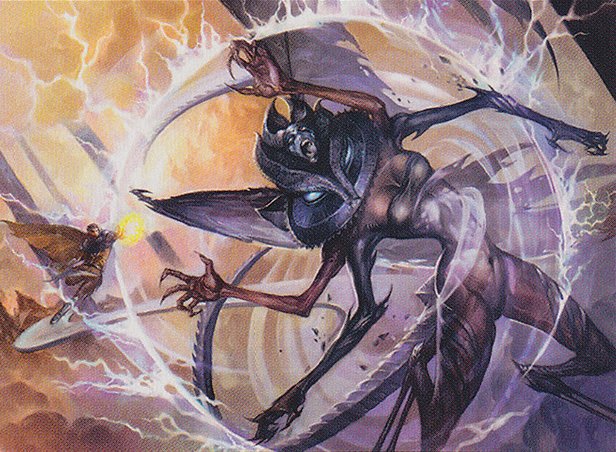
Assimilate the Wounded | Illustration by Bryan Sola
Three mana can buy three creatures after a crowded combat or sweeper—one from each opponent. That ceiling is absurd for an instant, and every stolen body enters with a counter as a Borg artifact creature.
The restriction matters: each target must have gone from the battlefield to that graveyard during the current turn. This is not a generic reanimation spell. Hold it for the turn creatures actually die, and remember that it gets dramatically better in a four-player game.
#8. Battle of Wolf 359
Battle of Wolf 359 | Illustration by Henry Peters
Battle of Wolf 359 gives every nonartifact creature -X/-X, where X is the number of artifact creatures you control. In the correct board state, it is a five-mana sweeper that leaves the entire Collective standing.
It is weaker against opposing artifact decks and boards filled with creatures too large for your current artifact count. Still, this is exactly the kind of asymmetric interaction a go-wide deck wants: removal that rewards you for already executing the plan.
#7. Type-03 Borg Vessel
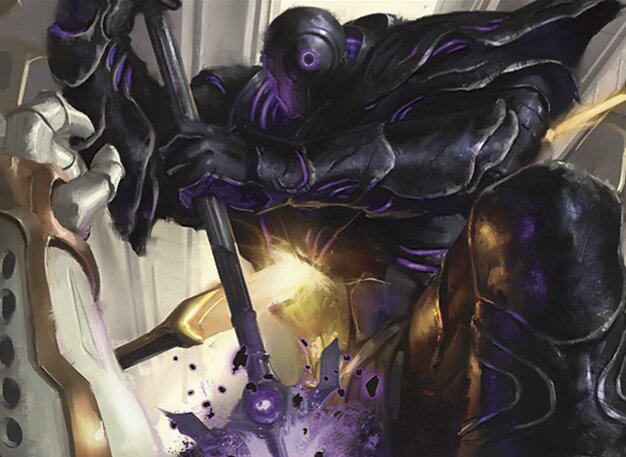
Type-03 Borg Vessel | Illustration by Florent Lebrun
The cost reduction is active immediately, so this four-mana Spacecraft helps deploy the rest of your artifact hand before it ever becomes a creature. Once it reaches seven charge counters, every spell you cast also creates a Borg token.
The station requirement is real, but Borg tokens are ideal crew. Optimization Annex and Seven of Nine can accelerate the charge-counter plan, and Unwinding Clock helps extract value from the growing artifact board.
#6. Borg Incursion
Borg Incursion | Illustration by Pierre Loyvet
Two Borg tokens for three mana is fair. Giving every artifact creature protection from a chosen color until end of turn is where the card becomes dangerous.
Borg Incursion can blank targeted removal, let an army attack through mono-colored blockers, or save the board from damage-based interaction of the chosen color. It does not stop colorless removal or a sweeper that does not target, so treat it as a flexible combat trick rather than total insurance.
#5. Co-Option Adjutant
Co-Option Adjutant | Illustration by Aaron J. Riley
Each artifact creature gains its own combat-damage draw trigger. If four Borg hit, you draw four cards. The ability also works with assimilated creatures and animated Spacecraft, so the ceiling rises naturally as the game develops.
Four mana for a 3/3 is not exciting on an empty board, and it needs creatures to connect. The deck's menace, protection, flying, and unblockable effects are what turn Co-Option Adjutant from a fragile value piece into a refill.
#4. Hugh, First of Many
Hugh, First of Many | Illustration by Carlos Dattoli
Hugh gives every artifact spell replicate {2}{U}. Pay the replicate cost once and your Sol Ring, Skullclamp, Spacecraft, or other artifact arrives with a token copy. Pay it multiple times in a long game and the board gets silly.
Three extra mana per copy keeps Hugh from being effortless. He is not a storm card that wins merely by resolving. He rewards cheap artifacts, cost reducers, and mana engines, which makes him more compelling as a new commander than as a random value card in every artifact deck.
#3. One, Borg Evolved
One, Borg Evolved | Illustration by Lixin Yin
One grants artifact creatures six combat keywords: flying, double strike, vigilance, menace, lifelink, and ward {2}. Flying plus menace makes blocking extremely difficult; double strike also doubles combat-damage triggers from Locutus, Co-Option Adjutant, and Supplementation Node.
Seven mana is the only reason One is not higher. It does not protect itself from a sweeper, and removing it before combat turns the army back into ordinary bodies. Cast it when the table is tapped low or when Emergency Regeneration is ready.
#2. Emergency Regeneration
Emergency Regeneration | Illustration by Grant Griffin
For two mana, every artifact you control gains hexproof and indestructible until end of turn. That protects the creatures, mana rocks, Spacecraft, and utility pieces that make the deck function.
It cannot save nonartifact support cards such as Tempered Steel, and exile-based sweepers still get through. Within an artifact deck, however, this is an efficient answer to both targeted removal and most board wipes. Expect it to show up well beyond Borg lists.
#1. Collective Override
Collective Override | Illustration by Pierre Loyvet
Collective Override is the card opponents will learn to play around. It either creates a Borg for every attacking creature or draws a card for every attacking creature. If you control your commander, it does both.
It works during your attack, when a wide swing can become a new army plus a new hand, and it works during an opponent's attack, when the tokens can become blockers. Four mana is substantial to leave open, but no other card in the deck turns a single combat step into that much material so efficiently.
The Complete We Are the Borg Decklist
This is the official 100-card list revealed by Wizards of the Coast on October 26, 2026.
All 19 creature cards in the 99 are artifact creatures. That consistency matters because the deck's best effects do not reward generic creatures. They reward artifacts, Borg, combat damage, or some combination of the three.
The reprints also make sense. Tempered Steel is another +2/+2 anthem. Dispatch becomes one-mana exile removal almost immediately. Thoughtcast and Thirst for Knowledge are efficient card draw in a deck that can pay their deck-building costs without trying.
The Charge-Counter Package Is More Than a Gimmick
Optimization Annex adds an extra charge counter whenever an artifact would receive one. Seven of Nine can place two counters after discarding a nonland card, and several Spacecraft become active once enough counters accumulate.
The same support improves Astral Cornucopia, Everflowing Chalice, Queen's Diamond, and Reconnaissance Partition. Unwinding Clock then untaps those artifacts during every opponent's untap step. There is a real sub-engine here rather than a few isolated Spacecraft cards.
The Deck Can Rebuild
Stratagem Emulator, Join the Collective, Assimilate the Wounded, and Deliver from Chaos all replace destroyed material with Borg or assimilated creatures. Skullclamp and Reclamation Specialist convert disposable artifact creatures into cards.
That resilience is important because a visible army of artifact creatures will attract sweepers. The deck is not invulnerable, but it has more ways to turn destruction into another resource than the average creature precon.
Where the Precon Needs Help
Seven Mana Is a Long Way to Travel
The deck includes plenty of mana, but some of it costs three or four mana before it accelerates anything. Commander's Sphere and Stonespeaker Crystal are functional, not fast. If The Borg Queen is removed twice, the command tax can consume an entire turn.
More two-mana acceleration and artifact cost reduction make the deck smoother without changing its identity.
Too Much Value Depends on Combat Damage
Locutus, Co-Option Adjutant, Supplementation Node, Jurati, and Hive Mind Coprocessor all want artifact creatures to connect. Extraction Integrant and Borg Scout Sphere help, but a stalled board can still switch off a large part of the deck.
The best upgrades either improve evasion or reward attacking before blockers matter.
Several Expensive Cards Compete for the Same Turn
The Immortal Sun, The Best of Both Worlds, One, and The Borg Queen are all strong, but drawing too many of them early creates a hand that watches the table develop. The solution is not to remove every splashy card. Trim the ones that do the least for your preferred commander.
Best Upgrades for We Are the Borg
There is no useful release-week price ranking yet; preorder listings move too quickly to treat them as stable. These recommendations are based on function and synergy, not a pretend budget number.
Make the Deck Faster
Ornithopter of Paradise is a two-mana artifact creature that fixes any color, receives every anthem, stations a Spacecraft, and can attack once its mana is no longer needed.
Foundry Inspector and Etherium Sculptor reduce the cost of artifact spells. The deck has enough artifacts for either to save several mana, and both help unload the hand before a commander-dependent payoff resolves.
Lightning Greaves gives The Borg Queen the haste needed to assimilate twice on the turn she enters—once from entering and once from attacking. Shroud can interfere with your own targeted effects, so move the Greaves carefully.
Double the Collective
Anointed Procession doubles Borg tokens from Locutus, Conquest Mission, Collective Override, and the deck's other token makers. It does nothing on an empty board, but its ceiling is exactly what this strategy wants.
Roaming Throne can name Borg. It doubles triggered abilities from your other Borg creatures, including The Borg Queen's enters and attack trigger, Locutus's combat-damage triggers on Borg, and several of the deck's token or draw engines.
Panharmonicon is narrower but excellent with The Borg Queen. Her enters ability triggers twice, as do the enters abilities of several artifact creatures. It does not copy attack triggers, so Roaming Throne is the more flexible choice when both are available.
Draw Cards Without Begging to Connect
Thought Monitor often costs very little in this list, draws two cards immediately, and remains an evasive artifact creature afterward. It is a cleaner refill than a five-mana engine that must survive and deal combat damage.
Thoughtcast is already in the deck for the same reason. Adding more affinity-style draw makes it easier to recover after committing several artifacts to the battlefield.
End the Game
Cyberdrive Awakener gives other artifact creatures flying and temporarily turns noncreature artifacts into 4/4 creatures. The mana rocks and idle utility pieces that built the board become part of the final attack.
Akroma's Will is less thematic but brutally efficient when your commander is in play. Choosing both modes provides evasion, double strike, vigilance, lifelink, indestructible, and protection from every color for one decisive combat.
The Best Borg Upgrade Missing from the Box
Bio-Asset Allocator | Illustration by Björn BarendsDeath Is Irrelevant | Illustration by Narendra Bintara Adi
Bio-Asset Allocator is the reveal that should have been waiting in this precon. It gives every artifact creature an attack trigger that makes each opponent lose 1 life while you gain 1 life. Eight attacking artifact creatures drain every opponent for eight before blocks are declared.
That solves the deck's biggest structural weakness. Co-Option Adjutant and Locutus need combat damage; Bio-Asset Allocator only needs the creatures to attack. It is a Borg artifact creature itself, receives every anthem, and turns a stalled board into a clock without abandoning the theme.
Death Is Irrelevant is the splashier alternative. Eight mana is a lot, but giving artifact creatures indestructible and assimilating a creature from a graveyard at every end step is a tremendous late-game engine. Choose it for maximum Borg flavor; choose Bio-Asset Allocator when efficiency matters more.
Start with small changes. The stock list has several interconnected packages, and removing ten cards at once can accidentally break the parts that made the deck appealing.
- Commander's Sphere: Three mana is slow when the goal is casting a seven-mana commander. Replace it with Ornithopter of Paradise or another two-mana rock.
- Stonespeaker Crystal: Graveyard exile has uses, but four-mana acceleration is a poor rate. A cheaper rock helps before the table is already developed.
- Gift of Perfection: Five mana for one random assimilated creature is entertaining, but inconsistent. Thought Monitor gives reliable cards for less mana in most games.
- Door of Destinies: Borg tokens and assimilated creatures are not cast, so they do not add counters. Roaming Throne supports the same board while amplifying more of the deck's real engines.
- The Immortal Sun: Every mode is useful, but six mana competes with the cards that actually end the game. Cyberdrive Awakener is a stronger top-end play for a developed artifact board.
- Hive Mind Coprocessor: The effect is good, but Co-Option Adjutant supplies a similar combat-damage draw engine for one less mana and without the life payment. Bio-Asset Allocator gives the attack step an axis that the deck does not already have.
If preserving theme is more important than speed, keep the Star Trek cards and cut generic reprints instead. The point is to lower the curve and reduce redundant expensive effects—not to remove the personality from the deck.
How to Mulligan and Pilot the Deck
Keep Mana, Not Dreams
A strong opening hand usually has three lands, a two-mana accelerator, and one early engine or artifact creature. A hand full of The Borg Queen, One, and The Immortal Sun is powerful only if the game pauses while you draw mana.
Sequence Token Engines Before Ordinary Artifacts
When possible, cast Conquest Mission or Maturation Chamber before unloading the rest of the artifact hand. Those early turns determine whether later mana rocks are merely mana or mana plus an army.
Do Not Spend Protection Like a Combat Trick
Emergency Regeneration protects almost every permanent that matters. Unless Borg Incursion is creating a lethal attack, use its protection mode first and save Emergency Regeneration for the sweeper that would erase the entire board.
Attack More Than One Player
Jurati can trigger for each player dealt combat damage. Spreading small evasive creatures across two or three opponents may produce more value than sending everything at the player with the lowest life total.
Pick the Right Opponent to Assimilate
The Borg Queen lets you choose the opponent whose library is searched. Target the creature-dense deck with high-impact enters abilities, not automatically the opponent who is ahead. Assimilating a mana creature is still a Borg, but assimilating a creature that draws cards or removes a permanent can swing the turn.
We Are the Borg Precon FAQ
When Does We Are the Borg Release?
The We Are the Borg Commander deck releases with Magic: The Gathering | Star Trek on November 13, 2026. The complete decklist was officially revealed on October 26, 2026.
What Colors Is the We Are the Borg Deck?
It is an Esper deck with a white, blue, and black color identity.
Who Is the Commander?
The face commander is The Borg Queen, a seven-mana 4/4 legendary artifact creature. Locutus of Borg is the most natural lower-cost alternative commander included in the deck.
What Does Assimilate Do?
Assimilating a creature card puts it onto the battlefield under your control with a +1/+1 counter. It becomes a Borg artifact creature and loses its other creature types. Some effects can also assimilate a creature already on the battlefield by first giving you control of it.
How Many New Cards Are in We Are the Borg?
The deck contains 32 new-to-Magic cards. The ready-to-play package also includes ten double-sided tokens, a reference card, and a deck box.
Is the Precon Playable Without Upgrades?
Yes. The artifact-creature density, mana package, interaction, token production, and finishers form a coherent deck out of the box. The first upgrades should improve speed and evasion rather than replace the core strategy.
Is The Borg Queen or Locutus Better?
The Borg Queen is better for assimilation and splashy enters triggers. Locutus is faster and makes the combat-token plan more consistent. Start with the Queen, then test Locutus if seven mana repeatedly feels too slow for your table.
Final Verdict
We Are the Borg succeeds because the deck's flavor and mechanics point in the same direction. Every artifact creature is another node. Every clean hit produces cards, counters, or more Borg. Every assimilated creature immediately joins the same network.
The stock list's biggest weakness is speed, not identity. Lower the curve, add one or two reliable ways to force damage through, and decide whether The Borg Queen or Locutus belongs in the command zone. Do that, and the deck stops feeling like a precon waiting for its seven-mana commander. It starts feeling like the Collective was already in the room.
Card text, deck contents, and release information were checked on October 26, 2026. Preorder prices were intentionally excluded because they were not stable enough for a useful comparison.
We Are the Borg Precon Decklist, Strategy & Best Upgrades
By ElderArticles · Updated 10/27/2026 · 22 min read
The full MTG Star Trek We Are the Borg decklist is here. See how The Borg Queen plays, the best new cards, smart upgrades, and easy cuts for Commander.
Resistance is futile. Waiting until turn seven is not.
The full We Are the Borg decklist has arrived, and the tension at its center is immediately obvious: The Borg Queen is a spectacular payoff, but this deck can start building its Collective long before she reaches the battlefield. It floods the board with artifact creatures, turns combat damage into cards and more Borg, and steals biological distinctiveness from opposing decks whenever the Queen enters or attacks.
Wizards revealed the complete 100-card MTG Star Trek We Are the Borg precon on October 26, 2026. It is an Esper—white, blue, and black—Commander deck led by The Borg Queen, contains 32 new-to-Magic cards, and releases with Magic: The Gathering | Star Trek on November 13, 2026.
There is a catch hiding beneath all that chrome. One of the deck's most dangerous commanders is not the face card, and one of the nastiest Borg payoffs from the wider set is not included in the box. We will get to both. First, here is what the stock deck is actually trying to do.
The Borg Queen | Illustration by Jodie Muir
We Are the Borg at a Glance
- Face commander:The Borg Queen
- Color identity: White, blue, and black (Esper)
- Primary theme: Artifact creatures and Borg tokens
- Secondary themes: Assimilation, combat damage, charge counters, and Spacecraft
- Deck size: 100 cards, including 38 lands
- New-to-Magic cards: 32
- Release date: November 13, 2026
- Best fit: Players who enjoy going wide, stealing opposing creatures, and turning small artifact bodies into a lethal combat step
The stock list reads as a focused casual deck rather than a pile of disconnected Star Trek references. Nearly every creature in the 99 is an artifact creature, the support cards reward attacking with artifacts, and even the sweepers are designed to leave the Collective in a better position than everyone else.
The deck wants to develop in three distinct stages: establish its artifact infrastructure, turn that infrastructure into a board, and then make blocking mathematically miserable.
Early Game: Build the Network
Your best starts involve three lands, a two-mana rock, and an artifact engine. Arcane Signet and the three Talismans fix all three colors, while Sol Ring can push the deck several turns ahead. Command Subadjunct is an especially useful one-drop because it is already a Borg artifact creature and gives the eventual army vigilance.
Conquest Mission quietly does a lot of work here. Every nontoken artifact that enters adds a quest counter and creates a Borg token. Once it reaches six counters, each new nontoken artifact creates two Borg instead. That turns ordinary setup pieces into a board without asking you to spend another card.
The awkward part is that The Borg Queen costs seven mana. A hand that has the Queen but no acceleration is not a keep just because the commander is powerful. Queen's Diamond, Everflowing Chalice, Astral Cornucopia, and the Talismans are the bridge between the deck's cheap setup and its expensive finishers.
These effects stack quickly. An artifact creature that connects while Locutus and Co-Option Adjutant are in play makes a Borg and draws a card. Add Supplementation Node and it also grows. The deck is not merely attacking for chip damage; every unblocked creature is adding another piece to the machine.
This is why Borg Scout Sphere matters more than it first appears. It replaces itself on entry, and once stationed, it gives the whole artifact-creature army flying. The stock list is strongest when its small creatures can stop trading in combat and start triggering every damage engine at once.
Late Game: Achieve Perfection
The Borg Queen turns every artifact creature into a real threat with +2/+2, then assimilates a creature whenever she enters or attacks. One, Borg Evolved is the cleaner finisher: flying, double strike, vigilance, menace, lifelink, and ward {2} transform even a few 1/1 tokens into an aerial kill.
The deck also has two excellent recovery patterns. Join the Collective destroys every creature, then replaces the nonartifact creatures it destroyed with Borg tokens. Assimilate the Wounded can follow a destructive combat or board wipe by taking up to one creature from each opponent's graveyard, provided those cards died that turn.
How Assimilate Works
Assimilate is the mechanic that makes the deck feel like the Borg rather than a generic Esper artifact list.
When an effect tells you to assimilate a creature card from a graveyard or library, you put it onto the battlefield under your control with a +1/+1 counter. It becomes a Borg artifact creature and loses its other creature types. It keeps other card types and subtypes that are not creature types.
That final point is the real engine. Assimilation is not just theft. It converts an opponent's best creature into the exact permanent type the rest of your deck rewards.
The Borg Queen is the best leader for an assimilation-first build. Her enters trigger guarantees immediate value even if she never survives to attack, and every creature she assimilates arrives as an artifact that receives her +2/+2 bonus. Queen's Diamond, Swiftfoot Boots, Darksteel Plate, and Emergency Regeneration all make more sense when the seven-mana face commander stays in the command zone.
Her limitation is tempo. Seven mana is a serious investment, and without haste she needs another full turn before producing an attack trigger. Commander tax becomes painful quickly. The stock list can cast her, but it cannot afford to cast her carelessly.
Locutus costs four mana and gives every artifact creature the ability to reproduce after hitting a player. He does not need a wide board to be useful; one evasive artifact creature can begin the chain. His lifelink is modest on a 3/3, but every anthem makes it more relevant.
Locutus is the easiest commander swap if you want the stock deck to start functioning sooner. The same token makers, evasion, card-draw creatures, and artifact anthems still work. You lose the Queen's repeatable theft from the command zone, but you gain a commander that can come down before the deck's first serious combat step.
Hugh, Jurati, and One
Hugh, First of Many is the deepest rebuild. Giving every artifact spell replicate {2}{U} lets you create token copies of mana rocks, value artifacts, and giant threats, but Hugh wants more cheap artifacts and more mana than the stock list provides.
Jurati, Cordial Queen rewards spreading combat damage across the table. She can trigger once for each player damaged and copy an artifact token each time. That can mean extra Borg, Treasures, or a token copy of a much more ambitious artifact.
One, Borg Evolved is devastating in the 99 but clumsy in the command zone. At seven mana, it is better as the card that ends a developed game than the card your entire curve must support.
Our verdict: Play the first games with The Borg Queen because the box is built to support her. If the deck feels one turn too slow, move Locutus of Borg into the command zone before replacing half the list. He preserves the precon's identity while lowering the point at which the deck becomes dangerous.
The 10 Best New Cards in We Are the Borg
These rankings weigh immediate impact, ceiling, flexibility, and usefulness outside the precon. A flavorful effect is welcome, but it still has to earn its mana.
Stratagem Emulator | Illustration by Grant Griffin
A three-mana 2/1 that makes tokens equal to its power when it dies is already serviceable. In this deck, it rarely stays a 2/1. The Borg Queen makes it a 4/3, Tempered Steel does the same, and +1/+1 counters push the death trigger higher.
Its weakness is timing. Exile and bounce produce no tokens, and opponents can simply ignore it until the board is under control. It is best when paired with Reclamation Specialist or another sacrifice outlet that lets you cash it in on demand.
Assimilate the Wounded | Illustration by Bryan Sola
Three mana can buy three creatures after a crowded combat or sweeper—one from each opponent. That ceiling is absurd for an instant, and every stolen body enters with a counter as a Borg artifact creature.
The restriction matters: each target must have gone from the battlefield to that graveyard during the current turn. This is not a generic reanimation spell. Hold it for the turn creatures actually die, and remember that it gets dramatically better in a four-player game.
Battle of Wolf 359 gives every nonartifact creature -X/-X, where X is the number of artifact creatures you control. In the correct board state, it is a five-mana sweeper that leaves the entire Collective standing.
It is weaker against opposing artifact decks and boards filled with creatures too large for your current artifact count. Still, this is exactly the kind of asymmetric interaction a go-wide deck wants: removal that rewards you for already executing the plan.
Type-03 Borg Vessel | Illustration by Florent Lebrun
The cost reduction is active immediately, so this four-mana Spacecraft helps deploy the rest of your artifact hand before it ever becomes a creature. Once it reaches seven charge counters, every spell you cast also creates a Borg token.
The station requirement is real, but Borg tokens are ideal crew. Optimization Annex and Seven of Nine can accelerate the charge-counter plan, and Unwinding Clock helps extract value from the growing artifact board.
Two Borg tokens for three mana is fair. Giving every artifact creature protection from a chosen color until end of turn is where the card becomes dangerous.
Borg Incursion can blank targeted removal, let an army attack through mono-colored blockers, or save the board from damage-based interaction of the chosen color. It does not stop colorless removal or a sweeper that does not target, so treat it as a flexible combat trick rather than total insurance.
Co-Option Adjutant | Illustration by Aaron J. Riley
Each artifact creature gains its own combat-damage draw trigger. If four Borg hit, you draw four cards. The ability also works with assimilated creatures and animated Spacecraft, so the ceiling rises naturally as the game develops.
Four mana for a 3/3 is not exciting on an empty board, and it needs creatures to connect. The deck's menace, protection, flying, and unblockable effects are what turn Co-Option Adjutant from a fragile value piece into a refill.
Hugh, First of Many | Illustration by Carlos Dattoli
Hugh gives every artifact spell replicate {2}{U}. Pay the replicate cost once and your Sol Ring, Skullclamp, Spacecraft, or other artifact arrives with a token copy. Pay it multiple times in a long game and the board gets silly.
Three extra mana per copy keeps Hugh from being effortless. He is not a storm card that wins merely by resolving. He rewards cheap artifacts, cost reducers, and mana engines, which makes him more compelling as a new commander than as a random value card in every artifact deck.
One grants artifact creatures six combat keywords: flying, double strike, vigilance, menace, lifelink, and ward {2}. Flying plus menace makes blocking extremely difficult; double strike also doubles combat-damage triggers from Locutus, Co-Option Adjutant, and Supplementation Node.
Seven mana is the only reason One is not higher. It does not protect itself from a sweeper, and removing it before combat turns the army back into ordinary bodies. Cast it when the table is tapped low or when Emergency Regeneration is ready.
Emergency Regeneration | Illustration by Grant Griffin
For two mana, every artifact you control gains hexproof and indestructible until end of turn. That protects the creatures, mana rocks, Spacecraft, and utility pieces that make the deck function.
It cannot save nonartifact support cards such as Tempered Steel, and exile-based sweepers still get through. Within an artifact deck, however, this is an efficient answer to both targeted removal and most board wipes. Expect it to show up well beyond Borg lists.
Collective Override | Illustration by Pierre Loyvet
Collective Override is the card opponents will learn to play around. It either creates a Borg for every attacking creature or draws a card for every attacking creature. If you control your commander, it does both.
It works during your attack, when a wide swing can become a new army plus a new hand, and it works during an opponent's attack, when the tokens can become blockers. Four mana is substantial to leave open, but no other card in the deck turns a single combat step into that much material so efficiently.
The Complete We Are the Borg Decklist
This is the official 100-card list revealed by Wizards of the Coast on October 26, 2026.
All 19 creature cards in the 99 are artifact creatures. That consistency matters because the deck's best effects do not reward generic creatures. They reward artifacts, Borg, combat damage, or some combination of the three.
The reprints also make sense. Tempered Steel is another +2/+2 anthem. Dispatch becomes one-mana exile removal almost immediately. Thoughtcast and Thirst for Knowledge are efficient card draw in a deck that can pay their deck-building costs without trying.
The Charge-Counter Package Is More Than a Gimmick
Optimization Annex adds an extra charge counter whenever an artifact would receive one. Seven of Nine can place two counters after discarding a nonland card, and several Spacecraft become active once enough counters accumulate.
That resilience is important because a visible army of artifact creatures will attract sweepers. The deck is not invulnerable, but it has more ways to turn destruction into another resource than the average creature precon.
Where the Precon Needs Help
Seven Mana Is a Long Way to Travel
The deck includes plenty of mana, but some of it costs three or four mana before it accelerates anything. Commander's Sphere and Stonespeaker Crystal are functional, not fast. If The Borg Queen is removed twice, the command tax can consume an entire turn.
More two-mana acceleration and artifact cost reduction make the deck smoother without changing its identity.
The best upgrades either improve evasion or reward attacking before blockers matter.
Several Expensive Cards Compete for the Same Turn
The Immortal Sun, The Best of Both Worlds, One, and The Borg Queen are all strong, but drawing too many of them early creates a hand that watches the table develop. The solution is not to remove every splashy card. Trim the ones that do the least for your preferred commander.
Best Upgrades for We Are the Borg
There is no useful release-week price ranking yet; preorder listings move too quickly to treat them as stable. These recommendations are based on function and synergy, not a pretend budget number.
Make the Deck Faster
Ornithopter of Paradise is a two-mana artifact creature that fixes any color, receives every anthem, stations a Spacecraft, and can attack once its mana is no longer needed.
Foundry Inspector and Etherium Sculptor reduce the cost of artifact spells. The deck has enough artifacts for either to save several mana, and both help unload the hand before a commander-dependent payoff resolves.
Lightning Greaves gives The Borg Queen the haste needed to assimilate twice on the turn she enters—once from entering and once from attacking. Shroud can interfere with your own targeted effects, so move the Greaves carefully.
Roaming Throne can name Borg. It doubles triggered abilities from your other Borg creatures, including The Borg Queen's enters and attack trigger, Locutus's combat-damage triggers on Borg, and several of the deck's token or draw engines.
Panharmonicon is narrower but excellent with The Borg Queen. Her enters ability triggers twice, as do the enters abilities of several artifact creatures. It does not copy attack triggers, so Roaming Throne is the more flexible choice when both are available.
Draw Cards Without Begging to Connect
Thought Monitor often costs very little in this list, draws two cards immediately, and remains an evasive artifact creature afterward. It is a cleaner refill than a five-mana engine that must survive and deal combat damage.
Thoughtcast is already in the deck for the same reason. Adding more affinity-style draw makes it easier to recover after committing several artifacts to the battlefield.
End the Game
Cyberdrive Awakener gives other artifact creatures flying and temporarily turns noncreature artifacts into 4/4 creatures. The mana rocks and idle utility pieces that built the board become part of the final attack.
Akroma's Will is less thematic but brutally efficient when your commander is in play. Choosing both modes provides evasion, double strike, vigilance, lifelink, indestructible, and protection from every color for one decisive combat.
The Best Borg Upgrade Missing from the Box
Bio-Asset Allocator | Illustration by Björn BarendsDeath Is Irrelevant | Illustration by Narendra Bintara Adi
Bio-Asset Allocator is the reveal that should have been waiting in this precon. It gives every artifact creature an attack trigger that makes each opponent lose 1 life while you gain 1 life. Eight attacking artifact creatures drain every opponent for eight before blocks are declared.
That solves the deck's biggest structural weakness. Co-Option Adjutant and Locutus need combat damage; Bio-Asset Allocator only needs the creatures to attack. It is a Borg artifact creature itself, receives every anthem, and turns a stalled board into a clock without abandoning the theme.
Death Is Irrelevant is the splashier alternative. Eight mana is a lot, but giving artifact creatures indestructible and assimilating a creature from a graveyard at every end step is a tremendous late-game engine. Choose it for maximum Borg flavor; choose Bio-Asset Allocator when efficiency matters more.
Start with small changes. The stock list has several interconnected packages, and removing ten cards at once can accidentally break the parts that made the deck appealing.
- Commander's Sphere: Three mana is slow when the goal is casting a seven-mana commander. Replace it with Ornithopter of Paradise or another two-mana rock.
- Stonespeaker Crystal: Graveyard exile has uses, but four-mana acceleration is a poor rate. A cheaper rock helps before the table is already developed.
- Gift of Perfection: Five mana for one random assimilated creature is entertaining, but inconsistent. Thought Monitor gives reliable cards for less mana in most games.
- Door of Destinies: Borg tokens and assimilated creatures are not cast, so they do not add counters. Roaming Throne supports the same board while amplifying more of the deck's real engines.
- The Immortal Sun: Every mode is useful, but six mana competes with the cards that actually end the game. Cyberdrive Awakener is a stronger top-end play for a developed artifact board.
- Hive Mind Coprocessor: The effect is good, but Co-Option Adjutant supplies a similar combat-damage draw engine for one less mana and without the life payment. Bio-Asset Allocator gives the attack step an axis that the deck does not already have.
If preserving theme is more important than speed, keep the Star Trek cards and cut generic reprints instead. The point is to lower the curve and reduce redundant expensive effects—not to remove the personality from the deck.
How to Mulligan and Pilot the Deck
Keep Mana, Not Dreams
A strong opening hand usually has three lands, a two-mana accelerator, and one early engine or artifact creature. A hand full of The Borg Queen, One, and The Immortal Sun is powerful only if the game pauses while you draw mana.
Sequence Token Engines Before Ordinary Artifacts
When possible, cast Conquest Mission or Maturation Chamber before unloading the rest of the artifact hand. Those early turns determine whether later mana rocks are merely mana or mana plus an army.
Do Not Spend Protection Like a Combat Trick
Emergency Regeneration protects almost every permanent that matters. Unless Borg Incursion is creating a lethal attack, use its protection mode first and save Emergency Regeneration for the sweeper that would erase the entire board.
Attack More Than One Player
Jurati can trigger for each player dealt combat damage. Spreading small evasive creatures across two or three opponents may produce more value than sending everything at the player with the lowest life total.
Pick the Right Opponent to Assimilate
The Borg Queen lets you choose the opponent whose library is searched. Target the creature-dense deck with high-impact enters abilities, not automatically the opponent who is ahead. Assimilating a mana creature is still a Borg, but assimilating a creature that draws cards or removes a permanent can swing the turn.
We Are the Borg Precon FAQ
When Does We Are the Borg Release?
The We Are the Borg Commander deck releases with Magic: The Gathering | Star Trek on November 13, 2026. The complete decklist was officially revealed on October 26, 2026.
What Colors Is the We Are the Borg Deck?
It is an Esper deck with a white, blue, and black color identity.
Who Is the Commander?
The face commander is The Borg Queen, a seven-mana 4/4 legendary artifact creature. Locutus of Borg is the most natural lower-cost alternative commander included in the deck.
What Does Assimilate Do?
Assimilating a creature card puts it onto the battlefield under your control with a +1/+1 counter. It becomes a Borg artifact creature and loses its other creature types. Some effects can also assimilate a creature already on the battlefield by first giving you control of it.
How Many New Cards Are in We Are the Borg?
The deck contains 32 new-to-Magic cards. The ready-to-play package also includes ten double-sided tokens, a reference card, and a deck box.
Is the Precon Playable Without Upgrades?
Yes. The artifact-creature density, mana package, interaction, token production, and finishers form a coherent deck out of the box. The first upgrades should improve speed and evasion rather than replace the core strategy.
The Borg Queen is better for assimilation and splashy enters triggers. Locutus is faster and makes the combat-token plan more consistent. Start with the Queen, then test Locutus if seven mana repeatedly feels too slow for your table.
Final Verdict
We Are the Borg succeeds because the deck's flavor and mechanics point in the same direction. Every artifact creature is another node. Every clean hit produces cards, counters, or more Borg. Every assimilated creature immediately joins the same network.
The stock list's biggest weakness is speed, not identity. Lower the curve, add one or two reliable ways to force damage through, and decide whether The Borg Queen or Locutus belongs in the command zone. Do that, and the deck stops feeling like a precon waiting for its seven-mana commander. It starts feeling like the Collective was already in the room.
Card text, deck contents, and release information were checked on October 26, 2026. Preorder prices were intentionally excluded because they were not stable enough for a useful comparison.
AI-generated article, published by an ElderDecks editor.