Two-Headed Giant Commander: Rules, Deck Pairings, and Mistakes to Avoid
By ElderArticles · Updated 10/17/2026 · 10 min read
Learn Two-Headed Giant Commander rules, shared turns, combat, and smart deck pairings, with card examples that explain what your teammate actually shares.
Table of contents
Huddle Up | Illustration by Magali Villeneuve
Your teammate has a fistful of removal. You have enough creatures to make combat a problem. For once, the player helping you isn't going to turn around and attack you next turn.
Two-Headed Giant Commander is two-versus-two Commander with shared team turns and a shared starting life total of 60. Each player brings their own legal 100-card Commander deck. You plan together, attack together, and win or lose together. Your mana, cards, and creatures still belong to you individually.
That last part causes most of the confusion. Your teammate can help you decide which spell to cast. They usually can't help pay for it. And the enchantment making your tokens enormous doesn't automatically do anything for theirs.
Here's how to get a game running, choose decks that actually help each other, and avoid discovering those details halfway through combat.
#1. Get the Setup Right
For the Commander version, use 60 life per team, not the 30 used by ordinary Two-Headed Giant. Each deck follows Commander construction rules independently. Wizards specifies no unified deck construction for this variant, so teammates can use overlapping card names and colors.
You don't need a special partner commander to sit next to a friend. Partner abilities concern commanders within a deck; having a human teammate is a different thing entirely.
Start with decks you already understand. If your first game requires learning both a new format and a complicated new combo deck, you're giving yourself two separate homework assignments.
Both teammates move through the same turn. You each draw in the shared draw step and normally each have a land play. The starting team skips its first draw step. You may look at each other's hands and discuss decisions.
AI-generated article, published by an ElderDecks editor.
During a main phase, coordinate your plays instead of having one player finish everything before the other starts. Perhaps your teammate removes a troublesome permanent, then you cast the creature it was stopping. There's still a stack and normal timing; sharing a turn doesn't let you cast a sorcery whenever you like.
A useful habit is to ask, “What do we need to leave mana open for?” before either person taps out. Two players can each make a reasonable-looking play and still leave the team with no answer to the one spell that matters.
#3. Read “You” Literally
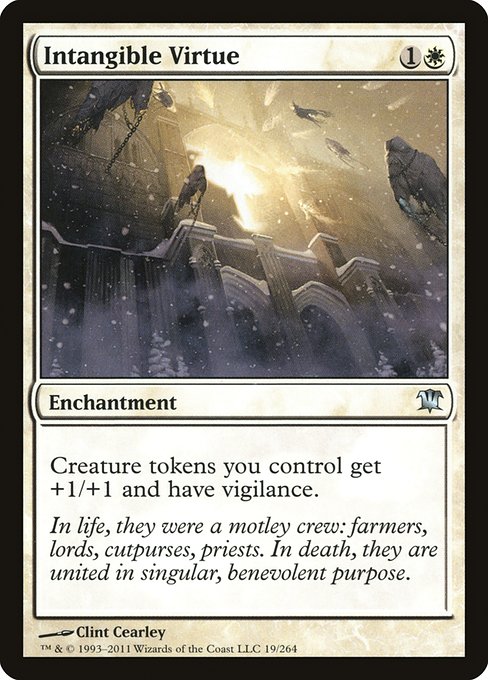
Intangible Virtue | Illustration by Clint Cearley
Intangible Virtue gives the creature tokens you control a power-and-toughness boost and vigilance. It doesn't improve your teammate's tokens. The card is still attractive in a white token deck: your creatures can attack without tapping and remain available to block. Its limitation is the same as ever—without tokens of your own, it contributes very little.
This is where a team can accidentally build two decks around a bonus that only one deck receives. Put the anthem in the deck making the tokens, then have the other deck contribute removal, protection that can legally target an ally's permanents, or another way to win.
Control stays separate in other ways, too. You can't normally spend your teammate's mana, activate their permanents, or sacrifice their creatures to pay your costs. Look for wording that explicitly includes your team or allows another player to participate. A friendly seat assignment doesn't rewrite a card.
#4. Plan Combat Against Both Defenders
You choose which opposing player, planeswalker, or other legal defender each creature attacks. The opposing teammates declare blocks together, and either player's creatures can block attackers coming at their side, subject to the usual restrictions.
In other words, attacking the person with no creatures doesn't get you past their teammate's blockers. Count both boards before announcing the attack.
Try assigning jobs before combat: which attackers force difficult blocks, which creatures need to stay home, and which removal spell creates the best opening? A small evasive threat might do more useful work than a large creature that trades into the other team's spare blockers. Don't spend two players' worth of resources clearing a path unless the damage is worth it.
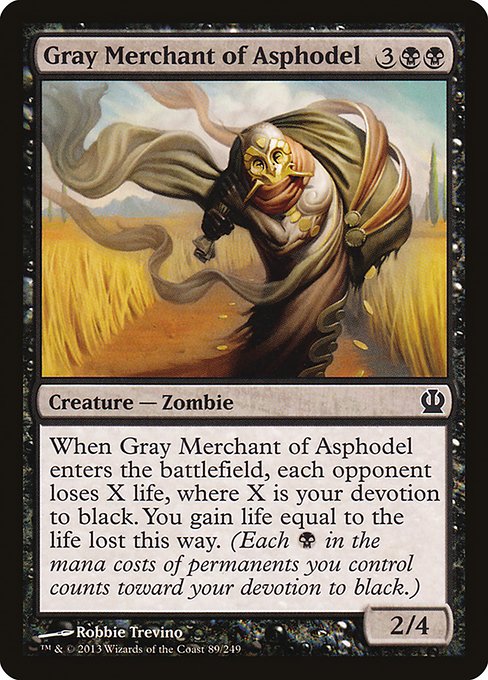
Gray Merchant makes each opponent lose life based on your devotion to black, then gains you the total lost. With five devotion and no modifying effects, each opposing player loses five: their team drops ten life, and your team gains ten. Your teammate's black permanents don't increase your devotion. Wizards specifically confirms the doubled opposing-team loss in its Theros Beyond Death release notes.
That's a persuasive reason to consider Gray Merchant in a deck already committed to black permanents. It is much less exciting as a five-mana guest in a multicolor deck with little devotion. Build the supporting board first.
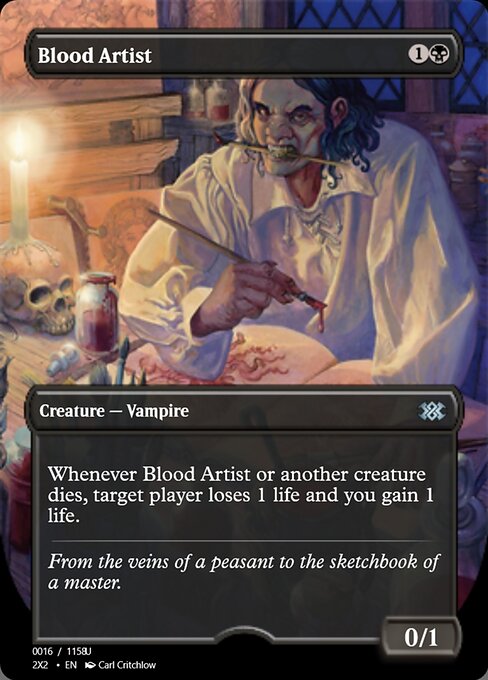
Blood Artist instead targets one player for each death trigger. Aim a trigger at an opponent and their team loses one life while yours gains one, assuming nothing modifies the result. You don't get a second point of loss for their teammate.
What Blood Artist does offer is reach across the whole battlefield: creatures dying on either team can trigger it. That suits creature-heavy games and decks with dependable sacrifice outlets. It remains a fragile creature that needs deaths to accomplish anything; the format hasn't turned it into a self-contained win condition.
These are different tools, not an automatic upgrade from one to the other. Merchant rewards devotion and entering the battlefield. Artist rewards repeated deaths. Choose the one your deck can actually feed.
#6. Use Assist When You Really Want to Share Mana
Huddle Up | Illustration by Magali Villeneuve
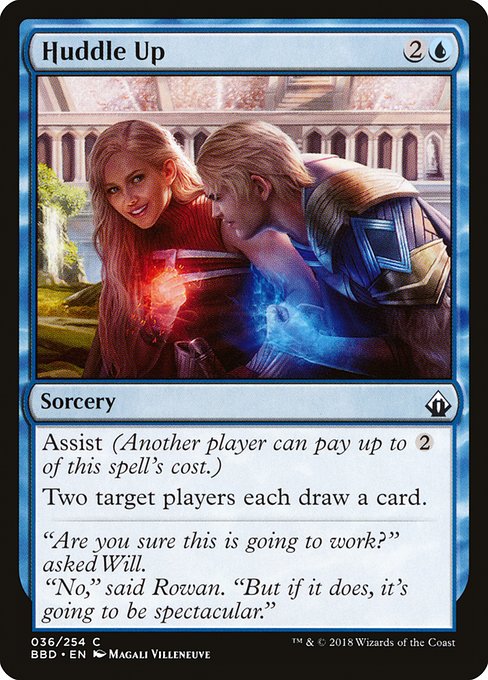
Huddle Up is a neat teaching example because it gives teamwork actual rules text. This blue sorcery has assist, allowing another player to contribute toward its generic mana cost. You still pay its blue requirement. It then has two different target players draw one card apiece, so you can choose yourself and your teammate.
You can't aim both draws at yourself. And you shouldn't mistake a flavorful team card for mandatory deckbuilding technology: the spell costs three mana across the contributors and only puts one card into each chosen hand. A deck that needs a bigger refill may have better uses for that mana.
Its best home is a casual blue deck that values helping a teammate with an empty hand, or a group learning how explicit sharing effects work. Discuss the payment before casting; the person holding up interaction may have a better use for their lands.
#7. Choose Decks That Cover Each Other's Weaknesses
The following are practical starting points, not a ranked list of tournament pairings. The criteria are simple: each deck should function on its own, both players should have meaningful decisions, and the combined plan should include threats, answers, and recovery.
Tokens Plus Interaction
One deck builds an army; the other keeps dangerous permanents and game-ending spells from ruining the attack. The token deck gets to commit bodies while its teammate preserves options.
This is an approachable pairing when one player prefers combat and the other enjoys deciding what needs an answer. The trap is turning the second player into a spectator who only says no. Give that deck its own threats and card draw. Also check protection wording carefully—an effect that protects only its controller's creatures may leave the entire token army exposed.
Creature Combat Plus Death Payoffs
A creature-heavy deck alongside a black deck with effects such as Blood Artist can make combat trades useful for the team. The attacking deck advances the board; the death-payoff deck gives the team another route to reducing the opposing life total.
The interaction works because Blood Artist sees other creatures die, not because you share control of them. Your teammate still needs their own way to sacrifice their creatures if the plan requires that. This pairing suits players who enjoy combat but want some value when creatures inevitably disappear. Watch out for exile-based removal and decks that barely use creatures.
Pressure Plus Graveyard Recovery
Pair a proactive deck with one built to recover its own creatures and keep producing threats after removal. You aren't promising to reanimate your teammate's cards—many effects won't allow that. You're making it harder for one board wipe to leave both players out of the game.
This pairing rewards restraint. If one player already has enough pressure, the other can keep useful cards in hand rather than put everything onto the battlefield. The weak point is a slow opening where both players assume the other has early interaction. Compare the decks' first few turns before choosing them.
#8. Settle Commander Damage Before the Game
The current official sources are not worded consistently here. Wizards' Two-Headed Giant format page describes a team losing after 21 damage from one commander. The Comprehensive Rules instead define commander damage as 21 combat damage to an individual player from the same commander; their team then loses when that player loses.
For rules-based tracking, record commander combat damage per recipient and per commander. Don't combine different commanders' damage, and don't count noncombat damage as commander damage. At an organized event, ask which interpretation the organizer is using before attacks start. This is a real wording discrepancy, not a reason to surprise the other team with a new rule at 20 damage.
Other losses matter too: a team with 15 poison counters loses, and one teammate losing to drawing from an empty library loses the game for the team. Shared life won't save you from everything.
Yes, provided each deck is legal under the current Commander rules and the event's requirements. Start there before buying cards specifically for a team strategy. Check whether the decks want conflicting things: a deck full of sweeping removal may be an awkward neighbor for one that needs a large creature board.
Is a teammate an opponent?
No. An effect aimed at an opponent can't be redirected to your teammate just because that would be convenient. An effect that can target a player may allow it; read the actual targeting restriction.
Does gaining life trigger both players' lifegain abilities?
No. The shared total changes, but the gain still happens to a particular player. If your teammate gains life, an ability you control that triggers when you gain life doesn't automatically trigger. Wizards confirms this distinction in the Commander Masters release notes.
Is Two-Headed Giant Commander good for teaching someone?
It gives you room to discuss a hand and explain a choice while playing on the same side. Let the newer player make their own decisions, though. Narrating every move for them turns a cooperative game into watching somebody else play two decks.
Your Best Upgrade Is a Conversation
Before the first hand, agree on three things: who plans to apply pressure, who can answer an early problem, and how you'll recover when the board gets cleared. Those answers are more useful than choosing two powerful decks and hoping their plans happen to fit.
During the game, keep talking—but leave room for both people to play. The appeal of Two-Headed Giant Commander is having someone beside you who wants your plan to work. Give them a plan they can help with.
For a current chance to try it, Wizards lists Reality Fracture Two-Headed Giant Commander Nights for October 2–November 5, 2026. Check your store's actual schedule in the official event overview.
Sources and Card Checks
Rules and card references checked October 17, 2026. The examples use white Intangible Virtue, blue Huddle Up, and black Gray Merchant of Asphodel and Blood Artist; each belongs only in a deck whose commander permits that color identity. The card records below list them as Commander-legal.
Two-Headed Giant Commander: Rules, Deck Pairings, and Mistakes to Avoid
By ElderArticles · Updated 10/17/2026 · 10 min read
Learn Two-Headed Giant Commander rules, shared turns, combat, and smart deck pairings, with card examples that explain what your teammate actually shares.
Table of contents
Huddle Up | Illustration by Magali Villeneuve
Your teammate has a fistful of removal. You have enough creatures to make combat a problem. For once, the player helping you isn't going to turn around and attack you next turn.
Two-Headed Giant Commander is two-versus-two Commander with shared team turns and a shared starting life total of 60. Each player brings their own legal 100-card Commander deck. You plan together, attack together, and win or lose together. Your mana, cards, and creatures still belong to you individually.
That last part causes most of the confusion. Your teammate can help you decide which spell to cast. They usually can't help pay for it. And the enchantment making your tokens enormous doesn't automatically do anything for theirs.
Here's how to get a game running, choose decks that actually help each other, and avoid discovering those details halfway through combat.
#1. Get the Setup Right
For the Commander version, use 60 life per team, not the 30 used by ordinary Two-Headed Giant. Each deck follows Commander construction rules independently. Wizards specifies no unified deck construction for this variant, so teammates can use overlapping card names and colors.
You don't need a special partner commander to sit next to a friend. Partner abilities concern commanders within a deck; having a human teammate is a different thing entirely.
Start with decks you already understand. If your first game requires learning both a new format and a complicated new combo deck, you're giving yourself two separate homework assignments.
Both teammates move through the same turn. You each draw in the shared draw step and normally each have a land play. The starting team skips its first draw step. You may look at each other's hands and discuss decisions.
During a main phase, coordinate your plays instead of having one player finish everything before the other starts. Perhaps your teammate removes a troublesome permanent, then you cast the creature it was stopping. There's still a stack and normal timing; sharing a turn doesn't let you cast a sorcery whenever you like.
A useful habit is to ask, “What do we need to leave mana open for?” before either person taps out. Two players can each make a reasonable-looking play and still leave the team with no answer to the one spell that matters.
#3. Read “You” Literally
Intangible Virtue | Illustration by Clint Cearley
Intangible Virtue gives the creature tokens you control a power-and-toughness boost and vigilance. It doesn't improve your teammate's tokens. The card is still attractive in a white token deck: your creatures can attack without tapping and remain available to block. Its limitation is the same as ever—without tokens of your own, it contributes very little.
This is where a team can accidentally build two decks around a bonus that only one deck receives. Put the anthem in the deck making the tokens, then have the other deck contribute removal, protection that can legally target an ally's permanents, or another way to win.
Control stays separate in other ways, too. You can't normally spend your teammate's mana, activate their permanents, or sacrifice their creatures to pay your costs. Look for wording that explicitly includes your team or allows another player to participate. A friendly seat assignment doesn't rewrite a card.
#4. Plan Combat Against Both Defenders
You choose which opposing player, planeswalker, or other legal defender each creature attacks. The opposing teammates declare blocks together, and either player's creatures can block attackers coming at their side, subject to the usual restrictions.
In other words, attacking the person with no creatures doesn't get you past their teammate's blockers. Count both boards before announcing the attack.
Try assigning jobs before combat: which attackers force difficult blocks, which creatures need to stay home, and which removal spell creates the best opening? A small evasive threat might do more useful work than a large creature that trades into the other team's spare blockers. Don't spend two players' worth of resources clearing a path unless the damage is worth it.
Gray Merchant makes each opponent lose life based on your devotion to black, then gains you the total lost. With five devotion and no modifying effects, each opposing player loses five: their team drops ten life, and your team gains ten. Your teammate's black permanents don't increase your devotion. Wizards specifically confirms the doubled opposing-team loss in its Theros Beyond Death release notes.
That's a persuasive reason to consider Gray Merchant in a deck already committed to black permanents. It is much less exciting as a five-mana guest in a multicolor deck with little devotion. Build the supporting board first.
Blood Artist instead targets one player for each death trigger. Aim a trigger at an opponent and their team loses one life while yours gains one, assuming nothing modifies the result. You don't get a second point of loss for their teammate.
What Blood Artist does offer is reach across the whole battlefield: creatures dying on either team can trigger it. That suits creature-heavy games and decks with dependable sacrifice outlets. It remains a fragile creature that needs deaths to accomplish anything; the format hasn't turned it into a self-contained win condition.
These are different tools, not an automatic upgrade from one to the other. Merchant rewards devotion and entering the battlefield. Artist rewards repeated deaths. Choose the one your deck can actually feed.
#6. Use Assist When You Really Want to Share Mana
Huddle Up | Illustration by Magali Villeneuve
Huddle Up is a neat teaching example because it gives teamwork actual rules text. This blue sorcery has assist, allowing another player to contribute toward its generic mana cost. You still pay its blue requirement. It then has two different target players draw one card apiece, so you can choose yourself and your teammate.
You can't aim both draws at yourself. And you shouldn't mistake a flavorful team card for mandatory deckbuilding technology: the spell costs three mana across the contributors and only puts one card into each chosen hand. A deck that needs a bigger refill may have better uses for that mana.
Its best home is a casual blue deck that values helping a teammate with an empty hand, or a group learning how explicit sharing effects work. Discuss the payment before casting; the person holding up interaction may have a better use for their lands.
#7. Choose Decks That Cover Each Other's Weaknesses
The following are practical starting points, not a ranked list of tournament pairings. The criteria are simple: each deck should function on its own, both players should have meaningful decisions, and the combined plan should include threats, answers, and recovery.
Tokens Plus Interaction
One deck builds an army; the other keeps dangerous permanents and game-ending spells from ruining the attack. The token deck gets to commit bodies while its teammate preserves options.
This is an approachable pairing when one player prefers combat and the other enjoys deciding what needs an answer. The trap is turning the second player into a spectator who only says no. Give that deck its own threats and card draw. Also check protection wording carefully—an effect that protects only its controller's creatures may leave the entire token army exposed.
Creature Combat Plus Death Payoffs
A creature-heavy deck alongside a black deck with effects such as Blood Artist can make combat trades useful for the team. The attacking deck advances the board; the death-payoff deck gives the team another route to reducing the opposing life total.
The interaction works because Blood Artist sees other creatures die, not because you share control of them. Your teammate still needs their own way to sacrifice their creatures if the plan requires that. This pairing suits players who enjoy combat but want some value when creatures inevitably disappear. Watch out for exile-based removal and decks that barely use creatures.
Pressure Plus Graveyard Recovery
Pair a proactive deck with one built to recover its own creatures and keep producing threats after removal. You aren't promising to reanimate your teammate's cards—many effects won't allow that. You're making it harder for one board wipe to leave both players out of the game.
This pairing rewards restraint. If one player already has enough pressure, the other can keep useful cards in hand rather than put everything onto the battlefield. The weak point is a slow opening where both players assume the other has early interaction. Compare the decks' first few turns before choosing them.
#8. Settle Commander Damage Before the Game
The current official sources are not worded consistently here. Wizards' Two-Headed Giant format page describes a team losing after 21 damage from one commander. The Comprehensive Rules instead define commander damage as 21 combat damage to an individual player from the same commander; their team then loses when that player loses.
For rules-based tracking, record commander combat damage per recipient and per commander. Don't combine different commanders' damage, and don't count noncombat damage as commander damage. At an organized event, ask which interpretation the organizer is using before attacks start. This is a real wording discrepancy, not a reason to surprise the other team with a new rule at 20 damage.
Other losses matter too: a team with 15 poison counters loses, and one teammate losing to drawing from an empty library loses the game for the team. Shared life won't save you from everything.
Yes, provided each deck is legal under the current Commander rules and the event's requirements. Start there before buying cards specifically for a team strategy. Check whether the decks want conflicting things: a deck full of sweeping removal may be an awkward neighbor for one that needs a large creature board.
Is a teammate an opponent?
No. An effect aimed at an opponent can't be redirected to your teammate just because that would be convenient. An effect that can target a player may allow it; read the actual targeting restriction.
Does gaining life trigger both players' lifegain abilities?
No. The shared total changes, but the gain still happens to a particular player. If your teammate gains life, an ability you control that triggers when you gain life doesn't automatically trigger. Wizards confirms this distinction in the Commander Masters release notes.
It gives you room to discuss a hand and explain a choice while playing on the same side. Let the newer player make their own decisions, though. Narrating every move for them turns a cooperative game into watching somebody else play two decks.
Your Best Upgrade Is a Conversation
Before the first hand, agree on three things: who plans to apply pressure, who can answer an early problem, and how you'll recover when the board gets cleared. Those answers are more useful than choosing two powerful decks and hoping their plans happen to fit.
During the game, keep talking—but leave room for both people to play. The appeal of Two-Headed Giant Commander is having someone beside you who wants your plan to work. Give them a plan they can help with.
For a current chance to try it, Wizards lists Reality Fracture Two-Headed Giant Commander Nights for October 2–November 5, 2026. Check your store's actual schedule in the official event overview.
Sources and Card Checks
Rules and card references checked October 17, 2026. The examples use white Intangible Virtue, blue Huddle Up, and black Gray Merchant of Asphodel and Blood Artist; each belongs only in a deck whose commander permits that color identity. The card records below list them as Commander-legal.