Klingon Fury Commander Decklist (2026): Best Worf Upgrades & Cards to Cut
By ElderArticles · Updated 10/29/2026 · 23 min read
See the complete Klingon Fury decklist, learn Worf's battlefront strategy, and find the best upgrades and cards to cut from the MTG Star Trek precon.
Table of contents
Worf, Defiant Commander | Illustration by Flavio Greco Paglia
Most aggressive Commander decks have one problem: knocking out a single opponent doesn’t necessarily help you survive the other two.
Klingon Fury takes a different approach. Worf rewards you for attacking multiple opponents, turning aggression into additional cards while an army of Klingon Warriors threatens the entire table.
But can the precon actually sustain that aggression, and which cards should you replace first?
The short answer is yes, with one important warning. Klingon Fury has a legitimate combat engine, useful token makers, extra combats, and several cards that can end a game. What it lacks is enough cheap protection for the small creatures Worf asks you to send in three directions. The best Klingon Fury upgrades make attacking safer, multiply Worf's battlefront trigger, and turn his 2/1 Warriors into resources when combat is no longer profitable.
Wizards revealed the complete Klingon Fury decklist on October 28, 2026. The precon releases with Magic: The Gathering | Star Trek on November 13, 2026. Until that release date, its new cards appear as not yet Commander-legal in card databases because they have not been released, not because they are banned.
- Face commander: Worf, Defiant Commander
- Backup commander: Kor, Cause of Vengeance
- Colors: Red, white, and black, commonly called Mardu
- Primary plan: Attack multiple opponents, make Klingon Warrior tokens, and convert combat into cards
- Supporting themes: Warrior typal, sacrifice, melee, goad, extra combats, and Spacecraft
- Deck size: 100 cards
- Lands: 38
- Release date:
AI-generated article, published by an ElderDecks editor.
November 13, 2026
-
Official US MSRP:
$74.99 for the standard Commander deck
The stock list contains 24 creatures including Worf, 38 lands, six familiar two-mana mana rocks, and several cards that generate attackers without asking you to empty your hand. That last detail matters. A go-wide deck that must cast every creature it draws is easy to exhaust. Klingon Fury can build a board from Worf, Rite of Ascension, Glory to the Empire!, and its other token engines while leaving actual cards available for the next turn.
How Worf, Defiant Commander Works
Worf, Defiant Commander | Illustration by Flavio Greco PagliaKor, Cause of Vengeance | Illustration by Eric Wilkerson
Worf, Defiant Commander costs five mana for a 3/4 Klingon Warrior Officer. When he enters, he creates a 2/1 red Klingon Warrior token with haste. His battlefront ability triggers whenever you attack and exiles the top X cards of your library, where X is the number of opponents you attacked that turn. You may play those cards until the end of your next turn.
At a normal four-player table, attacking all three opponents turns one combat into three temporary cards. You do not have to deal combat damage, and Worf does not have to attack. One creature aimed at each opponent is enough to produce the full trigger.
That creates three important deckbuilding rules.
First, quantity matters more than size. A 10/10 attacker can pressure one player, but three disposable tokens unlock three cards. Worf wants enough bodies to divide the attack without leaving one opponent untouched.
Second, mana matters after combat. Exiling three cards is not the same as drawing three cards if you cannot cast them. The permission lasts through the end of your next turn, so you usually have time, but the deck still wants cheap spells and Treasure production rather than a hand clogged with six-drops.
Third, extra combats are extra Worf triggers. Worf triggers whenever you attack, not only once each turn. World at War, Combat Celebrant, Own the Day, Karlach, Fury of Avernus, and Aurelia, the Warleader can each turn one turn cycle into another batch of exiled cards.
What Does Battlefront Count?
Battlefront counts the number of opponents you attacked that turn, with a maximum of three in an ordinary four-player game. It does not count the number of attacking creatures, the amount of damage dealt, or how many opponents were attacked during the current combat only.
That last point is easy to miss. If your first combat attacks all three opponents, a later Worf trigger during an extra combat still sees that you attacked three opponents this turn. You can focus the second wave wherever it needs to go and still receive the full value.
Creatures put onto the battlefield tapped and attacking are attacking creatures, but they never "attacked" for rules purposes. They do not increase Worf's battlefront count for the current trigger. You must declare at least one attacker at each opponent to reach three. Adeline, Resplendent Cathar and Rite of Ascension still widen combat and leave bodies that can be declared as attackers on later turns.
Can the Klingon Fury Precon Sustain Its Aggression?
The stock deck can keep attacking better than its small creatures suggest, but it cannot do so carelessly.
Worf and Kurn, Son of Mogh provide cards. Professional Face-Breaker turns combat damage into Treasure. Rite of Ascension and Glory to the Empire! replace cards in hand with tokens on the battlefield. Disrupt Decorum and Galvanizing Tenor can force opposing creatures away from you. The Spacecraft package gives the army useful combat tools, including vigilance and evasion.
The problem arrives after the first impressive turn. If three opponents block one attacker each, you can lose the exact bodies needed to keep battlefront at full strength. If the table casts a sweeper, Worf costs seven mana the next time and only rebuilds one token. If you exile three expensive cards and spend the turn casting them, you may leave no mana to protect the board you just created.
The precon therefore wants to play like combat midrange, not reckless all-in aggro. Establish mana, deploy one or two engines, make profitable attacks, and hold something back. Your goal is not to deal the maximum possible damage on turn five. Your goal is to make every combat step produce more material than it costs.
How to Play Klingon Fury
Early Game: Build Three Lanes of Attack
The opening hand should have three lands, access to at least two colors, and either a mana rock or a cheap creature. Sol Ring is still Sol Ring, but Arcane Signet, the three Talismans, and Mind Stone are especially important because Worf costs five.
Do not throw away early creatures for two points of damage. You are preparing to attack three opponents after Worf arrives. A modest board of three bodies is more valuable than one opponent being four life lower.
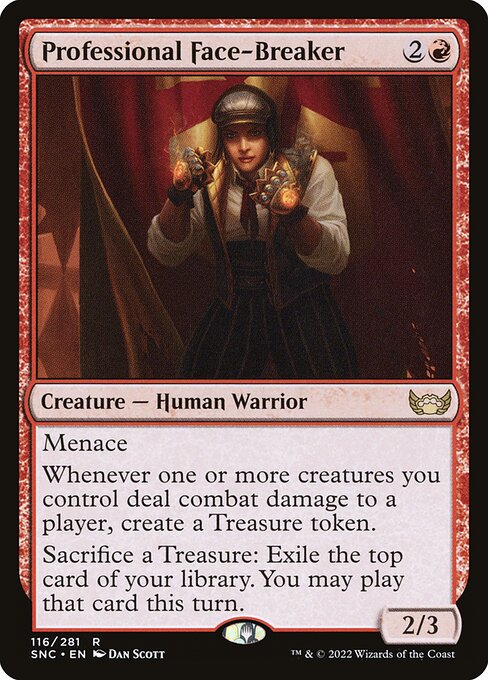
Professional Face-Breaker is one of the best early plays in the deck. Menace makes it difficult to block, and a successful hit creates Treasure that can pay for cards exiled by Worf later.
Midgame: Make Worf Pay for the Attack
Once Worf enters, spread the minimum number of attackers required to touch every opponent. Send evasive or expendable creatures toward the strongest blockers, then direct the real damage where it matters.
The permission to play Worf's exiled cards lasts until the end of your next turn. There is rarely a reason to panic-cast everything after combat. Play the land if one was exiled, use the current turn's remaining mana on the most efficient spell, and carry the rest into the following turn.
Watch your sequencing with extra combats. If Karlach or Combat Celebrant can create another combat, attack all three opponents in the first combat whenever practical. Later Worf triggers will then use the full battlefront count even if the second attack is concentrated on one vulnerable player.
Endgame: Stop Splitting Damage When the Math Says Otherwise
Worf rewards spreading the attack, but he does not require you to keep every opponent alive. Once Shared Animosity, Warleader's Call, melee, or Kor can produce lethal damage, take the elimination.
The ideal finishing turn uses the first combat to trigger battlefront and soften every board, then uses an extra combat to concentrate the army. Combat Celebrant and World at War already support that line in the stock deck. The upgrade package below makes it more reliable without replacing the Klingon cards that give the precon its identity.
The Best Cards Already in Klingon Fury
Rite of Ascension | Illustration by LordiganKurn, Son of Mogh | Illustration by Kieran Yanner
Rite of Ascension
Rite of Ascension is the cleanest Worf engine in the deck. Whenever you attack, it creates a tapped and attacking 2/1 Klingon Warrior for each opponent attacked that turn. Attack three players and the enchantment adds three attackers without spending another card from your hand.
Those new tokens arrive too late to increase the current Worf trigger, because the number of opponents attacked was already established. They still deal damage, receive Klingon and Warrior bonuses, and remain available for the next combat. With an extra combat, Rite triggers again.
Kurn, Son of Mogh
Kurn must attack, but his battlefront trigger can draw three cards for three life after you attack every opponent. Unlike Worf, those cards go directly into your hand. Deathtouch also makes blocking him unpleasant.
The limitation is survival. A 2/3 deathtoucher may trade up, but losing Kurn after one trigger slows the deck. Reconnaissance, Dolmen Gate, and Iroas, God of Victory turn him from a one-use refill into a repeatable engine.
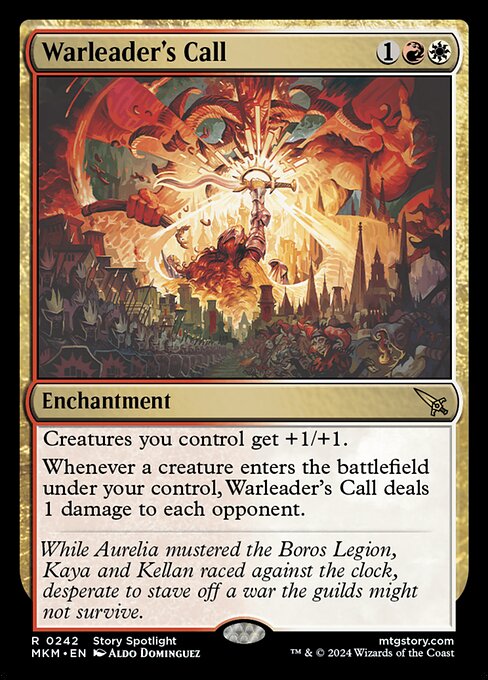
Shared Animosity | Illustration by Ariel OreaWarleader's Call | Illustration by Aldo Domínguez
Shared Animosity and Warleader's Call
Shared Animosity turns a scattered collection of Warriors into a serious clock. Each attacking creature gets +1/+0 for every other attacker sharing a creature type with it. Most of the Klingon tokens are Warriors, and many named Klingons are Warriors as well.
Warleader's Call is less explosive, but it does two jobs. It gives the team +1/+1 and deals one damage to each opponent whenever another creature enters under your control. Worf, Rite of Ascension, and Glory to the Empire! can therefore damage the table before any token connects.
Gnarling Targ also deserves to stay. The five-mana Boar gives Klingons and Warriors +2/+0 and trample whenever you attack. It misses the typal bonuses itself, but it supplies the evasion the rest of the army needs.
Right of Vengeance | Illustration by Albert CorderoProfessional Face-Breaker | Illustration by Dan Murayama Scott
Right of Vengeance and Professional Face-Breaker
Right of Vengeance punishes an opponent for trying to race you. For one turn, every creature that deals combat damage to you is destroyed and replaced with a hasty 2/1 Klingon Warrior under your control. It can turn an alpha strike into the army you need for the following turn.
Professional Face-Breaker solves Worf's hidden mana problem. Every opponent damaged by one or more of your creatures can generate a Treasure, and those Treasures can cast the cards battlefront exiles. Do not sacrifice every Treasure for impulse draw unless you have no better use for the mana.
Worf or Kor: Which Commander Should Lead Klingon Fury?
Kor, Cause of Vengeance costs four mana for a 4/4. Whenever you attack, you may sacrifice another creature. If you do, you draw a card and Klingons and Warriors you control get +2/+2 until end of turn.
Kor is the cleaner finisher. A disposable token becomes a card, and the rest of the army receives a large power boost. He also costs one less than Worf, which matters after commander tax.
Worf is still the better default commander for the stock deck. He creates an attacker immediately, asks only that you attack, and can produce up to three cards without sacrificing your board. Kor is stronger when you rebuild the deck around death triggers, recursion, and a deeper supply of expendable creatures.
A useful compromise is to lead with Worf and treat Kor as part of the 99. Worf develops the army and cards; Kor converts that army into a lethal turn when he appears.
The 8 Best Klingon Fury Upgrades
The package below improves the deck without sanding away everything that makes it Klingon Fury. The first four upgrades expand Worf's engine. The next four make combat safer or more decisive.
1. Isshin, Two Heavens as One
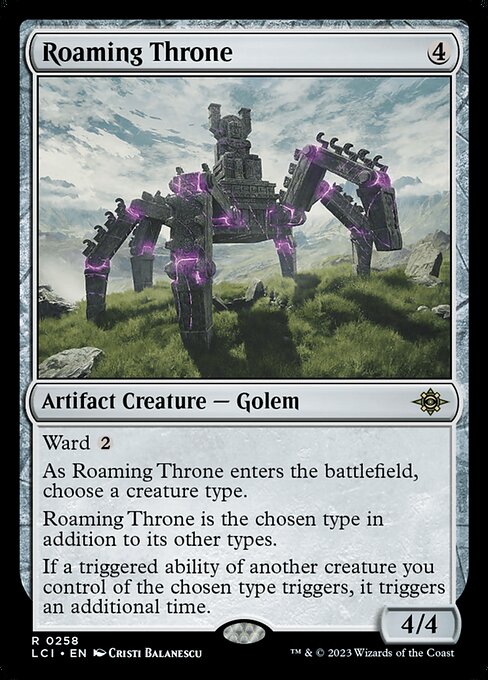
Isshin, Two Heavens as One | Illustration by Ryan PancoastRoaming Throne | Illustration by Cristi Balanescu
Isshin doubles triggered abilities caused by a creature attacking. Worf's battlefront ability qualifies, so an attack against all three opponents exiles three cards twice. Isshin also doubles Rite of Ascension, Shared Animosity, Kurn, Combat Celebrant, and several of the deck's new Klingon attack triggers.
This is the cleanest upgrade because it strengthens cards already in the box. It does not ask you to add a separate combo package or abandon the Warrior plan.
Recommended cut: Pest Control. Destroying every permanent with mana value one or less also destroys your zero-mana creature tokens. Cycling keeps Pest Control from being completely dead, but a token deck should not be eager to draw its own miniature sweeper.
2. Roaming Throne
Choose Warrior as Roaming Throne enters. It becomes a Warrior itself and doubles triggered abilities of your other Warriors. Worf is a Warrior, as are Kor, Kurn, many named Klingons, and all of Worf's tokens.
Roaming Throne doubles Worf's enter trigger and battlefront trigger. It also doubles Kor's attack trigger, although Kor still asks you to sacrifice a creature for each resolving trigger if you want both effects.
Recommended cut: Alexander, Ship's Fool. Alexander has vigilance and haste, then taps to make every player reveal and draw a card before dealing damage to a random opponent. That is entertaining, but it gives three opponents cards and does not advance the Klingon or Warrior plan.
3. Adeline, Resplendent Cathar
Adeline, Resplendent Cathar | Illustration by Bryan SolaMardu Ascendancy | Illustration by Jason Chan
Adeline does not increase Worf's battlefront count for the current combat. Her Humans enter tapped and attacking, and a creature put into combat that way never "attacked" under rule 508.4. You still need to declare attackers at each opponent.
What Adeline does provide is up to three new bodies every combat. Those Humans survive for the next turn, when you can declare them at different opponents to reach full-value battlefront. They are not Warriors, so they miss some typal bonuses, but they pressure planeswalkers and become excellent Skullclamp or Kor fodder.
Recommended cut: Sword of Light and Shadow. The Sword is powerful in a vacuum, but spending five total mana to cast and equip it is a slow way to improve one attacker. Protection from white and black can also stop you from targeting the equipped creature with some of your own spells.
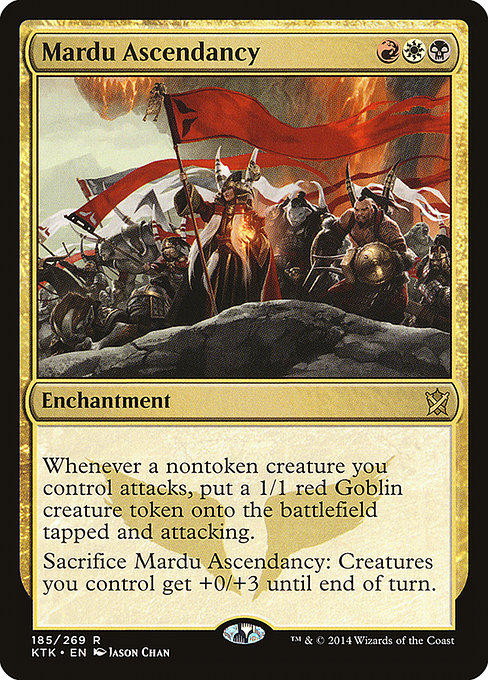
4. Mardu Ascendancy
Every nontoken attacker creates a 1/1 Goblin tapped and attacking. Those Goblins will not improve the current Worf trigger, but they widen the combat and stay for future turns. The enchantment can also sacrifice itself to give your creatures +0/+3, which can save much of the board from damage-based sweepers.
Mardu Ascendancy is better when the deck still contains plenty of named Klingons. If you later replace most nontoken creatures with token engines, its output falls.
Recommended cut: Painful Truths. Drawing three cards for three mana is efficient, but Worf and Kurn already supply cards when the deck is functioning. Ascendancy advances the battlefield, creates sacrifice material, and supports future battlefront turns.
5. Reconnaissance
Reconnaissance | Illustration by Val MayerikDolmen Gate | Illustration by Richard Sardinha
Reconnaissance is the one-mana enchantment Worf wishes the precon included. After a creature is blocked, remove it from combat and untap it. It still attacked, so Worf has already counted that opponent. You may also activate Reconnaissance during the end-of-combat step after damage, effectively giving surviving attackers vigilance.
This turns every small token into a safe battlefront enabler unless an opponent removes it before you can activate the enchantment.
Recommended cut: Return to Dust. Four mana is a large amount to hold open in a deck trying to cast creatures, attack, and use exiled cards. The stock list still has Vindicate, Rite of Oblivion, Path to Exile, Terminate, and other interaction.
6. Dolmen Gate
Dolmen Gate prevents all combat damage that would be dealt to your attacking creatures. It does not make them unblockable, but it lets the 2/1 Klingons attack into larger creatures without disappearing.
Reconnaissance is more flexible because it untaps creatures and can pull selected attackers out of combat. Dolmen Gate is simpler and protects the entire attack automatically. Running both is reasonable if combat-heavy pods are common in your group.
Recommended cut: Concerted Effort. Sharing useful keywords can produce strong turns, but it depends on the right mix of creatures being present during your upkeep. Dolmen Gate performs the job this deck needs every combat without requiring that setup.
7. Skullclamp
Skullclamp | Illustration by Anna PavleevaBoros Charm | Illustration by Zoltan Boros
Worf's 2/1 tokens become 3/0 when equipped with Skullclamp, die immediately as a state-based action, and draw two cards. That sounds contrary to an attack deck until a sweeper is coming, a token can no longer attack profitably, or Kor needs a sacrifice.
Skullclamp gives the deck a second plan. When combat is open, attack. When combat is closed, turn the smallest Warrior into two fresh cards.
Recommended cut: Valorous Stance. Its flexibility is useful, but one protected creature or one large-creature removal spell is less important than a repeatable way to turn spare tokens into cards.
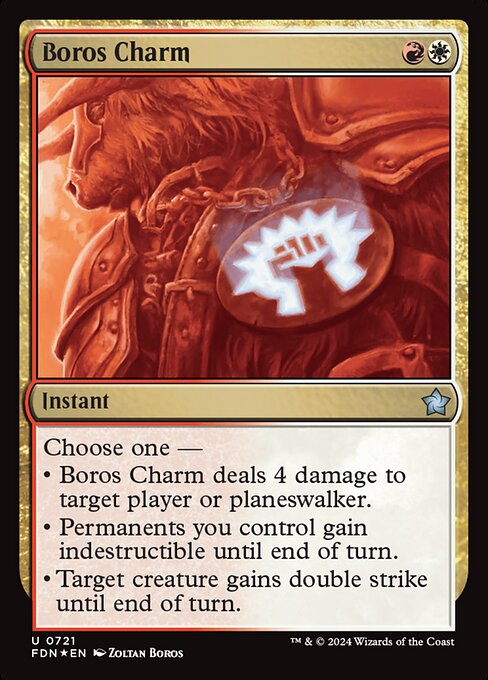
8. Boros Charm
Most losses with Klingon Fury will not come from lacking another anthem. They will come from committing a board, passing the turn, and watching it disappear.
Boros Charm gives every permanent you control indestructible for two mana. It can also give one creature double strike when that ends the game, or deal the last four damage to a player. That flexibility is far more useful to the deck than another expensive reset button.
Recommended cut: Ruinous Ultimatum. Destroying every opposing nonland permanent is spectacular, but seven mana with six colored pips is a serious demand on this precon's mana base. Worf would rather protect an existing army for two mana and keep attacking.
Premium and Alternative Upgrades
Karlach, Fury of Avernus | Illustration by Billy ChristianFlawless Maneuver | Illustration by Zoltan Boros
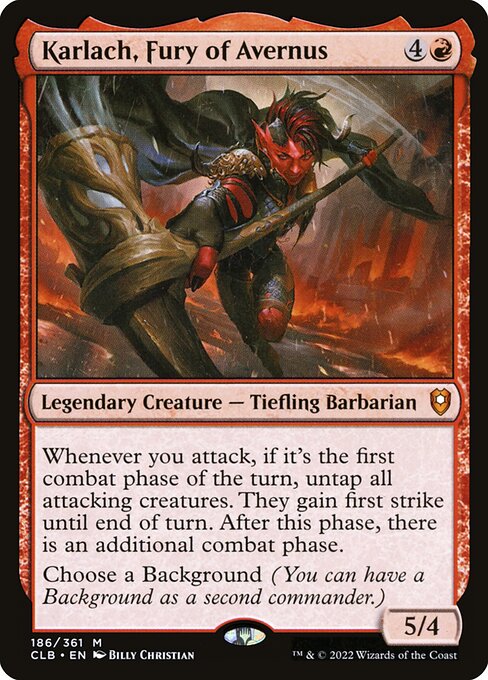
Karlach, Fury of Avernus
Karlach produces an extra combat the first time you attack each turn, untaps the attackers, and gives them first strike. Worf triggers in both combats. Rite of Ascension and other attack payoffs also trigger twice.
Karlach is usually better than Aurelia, the Warleader for this list because she costs one less and asks for less restrictive colors. Aurelia has flying, vigilance, and haste, so she remains the stronger top-end option if your mana base can reliably produce two red and two white mana.
Flawless Maneuver
If Worf is on the battlefield, Flawless Maneuver protects the entire creature army without spending mana. That lets you tap out for a payoff while still representing protection.
It is a premium upgrade rather than a required one. Boros Charm is cheaper to acquire in many markets, protects noncreature permanents too, and remains useful when Worf is absent. Run both only if your pod uses frequent sweepers.
Iroas, God of Victory
Iroas combines two effects the deck wants: menace and protection from combat damage while attacking. He is harder to remove than most creatures and makes blocking the Klingon army miserable.
If you add Iroas, he can replace Dolmen Gate or serve as a second version of the effect. The higher mana cost is the tradeoff for making your attackers harder to block.
Eight Clean Swaps for the Precon
If you want one practical package instead of rebuilding the entire deck, start here:
- Add Isshin, Two Heavens as One; cut Pest Control. Double Worf and the deck's attack triggers while removing a spell that destroys your tokens.
- Add Roaming Throne; cut Alexander, Ship's Fool. Double Warrior triggers and remove a symmetrical draw effect that helps every opponent.
- Add Adeline, Resplendent Cathar; cut Sword of Light and Shadow. Add up to three bodies per combat for future battlefront turns instead of investing five mana into one equipped creature.
- Add Mardu Ascendancy; cut Painful Truths. Build a battlefield and gain emergency protection instead of relying on one-shot draw.
- Add Reconnaissance; cut Return to Dust. Keep battlefront attackers alive for one mana and reduce the deck's clunky four-mana interaction.
- Add Dolmen Gate; cut Concerted Effort. Replace conditional keyword sharing with dependable combat protection.
- Add Skullclamp; cut Valorous Stance. Turn spare 2/1 tokens into repeatable cards.
- Add Boros Charm; cut Ruinous Ultimatum. Protect a winning board for two mana instead of waiting for a seven-mana reset.
This package preserves 38 lands and the deck's mana curve. It also keeps Vanquish the Horde as an emergency sweeper. An aggressive deck still needs a reset button; it simply does not need to devote several slots to destroying its own battlefield.
Klingon Fury Mana Base Upgrades
The stock list runs 38 lands, which is reasonable for a five-mana commander. Do not cut lands simply because Worf can exile cards. Missing the fifth land prevents the entire engine from starting.
The easiest improvements are one-for-one replacements for lands that always enter tapped:
- Replace Temple of Malice with an untapped black-red dual appropriate to your budget.
- Replace Shattered Landscape with a faster white-producing land if you are not using its landcycling regularly.
- Replace Evolving Wilds or Terramorphic Expanse with Fabled Passage if you already own one.
- Spectator Seating and Luxury Suite are strong Commander lands because they usually enter untapped in multiplayer.
Prioritize red sources slightly. Many early creatures and attack payoffs are red, while Worf eventually requires all three colors.
Klingon Fury - Star Trek Commander Decklist
The following is the complete 100-card list revealed by Wizards on October 28, 2026. The ElderDecks link opens an editable copy with card previews and quantities.
The commander asks you to attack several opponents, but many of the creatures doing that work have only one toughness. One damage-based sweeper or a few profitable blocks can collapse the engine. This is why Reconnaissance, Dolmen Gate, Boros Charm, and Flawless Maneuver rank above another anthem.
Worf Costs Five Mana
Worf does not need to survive combat, but the deck still depends heavily on having him available. After one removal spell, seven mana is a lot to spend rebuilding a 3/4 and one token. Do not keep an opening hand with attractive Klingon cards but no early mana development.
Battlefront Can Exile More Than You Can Cast
Three cards per combat looks like unlimited gas until two of them cost five mana. Treasure, cheap interaction, and a disciplined curve matter. Avoid filling every upgrade slot with another expensive legend simply because extra combats look exciting.
The Deck Announces Its Intentions
There is no subtle version of sending creatures at all three opponents. Worf makes you the active player at the table, and the table will respond. Goad, protection, and political targeting are part of the strategy, not optional flavor.
Klingon Fury FAQ
Is Klingon Fury Commander-legal right now?
The new Star Trek Commander cards release on November 13, 2026. Before that date, Scryfall correctly lists cards such as Worf and Kor as not yet legal because they have not been released. They are designed for the Commander product and become available for normal Commander play on release, subject to the format's banned list and any event rules.
How many cards can Worf exile in one combat?
At a normal four-player table, Worf can exile up to three cards because there are three opponents to attack. He counts opponents attacked, not creatures and not damage dealt.
Does Worf need to attack?
No. Worf triggers whenever you attack. He can remain untapped while three other creatures attack three different opponents.
Does an extra combat trigger battlefront again?
Yes. Worf triggers whenever you attack, so each combat can create another trigger. The value of X uses the number of opponents you attacked during the turn, including earlier combats.
Does Isshin double Worf's battlefront ability?
Yes. A creature attacking causes Worf's triggered ability to trigger, so Isshin, Two Heavens as One makes it trigger an additional time.
Is Kor, Cause of Vengeance a better commander than Worf?
Kor is better for a sacrifice-focused rebuild and can create more immediate damage. Worf is the stronger default for the precon because he makes his own attacker and generates cards without sacrificing creatures.
Should I cut all of the Spacecraft?
No. The Spacecraft give the deck useful tools and preserve the Star Trek identity. Replace one only if it repeatedly fails to support combat in your games. The first cuts should be cards that fight the token plan, demand too much mana, or miss the Klingon and Warrior synergies.
Does the surge-foil edition use a different decklist?
No. The surge-foil Collector's Edition contains the same 100-card deck. It does not contain stronger cards or a different upgrade package.
Final Verdict
Klingon Fury is not just a pile of Klingons with an attack instruction stapled to the box. Worf turns the hardest part of multiplayer aggro, spreading pressure across three opponents, into the deck's card-advantage engine. Rite of Ascension, Kurn, Shared Animosity, Warleader's Call, Professional Face-Breaker, and the extra-combat package give the stock list a real plan.
Its weakness is equally clear. Small attackers do not survive three sets of blockers forever. Start with Isshin and Roaming Throne if you want more explosive triggers. Start with Reconnaissance, Dolmen Gate, and Boros Charm if your games contain frequent removal and crowded battlefields. Add Skullclamp when you want the tokens to remain useful after attacking stops being safe.
The precon does not need to become generic Mardu good-stuff. Protect the army, multiply the battlefront triggers, and let the Klingons keep doing the actual fighting.
The decklist is official. Upgrade recommendations and cuts are original ElderDecks editorial judgments, not claims based on measured win rates or private playtesting. Prices for unreleased Star Trek singles are intentionally omitted because reliable market prices do not yet exist.
Worf, Defiant Commander | Illustration by Flavio Greco Paglia
Most aggressive Commander decks have one problem: knocking out a single opponent doesn’t necessarily help you survive the other two.
Klingon Fury takes a different approach. Worf rewards you for attacking multiple opponents, turning aggression into additional cards while an army of Klingon Warriors threatens the entire table.
But can the precon actually sustain that aggression, and which cards should you replace first?
The short answer is yes, with one important warning. Klingon Fury has a legitimate combat engine, useful token makers, extra combats, and several cards that can end a game. What it lacks is enough cheap protection for the small creatures Worf asks you to send in three directions. The best Klingon Fury upgrades make attacking safer, multiply Worf's battlefront trigger, and turn his 2/1 Warriors into resources when combat is no longer profitable.
Wizards revealed the complete Klingon Fury decklist on October 28, 2026. The precon releases with Magic: The Gathering | Star Trek on November 13, 2026. Until that release date, its new cards appear as not yet Commander-legal in card databases because they have not been released, not because they are banned.
- Face commander:Worf, Defiant Commander
- Backup commander:Kor, Cause of Vengeance
- Colors: Red, white, and black, commonly called Mardu
- Primary plan: Attack multiple opponents, make Klingon Warrior tokens, and convert combat into cards
- Supporting themes: Warrior typal, sacrifice, melee, goad, extra combats, and Spacecraft
- Deck size: 100 cards
- Lands: 38
- Release date: November 13, 2026
- Official US MSRP: $74.99 for the standard Commander deck
The stock list contains 24 creatures including Worf, 38 lands, six familiar two-mana mana rocks, and several cards that generate attackers without asking you to empty your hand. That last detail matters. A go-wide deck that must cast every creature it draws is easy to exhaust. Klingon Fury can build a board from Worf, Rite of Ascension, Glory to the Empire!, and its other token engines while leaving actual cards available for the next turn.
Worf, Defiant Commander costs five mana for a 3/4 Klingon Warrior Officer. When he enters, he creates a 2/1 red Klingon Warrior token with haste. His battlefront ability triggers whenever you attack and exiles the top X cards of your library, where X is the number of opponents you attacked that turn. You may play those cards until the end of your next turn.
At a normal four-player table, attacking all three opponents turns one combat into three temporary cards. You do not have to deal combat damage, and Worf does not have to attack. One creature aimed at each opponent is enough to produce the full trigger.
That creates three important deckbuilding rules.
First, quantity matters more than size. A 10/10 attacker can pressure one player, but three disposable tokens unlock three cards. Worf wants enough bodies to divide the attack without leaving one opponent untouched.
Second, mana matters after combat. Exiling three cards is not the same as drawing three cards if you cannot cast them. The permission lasts through the end of your next turn, so you usually have time, but the deck still wants cheap spells and Treasure production rather than a hand clogged with six-drops.
Battlefront counts the number of opponents you attacked that turn, with a maximum of three in an ordinary four-player game. It does not count the number of attacking creatures, the amount of damage dealt, or how many opponents were attacked during the current combat only.
That last point is easy to miss. If your first combat attacks all three opponents, a later Worf trigger during an extra combat still sees that you attacked three opponents this turn. You can focus the second wave wherever it needs to go and still receive the full value.
Creatures put onto the battlefield tapped and attacking are attacking creatures, but they never "attacked" for rules purposes. They do not increase Worf's battlefront count for the current trigger. You must declare at least one attacker at each opponent to reach three. Adeline, Resplendent Cathar and Rite of Ascension still widen combat and leave bodies that can be declared as attackers on later turns.
Can the Klingon Fury Precon Sustain Its Aggression?
The stock deck can keep attacking better than its small creatures suggest, but it cannot do so carelessly.
The problem arrives after the first impressive turn. If three opponents block one attacker each, you can lose the exact bodies needed to keep battlefront at full strength. If the table casts a sweeper, Worf costs seven mana the next time and only rebuilds one token. If you exile three expensive cards and spend the turn casting them, you may leave no mana to protect the board you just created.
The precon therefore wants to play like combat midrange, not reckless all-in aggro. Establish mana, deploy one or two engines, make profitable attacks, and hold something back. Your goal is not to deal the maximum possible damage on turn five. Your goal is to make every combat step produce more material than it costs.
How to Play Klingon Fury
Early Game: Build Three Lanes of Attack
The opening hand should have three lands, access to at least two colors, and either a mana rock or a cheap creature. Sol Ring is still Sol Ring, but Arcane Signet, the three Talismans, and Mind Stone are especially important because Worf costs five.
Do not throw away early creatures for two points of damage. You are preparing to attack three opponents after Worf arrives. A modest board of three bodies is more valuable than one opponent being four life lower.
Professional Face-Breaker is one of the best early plays in the deck. Menace makes it difficult to block, and a successful hit creates Treasure that can pay for cards exiled by Worf later.
Midgame: Make Worf Pay for the Attack
Once Worf enters, spread the minimum number of attackers required to touch every opponent. Send evasive or expendable creatures toward the strongest blockers, then direct the real damage where it matters.
The permission to play Worf's exiled cards lasts until the end of your next turn. There is rarely a reason to panic-cast everything after combat. Play the land if one was exiled, use the current turn's remaining mana on the most efficient spell, and carry the rest into the following turn.
Watch your sequencing with extra combats. If Karlach or Combat Celebrant can create another combat, attack all three opponents in the first combat whenever practical. Later Worf triggers will then use the full battlefront count even if the second attack is concentrated on one vulnerable player.
Endgame: Stop Splitting Damage When the Math Says Otherwise
Worf rewards spreading the attack, but he does not require you to keep every opponent alive. Once Shared Animosity, Warleader's Call, melee, or Kor can produce lethal damage, take the elimination.
The ideal finishing turn uses the first combat to trigger battlefront and soften every board, then uses an extra combat to concentrate the army. Combat Celebrant and World at War already support that line in the stock deck. The upgrade package below makes it more reliable without replacing the Klingon cards that give the precon its identity.
The Best Cards Already in Klingon Fury
Rite of Ascension | Illustration by LordiganKurn, Son of Mogh | Illustration by Kieran Yanner
Rite of Ascension is the cleanest Worf engine in the deck. Whenever you attack, it creates a tapped and attacking 2/1 Klingon Warrior for each opponent attacked that turn. Attack three players and the enchantment adds three attackers without spending another card from your hand.
Those new tokens arrive too late to increase the current Worf trigger, because the number of opponents attacked was already established. They still deal damage, receive Klingon and Warrior bonuses, and remain available for the next combat. With an extra combat, Rite triggers again.
Kurn must attack, but his battlefront trigger can draw three cards for three life after you attack every opponent. Unlike Worf, those cards go directly into your hand. Deathtouch also makes blocking him unpleasant.
The limitation is survival. A 2/3 deathtoucher may trade up, but losing Kurn after one trigger slows the deck. Reconnaissance, Dolmen Gate, and Iroas, God of Victory turn him from a one-use refill into a repeatable engine.
Shared Animosity | Illustration by Ariel OreaWarleader's Call | Illustration by Aldo Domínguez
Shared Animosity turns a scattered collection of Warriors into a serious clock. Each attacking creature gets +1/+0 for every other attacker sharing a creature type with it. Most of the Klingon tokens are Warriors, and many named Klingons are Warriors as well.
Warleader's Call is less explosive, but it does two jobs. It gives the team +1/+1 and deals one damage to each opponent whenever another creature enters under your control. Worf, Rite of Ascension, and Glory to the Empire! can therefore damage the table before any token connects.
Gnarling Targ also deserves to stay. The five-mana Boar gives Klingons and Warriors +2/+0 and trample whenever you attack. It misses the typal bonuses itself, but it supplies the evasion the rest of the army needs.
Right of Vengeance | Illustration by Albert CorderoProfessional Face-Breaker | Illustration by Dan Murayama Scott
Right of Vengeance punishes an opponent for trying to race you. For one turn, every creature that deals combat damage to you is destroyed and replaced with a hasty 2/1 Klingon Warrior under your control. It can turn an alpha strike into the army you need for the following turn.
Professional Face-Breaker solves Worf's hidden mana problem. Every opponent damaged by one or more of your creatures can generate a Treasure, and those Treasures can cast the cards battlefront exiles. Do not sacrifice every Treasure for impulse draw unless you have no better use for the mana.
Worf or Kor: Which Commander Should Lead Klingon Fury?
Kor, Cause of Vengeance costs four mana for a 4/4. Whenever you attack, you may sacrifice another creature. If you do, you draw a card and Klingons and Warriors you control get +2/+2 until end of turn.
Kor is the cleaner finisher. A disposable token becomes a card, and the rest of the army receives a large power boost. He also costs one less than Worf, which matters after commander tax.
Worf is still the better default commander for the stock deck. He creates an attacker immediately, asks only that you attack, and can produce up to three cards without sacrificing your board. Kor is stronger when you rebuild the deck around death triggers, recursion, and a deeper supply of expendable creatures.
A useful compromise is to lead with Worf and treat Kor as part of the 99. Worf develops the army and cards; Kor converts that army into a lethal turn when he appears.
The 8 Best Klingon Fury Upgrades
The package below improves the deck without sanding away everything that makes it Klingon Fury. The first four upgrades expand Worf's engine. The next four make combat safer or more decisive.
Isshin doubles triggered abilities caused by a creature attacking. Worf's battlefront ability qualifies, so an attack against all three opponents exiles three cards twice. Isshin also doubles Rite of Ascension, Shared Animosity, Kurn, Combat Celebrant, and several of the deck's new Klingon attack triggers.
This is the cleanest upgrade because it strengthens cards already in the box. It does not ask you to add a separate combo package or abandon the Warrior plan.
Recommended cut:Pest Control. Destroying every permanent with mana value one or less also destroys your zero-mana creature tokens. Cycling keeps Pest Control from being completely dead, but a token deck should not be eager to draw its own miniature sweeper.
Choose Warrior as Roaming Throne enters. It becomes a Warrior itself and doubles triggered abilities of your other Warriors. Worf is a Warrior, as are Kor, Kurn, many named Klingons, and all of Worf's tokens.
Roaming Throne doubles Worf's enter trigger and battlefront trigger. It also doubles Kor's attack trigger, although Kor still asks you to sacrifice a creature for each resolving trigger if you want both effects.
Recommended cut:Alexander, Ship's Fool. Alexander has vigilance and haste, then taps to make every player reveal and draw a card before dealing damage to a random opponent. That is entertaining, but it gives three opponents cards and does not advance the Klingon or Warrior plan.
Adeline does not increase Worf's battlefront count for the current combat. Her Humans enter tapped and attacking, and a creature put into combat that way never "attacked" under rule 508.4. You still need to declare attackers at each opponent.
What Adeline does provide is up to three new bodies every combat. Those Humans survive for the next turn, when you can declare them at different opponents to reach full-value battlefront. They are not Warriors, so they miss some typal bonuses, but they pressure planeswalkers and become excellent Skullclamp or Kor fodder.
Recommended cut:Sword of Light and Shadow. The Sword is powerful in a vacuum, but spending five total mana to cast and equip it is a slow way to improve one attacker. Protection from white and black can also stop you from targeting the equipped creature with some of your own spells.
Every nontoken attacker creates a 1/1 Goblin tapped and attacking. Those Goblins will not improve the current Worf trigger, but they widen the combat and stay for future turns. The enchantment can also sacrifice itself to give your creatures +0/+3, which can save much of the board from damage-based sweepers.
Mardu Ascendancy is better when the deck still contains plenty of named Klingons. If you later replace most nontoken creatures with token engines, its output falls.
Recommended cut:Painful Truths. Drawing three cards for three mana is efficient, but Worf and Kurn already supply cards when the deck is functioning. Ascendancy advances the battlefield, creates sacrifice material, and supports future battlefront turns.
5. Reconnaissance
Reconnaissance | Illustration by Val MayerikDolmen Gate | Illustration by Richard Sardinha
Reconnaissance is the one-mana enchantment Worf wishes the precon included. After a creature is blocked, remove it from combat and untap it. It still attacked, so Worf has already counted that opponent. You may also activate Reconnaissance during the end-of-combat step after damage, effectively giving surviving attackers vigilance.
This turns every small token into a safe battlefront enabler unless an opponent removes it before you can activate the enchantment.
Dolmen Gate prevents all combat damage that would be dealt to your attacking creatures. It does not make them unblockable, but it lets the 2/1 Klingons attack into larger creatures without disappearing.
Reconnaissance is more flexible because it untaps creatures and can pull selected attackers out of combat. Dolmen Gate is simpler and protects the entire attack automatically. Running both is reasonable if combat-heavy pods are common in your group.
Recommended cut:Concerted Effort. Sharing useful keywords can produce strong turns, but it depends on the right mix of creatures being present during your upkeep. Dolmen Gate performs the job this deck needs every combat without requiring that setup.
7. Skullclamp
Skullclamp | Illustration by Anna PavleevaBoros Charm | Illustration by Zoltan Boros
Worf's 2/1 tokens become 3/0 when equipped with Skullclamp, die immediately as a state-based action, and draw two cards. That sounds contrary to an attack deck until a sweeper is coming, a token can no longer attack profitably, or Kor needs a sacrifice.
Skullclamp gives the deck a second plan. When combat is open, attack. When combat is closed, turn the smallest Warrior into two fresh cards.
Recommended cut:Valorous Stance. Its flexibility is useful, but one protected creature or one large-creature removal spell is less important than a repeatable way to turn spare tokens into cards.
Most losses with Klingon Fury will not come from lacking another anthem. They will come from committing a board, passing the turn, and watching it disappear.
Boros Charm gives every permanent you control indestructible for two mana. It can also give one creature double strike when that ends the game, or deal the last four damage to a player. That flexibility is far more useful to the deck than another expensive reset button.
Recommended cut:Ruinous Ultimatum. Destroying every opposing nonland permanent is spectacular, but seven mana with six colored pips is a serious demand on this precon's mana base. Worf would rather protect an existing army for two mana and keep attacking.
Premium and Alternative Upgrades
Karlach, Fury of Avernus | Illustration by Billy ChristianFlawless Maneuver | Illustration by Zoltan Boros
Karlach produces an extra combat the first time you attack each turn, untaps the attackers, and gives them first strike. Worf triggers in both combats. Rite of Ascension and other attack payoffs also trigger twice.
Karlach is usually better than Aurelia, the Warleader for this list because she costs one less and asks for less restrictive colors. Aurelia has flying, vigilance, and haste, so she remains the stronger top-end option if your mana base can reliably produce two red and two white mana.
If Worf is on the battlefield, Flawless Maneuver protects the entire creature army without spending mana. That lets you tap out for a payoff while still representing protection.
It is a premium upgrade rather than a required one. Boros Charm is cheaper to acquire in many markets, protects noncreature permanents too, and remains useful when Worf is absent. Run both only if your pod uses frequent sweepers.
Iroas combines two effects the deck wants: menace and protection from combat damage while attacking. He is harder to remove than most creatures and makes blocking the Klingon army miserable.
If you add Iroas, he can replace Dolmen Gate or serve as a second version of the effect. The higher mana cost is the tradeoff for making your attackers harder to block.
Eight Clean Swaps for the Precon
If you want one practical package instead of rebuilding the entire deck, start here:
- Add Isshin, Two Heavens as One; cut Pest Control. Double Worf and the deck's attack triggers while removing a spell that destroys your tokens.
- Add Roaming Throne; cut Alexander, Ship's Fool. Double Warrior triggers and remove a symmetrical draw effect that helps every opponent.
- Add Adeline, Resplendent Cathar; cut Sword of Light and Shadow. Add up to three bodies per combat for future battlefront turns instead of investing five mana into one equipped creature.
- Add Mardu Ascendancy; cut Painful Truths. Build a battlefield and gain emergency protection instead of relying on one-shot draw.
- Add Reconnaissance; cut Return to Dust. Keep battlefront attackers alive for one mana and reduce the deck's clunky four-mana interaction.
- Add Dolmen Gate; cut Concerted Effort. Replace conditional keyword sharing with dependable combat protection.
- Add Skullclamp; cut Valorous Stance. Turn spare 2/1 tokens into repeatable cards.
- Add Boros Charm; cut Ruinous Ultimatum. Protect a winning board for two mana instead of waiting for a seven-mana reset.
This package preserves 38 lands and the deck's mana curve. It also keeps Vanquish the Horde as an emergency sweeper. An aggressive deck still needs a reset button; it simply does not need to devote several slots to destroying its own battlefield.
Klingon Fury Mana Base Upgrades
The stock list runs 38 lands, which is reasonable for a five-mana commander. Do not cut lands simply because Worf can exile cards. Missing the fifth land prevents the entire engine from starting.
The easiest improvements are one-for-one replacements for lands that always enter tapped:
Prioritize red sources slightly. Many early creatures and attack payoffs are red, while Worf eventually requires all three colors.
Klingon Fury - Star Trek Commander Decklist
The following is the complete 100-card list revealed by Wizards on October 28, 2026. The ElderDecks link opens an editable copy with card previews and quantities.
The commander asks you to attack several opponents, but many of the creatures doing that work have only one toughness. One damage-based sweeper or a few profitable blocks can collapse the engine. This is why Reconnaissance, Dolmen Gate, Boros Charm, and Flawless Maneuver rank above another anthem.
Worf Costs Five Mana
Worf does not need to survive combat, but the deck still depends heavily on having him available. After one removal spell, seven mana is a lot to spend rebuilding a 3/4 and one token. Do not keep an opening hand with attractive Klingon cards but no early mana development.
Battlefront Can Exile More Than You Can Cast
Three cards per combat looks like unlimited gas until two of them cost five mana. Treasure, cheap interaction, and a disciplined curve matter. Avoid filling every upgrade slot with another expensive legend simply because extra combats look exciting.
The Deck Announces Its Intentions
There is no subtle version of sending creatures at all three opponents. Worf makes you the active player at the table, and the table will respond. Goad, protection, and political targeting are part of the strategy, not optional flavor.
Klingon Fury FAQ
Is Klingon Fury Commander-legal right now?
The new Star Trek Commander cards release on November 13, 2026. Before that date, Scryfall correctly lists cards such as Worf and Kor as not yet legal because they have not been released. They are designed for the Commander product and become available for normal Commander play on release, subject to the format's banned list and any event rules.
How many cards can Worf exile in one combat?
At a normal four-player table, Worf can exile up to three cards because there are three opponents to attack. He counts opponents attacked, not creatures and not damage dealt.
Does Worf need to attack?
No. Worf triggers whenever you attack. He can remain untapped while three other creatures attack three different opponents.
Does an extra combat trigger battlefront again?
Yes. Worf triggers whenever you attack, so each combat can create another trigger. The value of X uses the number of opponents you attacked during the turn, including earlier combats.
Does Isshin double Worf's battlefront ability?
Yes. A creature attacking causes Worf's triggered ability to trigger, so Isshin, Two Heavens as One makes it trigger an additional time.
Kor is better for a sacrifice-focused rebuild and can create more immediate damage. Worf is the stronger default for the precon because he makes his own attacker and generates cards without sacrificing creatures.
Should I cut all of the Spacecraft?
No. The Spacecraft give the deck useful tools and preserve the Star Trek identity. Replace one only if it repeatedly fails to support combat in your games. The first cuts should be cards that fight the token plan, demand too much mana, or miss the Klingon and Warrior synergies.
Does the surge-foil edition use a different decklist?
No. The surge-foil Collector's Edition contains the same 100-card deck. It does not contain stronger cards or a different upgrade package.
Final Verdict
Klingon Fury is not just a pile of Klingons with an attack instruction stapled to the box. Worf turns the hardest part of multiplayer aggro, spreading pressure across three opponents, into the deck's card-advantage engine. Rite of Ascension, Kurn, Shared Animosity, Warleader's Call, Professional Face-Breaker, and the extra-combat package give the stock list a real plan.
Its weakness is equally clear. Small attackers do not survive three sets of blockers forever. Start with Isshin and Roaming Throne if you want more explosive triggers. Start with Reconnaissance, Dolmen Gate, and Boros Charm if your games contain frequent removal and crowded battlefields. Add Skullclamp when you want the tokens to remain useful after attacking stops being safe.
The precon does not need to become generic Mardu good-stuff. Protect the army, multiply the battlefront triggers, and let the Klingons keep doing the actual fighting.
The decklist is official. Upgrade recommendations and cuts are original ElderDecks editorial judgments, not claims based on measured win rates or private playtesting. Prices for unreleased Star Trek singles are intentionally omitted because reliable market prices do not yet exist.
AI-generated article, published by an ElderDecks editor.