10 Best MTG Commanders That Are Fun for the Whole Table
By ElderArticles · Updated 11/24/2026 · 15 min read
Build a Commander deck your friends want to face. Explore Phelddagrif, Zedruu, and eight more picks for gifts, group hug, politics, and memorable games.
Table of contents
A purple hippo hands out creatures. A Minotaur Monk gives away useful permanents. A Jellyfish decides who gets counters, cards, and Treasure. Some of the most memorable Commander games start with a player offering the table something interesting.
Phelddagrif and Zedruu the Greathearted lead our picks for commanders that can be fun for the whole table. Both let you help opponents while building your own position, creating room for deals, unusual decisions, and games that play out differently each time.
The build matters. A generous commander can still lead a miserable deck if its gifts conceal a lock or every attack meets another Fog. These ten recommendations focus on versions that give people useful choices, keep the game moving, and have a real plan to win.
Reviewed November 23, 2026. These are editorial picks for social multiplayer Commander, not a competitive power ranking. Fun depends on the group. All ten commanders and the forty support-card recommendations were checked for Commander legality and color identity.
What makes a commander fun for the table?
For this list, we value three things: other players get meaningful decisions, the commander creates interaction, and the deck lets the game reach a conclusion.
That includes group hug, where players receive extra resources; political decks, where help comes with a proposed deal; and combat incentives such as the monarch. It does not require giving everyone the same benefit every turn.
A friendly deck still needs removal and a win condition. Stopping a runaway threat can preserve a good game, and ending the game after an interesting battle gives everyone the chance to shuffle up again.
1. Phelddagrif
Phelddagrif | Illustration by Amy Weber
Colors: green-white-blue. Best for: small favors and flexible politics.
Phelddagrif lets you choose who benefits from each activation. Green gives it trample and an opponent a Hippo token. White gives it flying and an opponent two life. Blue returns it to its owner's hand and lets an opponent draw a card.
That makes it a natural conversation starter. You might offer a Hippo to someone who needs a blocker, give life to a player under pressure, or use a favor to negotiate a single safe attack. You control how much help to provide instead of automatically accelerating the entire table.
Shared cards:Secret Rendezvous gives you and one opponent three cards each.
A clear bargain:Orzhov Advokist offers counters to players willing to accept its temporary restriction on attacking you and your planeswalkers.
Useful interaction:Beast Within answers a troublesome permanent while leaving its controller a creature.
A way to finish:Overwhelming Stampede rewards building your own creature board with a decisive attack.
Keep it fun: Make short, specific deals and keep your own path to victory. Repeatedly preventing combat while feeding everyone resources can turn a charming hippo deck into a very long evening. Also, the Hippos belong to your opponents; they are not your army for Stampede.
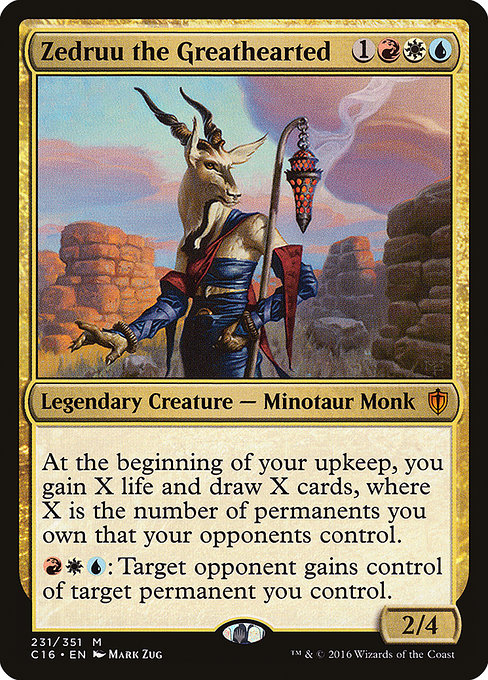
2. Zedruu the Greathearted
Zedruu the Greathearted | Illustration by Mark Zug
Colors: blue-red-white. Best for: gifts that reward both players.
Zedruu can give an opponent control of a permanent you control. At the beginning of your upkeep, she draws cards and gains life according to how many permanents you own your opponents control.
For this version, give away cards the recipient actually wants. A useful gift gives them something to do and gives you an ongoing reason to keep Zedruu alive. The table can see the arrangement and decide whether it is still worth supporting.
Easy donation:Howling Mine provides extra draws while untapped regardless of who controls it.
A creature to pass around:Humble Defector draws two cards for its controller, then moves to a chosen opponent. Its activation is restricted to its controller's turn.
Mutual development:Pendant of Prosperity enters under an opponent's control; its activation offers cards and land placement to that player and the Pendant's owner.
A visible finish:Approach of the Second Sun gives your accumulated card draw a destination. Its winning resolution requires casting it from your hand after you have cast another spell with that name that game.
Keep it fun: Choose useful donations rather than permanents meant to stop the recipient from playing. Explain Approach as part of your game plan. Ownership does not change when control changes, which is why these gifts can continue paying Zedruu.
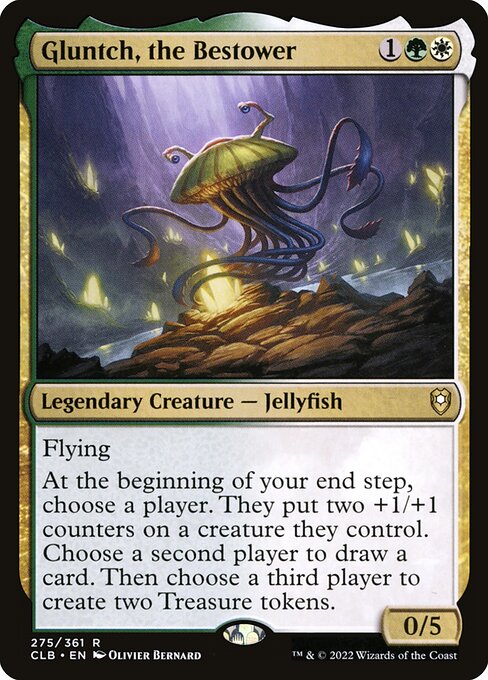
3. Gluntch, the Bestower
Gluntch, the Bestower | Illustration by Olivier Bernard
Colors: green-white. Best for: a short political decision every turn.
At your end step, Gluntch distributes three different rewards among three different players: two +1/+1 counters on a creature, a card, and two Treasures. You can choose yourself for one reward.
In a four-player game, that leaves one player without a gift. The choices can reflect what people need: a player short on mana might appreciate Treasure, while someone rebuilding could use a card. Gluntch offers enough negotiation to be interesting without needing a complicated board.
Recovery:Together Forever places initial counters and can arrange to return a creature with a counter to its owner's hand if it dies that turn. You can offer that protection to someone else's creature too.
Protection and draw:Inspiring Call rewards your creatures with +1/+1 counters and protects them from destruction for the turn.
Your own army:Felidar Retreat turns land drops into Cats or counters for your team.
A shared offer:Tempt with Discovery lets opponents accept a land search while giving you additional searches for each acceptance.
Keep it fun: Explain tempting offers fully, including what you gain. Build toward a creature finish, and keep gift negotiations brief enough that your end step does not become the longest part of every turn.
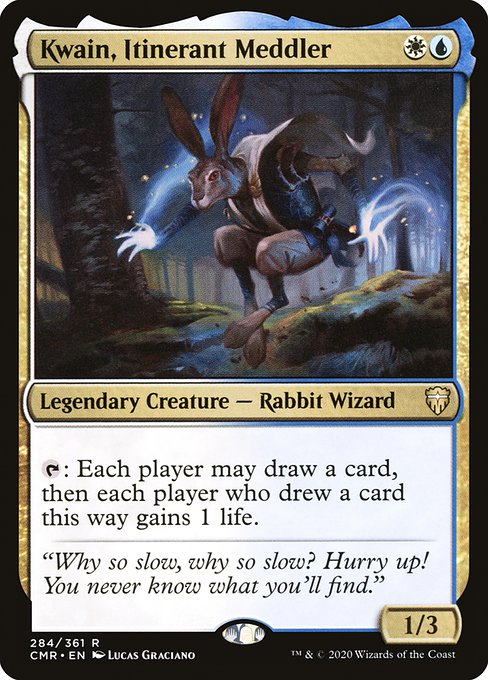
4. Kwain, Itinerant Meddler
Kwain, Itinerant Meddler | Illustration by Lucas Graciano
Colors: white-blue. Best for: simple, optional shared draw.
Kwain taps to let each player choose whether to draw a card. Each player who does gains one life. The choice belongs to each player, including you.
This is one of the clearest introductions to group hug. There are no piles to divide or complicated gifts to track: players decide whether another card is useful, then the game continues. At two mana, Kwain can establish that pattern early, once its tap ability is available.
More shared draws:Howling Mine adds another card during each player's draw step while it is untapped.
Creature production:Hoofprints of the Stag collects counters from your draws and can spend four counters plus mana to make a flying 4/4 during your turn.
Combat payoff:Empyrial Plate turns a large hand into a substantial power-and-toughness boost for an equipped creature.
Interaction:Swords to Plowshares handles a dangerous creature while giving its controller life.
Keep it fun: Let opponents decline Kwain's offer without a sales pitch. Build a flying creature or Equipment finish, and remember that a draw-restriction package changes the experience you are offering the table.
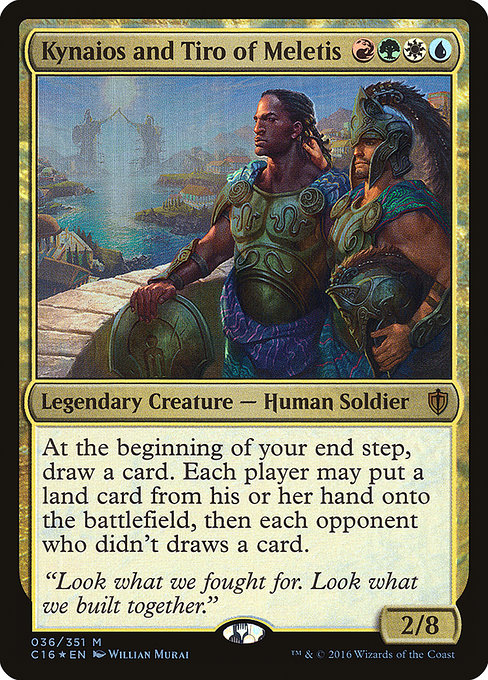
5. Kynaios and Tiro of Meletis
Kynaios and Tiro of Meletis | Illustration by Willian Murai
Colors: red-green-white-blue. Best for: helping everyone develop their game plan.
At your end step, you draw a card. Then each player may put a land from their hand onto the battlefield, and each opponent who does not draws a card instead. You receive the initial draw whether or not you put in a land.
The appeal is that opponents get a choice suited to their hand. Someone with a land can develop mana; someone without one still gets another card. Four colors also give you plenty of tools to interact while building a land-based board of your own.
Shared resources:Rites of Flourishing supplies extra draws and allows an additional land play on each player's turn.
Optional ramp:Rootweaver Druid offers opponents basic lands, with one of the lands they find entering under your control.
Flexible removal:Beast Within helps keep a dangerous permanent from taking over the game.
Land-based finish:Avenger of Zendikar turns your lands into Plants and uses later land drops to grow them.
Keep it fun: Extra resources do not help every deck equally. Watch who benefits most before adding another shared draw or ramp effect, and avoid stacking so much attack prevention that nobody can close the game.
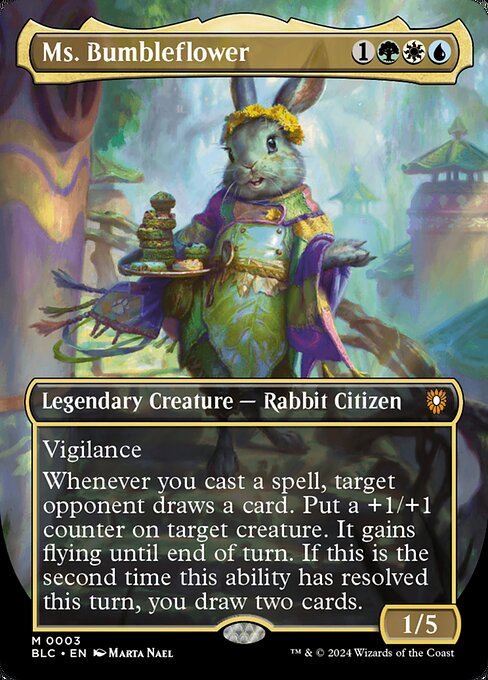
6. Ms. Bumbleflower
Ms. Bumbleflower | Illustration by Marta Nael
Colors: green-white-blue. Best for: targeted gifts with a growing creature plan.
Whenever you cast a spell, Ms. Bumbleflower makes a target opponent draw a card and puts a +1/+1 counter on a target creature, which gains flying for the turn. The second time that ability resolves each turn, you also draw two cards.
You choose the opponent receiving the card and can put the counter on a creature belonging to any player. That gives you room to help someone find an answer, strengthen your own threat, or offer another player an evasive attacker.
Your own card engine:Fathom Mage can draw when it receives +1/+1 counters.
A small shared draw:Farsight Adept gives you and a target opponent a card when it enters.
Interaction:Generous Gift removes a troublesome permanent and leaves an Elephant behind.
Combat finish:Overwhelming Stampede can turn a developed creature board into a serious attack.
Keep it fun: Make your targets clear and keep spell sequences moving. Giving cards to opponents does not erase how much value you are generating, so expect them to interact with your engine when it becomes the main threat.
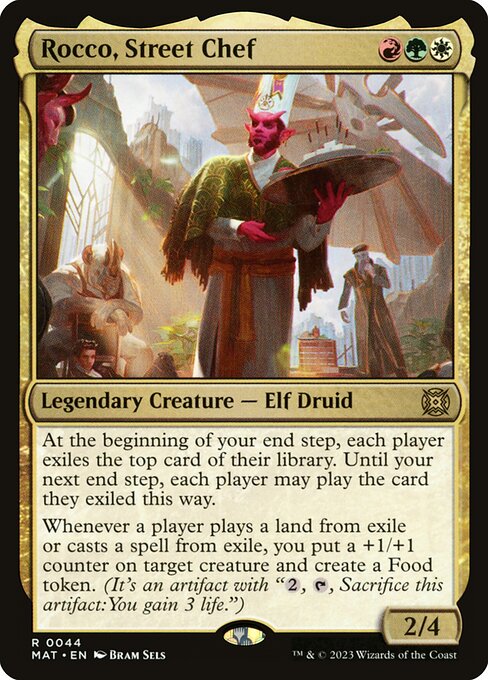
7. Rocco, Street Chef
Rocco, Street Chef | Illustration by Bram Sels
Colors: red-green-white. Best for: extra card choices and Food-powered turns.
At your end step, Rocco exiles the top card of each player's library and lets each player play their own exiled card until your next end step. Whenever anyone plays a land or casts a spell from exile, you create Food and put a +1/+1 counter on a target creature.
The decision is visible: use the extra card and grow Rocco's engine, or leave it alone. Players still pay costs and follow normal timing and land-play limits. Rocco supplies access, not free spells.
A shared card pool:Share the Spoils gives players access to cards exiled by the enchantment, with mana flexibility for casting them.
Food into mana:Gilded Goose can sacrifice Food to make mana.
Food into cards:Trail of Crumbs offers a look at your top two cards when you sacrifice Food and pay an extra mana, letting you take a permanent card.
A team boost:Night of the Sweets' Revenge turns Food into mana sources and can be sacrificed for a large creature boost.
Keep it fun: Track exiled cards and their deadlines clearly. Shared access can make turns slower if the cards are scattered around the table. Win through your counters and Food payoff, with enough evasion to make the big attack matter.
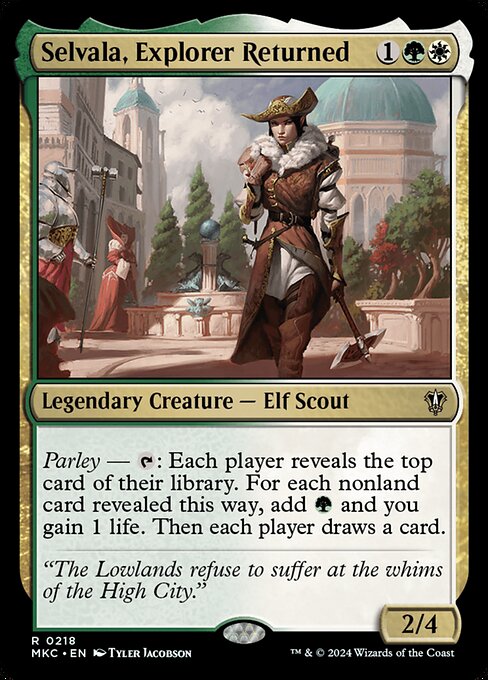
8. Selvala, Explorer Returned
Selvala, Explorer Returned | Illustration by Tyler Jacobson
Colors: green-white. Best for: a shared reveal that funds your next play.
Selvala's parley ability has everyone reveal the top card of their library, gives you green mana and life for each nonland revealed, then has everyone draw a card.
That creates a quick table moment: people see what is coming, everyone gets a card, and you find out how much mana the reveal produced. The result varies, so avoid planning as though every activation will produce the maximum.
A useful untap:Benefactor's Draught untaps everyone's creatures, replaces itself, and can draw you more cards when opposing creatures block that turn.
Life into cards:Well of Lost Dreams lets you spend mana to draw when you gain life.
Shared development:Rootweaver Druid offers a land bargain that can build both your mana and your opponents'.
A decisive finish:Hurricane can convert a mana advantage into damage to every player and every flying creature. It hits you too, so your life total matters.
Keep it fun: Use the resources to advance the game. Repeated untap chains can turn a quick group draw into a long turn where everyone else waits; that is a different build from the social version recommended here.
9. Queen Marchesa
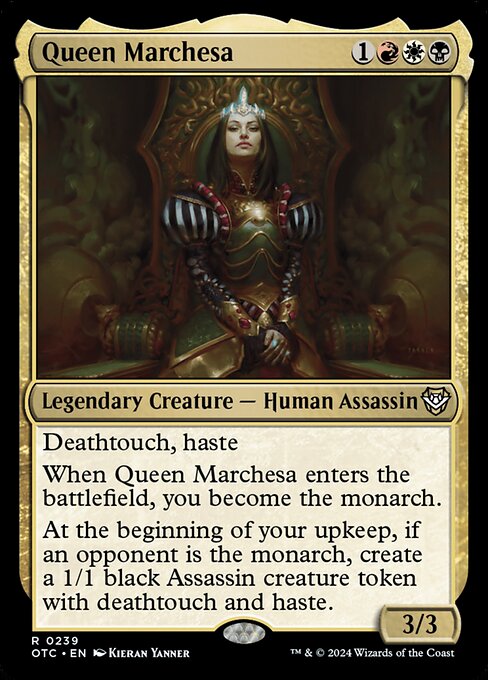
Queen Marchesa | Illustration by Kieran Yanner
Colors: red-white-black. Best for: combat politics and a crown worth stealing.
Queen Marchesa makes you the monarch when she enters. The monarch draws a card at the beginning of their end step, and a player can take the crown by having a creature deal combat damage to the monarch.
This gives the table a visible prize to contest. If an opponent holds the crown at the beginning of your upkeep, Marchesa can make a hasty Assassin with deathtouch to help you fight back. Choose her for groups that enjoy attacks, blocks, and changing alliances.
Interaction with a route back:Palace Jailer gives you the crown and can exile an opposing creature until an opponent becomes the monarch.
A growing air force:Court of Grace produces a flying Spirit on your upkeep, or a larger flying Angel if you are the monarch.
A combat favor:Duelist's Heritage can give an attacking creature double strike, including another player's attacker.
Cards and negotiation:Humble Defector offers a useful creature to pass around between players.
Keep it fun: Let the crown be contested. A deck that rewards combat has a different feel from one that makes attacking you practically impossible. Your tokens and combat tools provide a win plan without needing to freeze the battlefield.
10. Gor Muldrak, Amphinologist
Gor Muldrak, Amphinologist | Illustration by Steven Belledin
Colors: green-blue. Best for: an unusual creature-balancing game.
At your end step, each player tied for the fewest creatures creates a 4/3 Salamander Warrior. That can include you, multiple opponents, or several players at once.
Meanwhile, you and your permanents have protection from Salamanders. The gifts can help players with small boards enter combat, while your commander gives you a built-in advantage against those particular creatures. It is a distinctive option for a group that enjoys creature battles and changing board counts.
A different gift:Hunted Phantasm gives you an unblockable creature and a chosen opponent five Goblins, changing who has the fewest creatures.
Your own board:Fungal Sprouting creates Saprolings according to your largest creature's power.
Interaction:Beast Within answers a permanent and changes its controller's creature count with a Beast token.
Combat finish:Overwhelming Stampede gives your own army a way to push through blockers.
Keep it fun: Explain protection from Salamanders before handing out the first token. Those creatures are less useful against you, so the gift comes with a real advantage for your deck. Build other threats and move toward a finish instead of relying on a Salamander stalemate.
Which one should you build?
For selective favors, start with Phelddagrif. Its separate activations give you control over who gets help and how much you spend providing it.
For useful donations, choose Zedruu. Build around permanents people are willing to keep and turn the resulting card advantage into an announced win plan.
For simple group hug, choose Kwain or Gluntch. Kwain offers a quick optional draw; Gluntch makes one distribution decision each end step.
For an engine with shared benefits, try Kynaios and Tiro, Ms. Bumbleflower, Rocco, or Selvala. Each helps other players while rewarding you in a different way.
For more combat, choose Queen Marchesa or Gor Muldrak. The crown creates a prize to fight over, while Salamanders reshape who has creatures available.
How to keep a friendly Commander deck enjoyable
Make the offer clear
Explain both sides of a bargain. If an opponent taking a land gives you another land, say so. If using an exiled card gives you Food and a counter, point that out. Players can make better decisions when the benefits are visible.
Keep deals small: one attack, one removal spell, or one turn cycle. A table full of overlapping promises is difficult to follow and can make a casual game feel like contract negotiation.
Help with a purpose
Giving the same resources to everyone can widen an existing lead. A player with an empty hand and a player holding a combo do not necessarily use three extra cards in the same way.
When you have a choice, consider who needs help to stay involved and what you receive in return. Keep playing toward your own win rather than deciding that a particular opponent should win the game.
Keep interaction and a finish
Shared resources do not replace removal. Include ways to answer the permanent that is about to take over, and make sure your deck can function when its commander is unavailable.
Creature attacks, token armies, and a visible alternate win condition can all give these decks direction. Choose a finish your group enjoys and commit to using it when the opportunity arrives. Being friendly does not require declining every chance to win.
Match the build to the promise
If you describe the deck as helpful group hug, a surprise package that prevents opponents from drawing cards or casting spells will change that experience. Tell the group about any lock, repeated extra-turn plan, or combo that is central to the deck.
The same goes for constant Fog effects or long chains of untaps. A few defensive plays can buy time; repeating them indefinitely can prevent the interesting part of the game from ending.
Two useful rules for gift decks
Control and ownership are different. Donating a card changes its controller, not its owner. Zedruu counts your permanents while opponents control them. If an opponent creates a token, as with Phelddagrif's Hippo ability, that opponent owns the token; simply causing its creation does not make it one of your donations.
Extra access does not usually waive costs. Rocco and Share the Spoils give permission to play specified exiled cards. You still follow the applicable timing rules, pay costs, and obey land-play limits unless an effect explicitly says otherwise.
Build a deck your table will want to see again
Pick the kind of interaction you enjoy: offering small favors, passing useful permanents around, sharing cards, or fighting over the monarchy. Then use that commander's Create a deck button to begin in the free ElderDecks Commander deck builder.
Who would your group rather sit across from: Phelddagrif, Zedruu, or someone else on this list?
Sources and card references
Card text, color identity, and Commander legality were checked on November 23, 2026. The recommendations and assessments of play experience are ElderDecks editorial judgments. Card images are supplied through Scryfall with illustrator credits; artwork and card designs belong to Wizards of the Coast and their respective rights holders.