By ElderArticles · Updated 10/28/2026 · 21 min read
See the complete Federation Fleet Commander decklist, learn Jean-Luc Picard's strategy, and find 10 practical MTG Star Trek precon upgrades.
Table of contents
U.S.S. Enterprise-E, Sovereign | Illustration by Jetfreak-7
The Federation Fleet decklist is finally here, and it is not quite the straightforward “put counters on a spaceship and turn it sideways” precon the box suggests. Jean-Luc Picard is running three plans at once: historic permanents, second-card-drawn triggers, and Spacecraft loaded with charge counters. When those systems cooperate, the deck draws an absurd number of cards and launches ships without spending half the game at Spacedock. When they do not, you are left with a hand full of five-drops and a very diplomatic collection of 2/2s.
The best way to play Federation Fleet is as a Jeskai historic midrange deck. Resolve Picard, follow him with artifacts and legendary permanents that cost three or more, use the extra cards to trigger seek out, and let those triggers do the slow work of stationing your Spacecraft. The stock list can do that out of the box. The first upgrades should make it do the same thing more often, without giving every opponent nearly as many cards as you draw.
That distinction matters. Federation Fleet does not need a total rebuild. It needs its three engines to stop taking separate shifts.
Federation Fleet at a Glance
- Face commander: Jean-Luc Picard, Luminary
- Backup commander: Captain Janeway, Endgame
- Colors: White, blue, and red (Jeskai)
- Main themes: Historic permanents, drawing a second card, +1/+1 counters, charge counters, Officers, and Spacecraft
- Deck size: 100 cards
- New-to-Magic cards: 32
- Release date: November 13, 2026
Wizards revealed the full list on October 27, 2026. Federation Fleet is one of four Magic: The Gathering | Star Trek Commander decks, alongside Landing Party, Klingon Fury, and We Are the Borg. You can compare the products in our guide to all four MTG Star Trek Commander decks.
The deck has 38 lands, ten dedicated mana rocks, five Spacecraft, and a dense concentration of legendary creatures. That is enough mana for its expensive middle game, although the mana base includes several lands that will enter tapped.
AI-generated article, published by an ElderDecks editor.
How Jean-Luc Picard, Luminary Works
Jean-Luc Picard, Luminary | Illustration by Jason Pastrana
Jean-Luc Picard, Luminary costs {1}{U}{R}{W} for a 2/4 Human Officer. Whenever another historic permanent you control with mana value three or greater enters, you draw a card. Artifacts, legendary permanents, and Sagas are historic, so a large portion of the stock deck qualifies twice over.
There are three details worth catching before your first game.
First, the permanent must be another permanent. Picard does not draw a card for entering himself. Second, mana value matters: Ensign Harry Kim, Howling Mine, Mind Stone, Sol Ring, the Talismans, and Thought Vessel are historic, but their mana values are too low to trigger him. Third, the ability cares about entering the battlefield, not casting. Reanimating, blinking, or copying a qualifying permanent still draws the card. Ezri Dax normally has too little mana value, but she can trigger Picard if she enters as a copy of a creature with mana value three or greater.
Picard's seek out ability triggers whenever you draw your second card in a turn. It places a +1/+1 counter on another creature and two charge counters on a Spacecraft. This can trigger once on your turn and again on every opponent's turn if you find ways to draw two cards during those turns.
That last sentence is where the deck's real ceiling lives. Drawing two cards once per round is value. Drawing two cards on four separate turns is a launch sequence.
How Station and Charge Counters Work
Spacecraft begin as noncreature artifacts. Station lets you tap another creature you control at sorcery speed and put charge counters on the ship equal to that creature's power. At a charge-counter threshold that shows power and toughness, the Spacecraft becomes an artifact creature and gains that section's abilities. A threshold showing only rules text grants those abilities without itself making the ship a creature.
Summoning sickness does not stop a creature from stationing a ship because station's cost says to tap another untapped creature you control; it does not use the tap symbol. You can cast a creature and immediately tap it to station during the same main phase. You cannot station at instant speed, and the Spacecraft cannot tap itself once it becomes a creature.
Picard is unusually efficient because seek out adds two charge counters without tapping a crew member. That lets your small legends continue attacking, blocking, or activating their own abilities while the commander's card-draw engine quietly prepares the fleet.
The Stock Deck's Best Strategy
Early Game: Develop Mana Without Emptying the Historic Pipeline
Federation Fleet has ten mana rocks, but not every rock should hit the table before Picard. Sol Ring, Mind Stone, and the Talismans are excellent early acceleration because their mana values are too low to draw from Picard anyway. Commander's Sphere, Hedron Archive, Stonespeaker Crystal, and the five-mana artifacts are better after Picard when the game allows it.
The ideal opening establishes three colors, casts a cheap rock, and lands Picard on turn three or four. Do not station a ship simply because you can. Tapping every creature during your main phase makes it much easier for opponents to attack you, and U.S.S. Enterprise-E punishes tapped creatures without checking who controls them.
Midgame: Make the Second Draw Automatic
Howling Mine, Fevered Visions, Commander William Riker, Faithful Mending, Frantic Search, and the deck's historic-entry triggers all help produce a second draw. You are not trying to draw the most cards possible in one burst. You are trying to draw exactly enough cards on several different turns.
A single Faithful Mending during an opponent's turn draws two, triggers Picard, filters the hand, and can later do it again with flashback. Temporal Tribulation can blink two historic permanents and return them at the next end step. If both have mana value three or greater, Picard draws twice and seek out triggers without another card.
Endgame: Stop Building and Launch Something
The deck wins by converting its pile of counters and cards into combat damage. U.S.S. Prometheus, Prototype is the cleanest stock finisher: at eight charge counters, combat damage to one opponent is repeated to every other opponent. U.S.S. Stargazer, Here and There creates an attacking 4/3 Spacecraft Illusion. Tom Paris, Risk-Taker gives the entire team flying, double strike, vigilance, and haste after a seek out trigger.
Do not wait until every Spacecraft is active. One protected ship and a real clock are better than three half-stationed museum exhibits.
The Best Federation Fleet Synergies
Alhammarret's Archive | Illustration by Jonas De RoChief Miles O'Brien | Illustration by Alex Negrea
Alhammarret's Archive Turns One Draw Into the Trigger You Need
Alhammarret's Archive is already in the deck, and it may be the best non-Star Trek card in the box. Outside the first card drawn during your draw step, it replaces one card draw with two. A Picard trigger on an opponent's turn therefore becomes two cards and immediately fires seek out.
The Archive costs five, is an artifact, and has enough mana value to trigger Picard when it enters. It is slow, but Federation Fleet is one of the rare precons where every line of its text directly contributes to the commander's plan.
Temporal Tribulation Is More Than Protection
Temporal Tribulation exiles two permanents you control and returns them at the next end step. It can dodge removal, reset enters-the-battlefield abilities, and—most importantly—return two qualifying historic permanents on an opponent's turn. Two Picard triggers mean two cards, which means a seek out trigger.
Blink U.S.S. Defiant to remove another artifact or enchantment. Blink Loran of the Third Path for another removal trigger. Blink Reg Barclay after his temporary token has done its work. The flashback cost makes the same trick available later.
Chief Miles O'Brien Can Double a Nearly Finished Ship
Chief Miles O'Brien and Picard both trigger when you draw your second card. Put Picard's seek out trigger on the stack so it resolves first, adding two charge counters to a Spacecraft. Then let O'Brien double every counter already on that artifact. A ship with four counters can jump to twelve during one second-card sequence.
This is the interaction opponents should respect most. O'Brien does not merely add two more counters; he scales with everything already invested.
Reg Barclay Copies the Deck's Best Creature for a Turn
Reg Barclay, Fidgety Fantasist creates a hasty, nonlegendary artifact copy of another creature whenever you seek out. Copy Loran for another piece of removal, or choose a creature with another immediate payoff. Copies of Data or Chief O'Brien do not trigger from the second draw that created them. Barclay exiles the copy at the beginning of the next end step, so a copy needs to survive into another turn and be present for that turn's second draw to use its own seek out ability.
Because the token is an artifact and keeps the copied card's mana value, a copy of a creature costing three or more also triggers Picard as it enters. That third draw will not trigger seek out again during the same turn, but it keeps the hand full and gives the copy immediate value.
Sequence U.S.S. Enterprise-E Carefully
U.S.S. Enterprise-E, Sovereign destroys every tapped creature when it enters. That can be a devastating post-combat board wipe, but it will also destroy the creatures you tapped to station another ship. Cast it before committing the crew, after opponents attack, or when you are happy to trade the board for a 7/7 flying vigilant Spacecraft waiting to come online.
Picard and the Enterprise both trigger when it enters. You control the order of your triggers, so plan the stack before resolving either one.
Picard or Janeway: Which Commander Is Better?
Captain Janeway, Endgame | Illustration by Jason Pastrana
Captain Janeway, Endgame costs the same four mana as Picard and offers a much more aggressive plan. Whenever one or more Officers deal combat damage to a player, she draws a card and creates a 1/1 Officer token. She can also make herself unblockable by paying {2} and tapping an untapped creature you control, including herself.
Janeway is the better choice if you want to rebuild Federation Fleet as Jeskai Officer combat. Worf, Son of Mogh becomes an anthem and token maker, Tom Paris ends games, On the Shoulders of Giants grants evasion, and Janeway keeps adding attackers.
Picard is the stronger commander for the stock 99. The deck contains five Spacecraft, several draw-two cards, Alhammarret's Archive, Temporal Tribulation, and a huge number of historic permanents. Janeway uses the Officers well but leaves the ships and counter cards without a reliable engine.
The clean verdict: keep Picard for a focused precon upgrade. Switch to Janeway only if you are willing to cut much of the Spacecraft package and add more evasive Officers, combat protection, and extra-combat effects.
Federation Fleet's Biggest Weaknesses
The Deck Is Pulled in Three Directions
Some cards care about historic permanents. Others care about Officers. Others exist solely to move or exploit counters. Picard connects the historic and Spacecraft halves, but the Officer combat package sometimes feels like it belongs to Janeway's version of the deck.
The Group Draw Can Backfire
Howling Mine, Fevered Visions, Ambassador K'Ehleyr, Commander William Riker, and Cmdr. Troi all help opponents draw or cast cards. Those effects reliably turn on seek out during your turn, but they also give the table more chances to find removal for Picard.
Howling Mine is worth testing before cutting because it guarantees a second draw during your draw step. Cmdr. Troi is much harder to defend: handing an opponent a free spell is a dangerous price for copying it.
The Mana Curve Is Heavy
Five Spacecraft cost between three and six mana. Picard costs four. Several legends cost four, five, or six, and many of the deck's best reprints cost five. Ten mana rocks and 38 lands support that curve, but a tapped-land opening can still make the deck feel one turn late.
Counters Are Easy to Lose
A charged Spacecraft that gets exiled takes every counter with it. The stock deck has Grand Crescendo and counterspells, but very little protection specifically for its artifacts and almost no way to preserve counters after removal.
10 Best Federation Fleet Upgrades Under $30
This package costs approximately $27.69 in total, using current nonfoil USD prices returned by Scryfall for the selected printings on October 27, 2026. Prices can change, and shipping and taxes are not included. The goal is not to turn the precon into a combo deck; it is to make Picard's existing plan fire more reliably.
Gandalf the White and Panharmonicon: Double Picard's Triggers
Gandalf the White | Illustration by Magali VilleneuvePanharmonicon | Illustration by Volkan Baǵa
Gandalf the White — about $8.84: Gandalf lets you cast legendary and artifact spells with flash, opening the door to Picard draws and seek out triggers during opponents' turns. He also makes abilities caused by legendary permanents or artifacts entering or leaving trigger an additional time. Most of Federation Fleet qualifies.
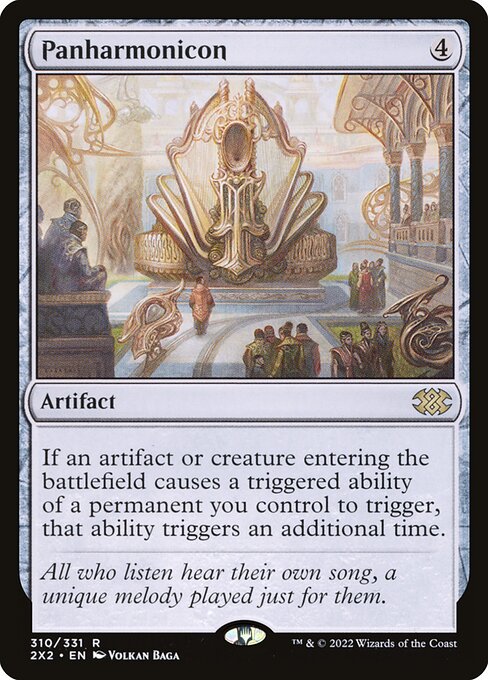
Panharmonicon — about $6.55: Panharmonicon doubles Picard's draw trigger when an artifact or creature enters. It also doubles Loran, U.S.S. Enterprise-E, U.S.S. Defiant, and other useful enters-the-battlefield abilities. Unlike a generic draw enchantment, Panharmonicon is itself a four-mana artifact, so it belongs in the historic plan.
Jhoira and Shorikai: Build a Private Draw Engine
Jhoira, Weatherlight Captain | Illustration by Brad RigneyShorikai, Genesis Engine | Illustration by Wisnu Tan
Jhoira, Weatherlight Captain — about $0.40: Jhoira draws when you cast a historic spell. Picard draws when a qualifying historic permanent enters. Cast a three-mana legendary creature or artifact with both on the field and you draw on the way down, draw again when it arrives, and trigger seek out.
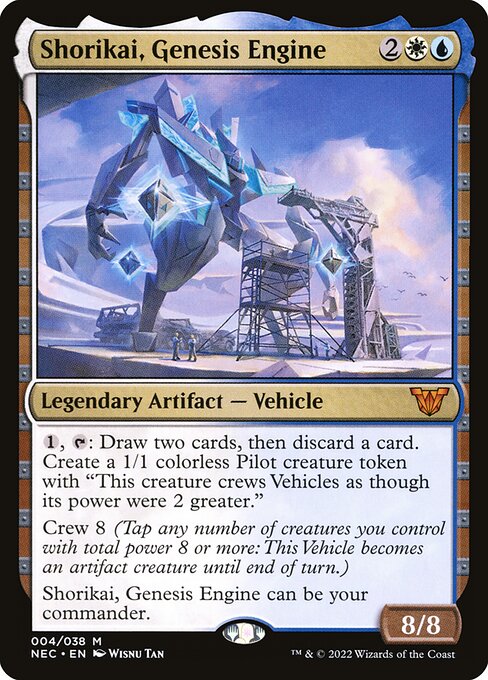
Shorikai, Genesis Engine — about $3.22: Shorikai draws two, discards one, and creates a Pilot for one mana plus a tap. That guarantees a seek out trigger, filters the hand, and supplies a creature that can station a Spacecraft. Shorikai is also a four-mana legendary artifact, so Picard draws when it enters.
Deepglow Skate and Tezzeret's Gambit: Charge the Whole Fleet
Deepglow Skate | Illustration by Jason KangTezzeret's Gambit | Illustration by Bryan Sola
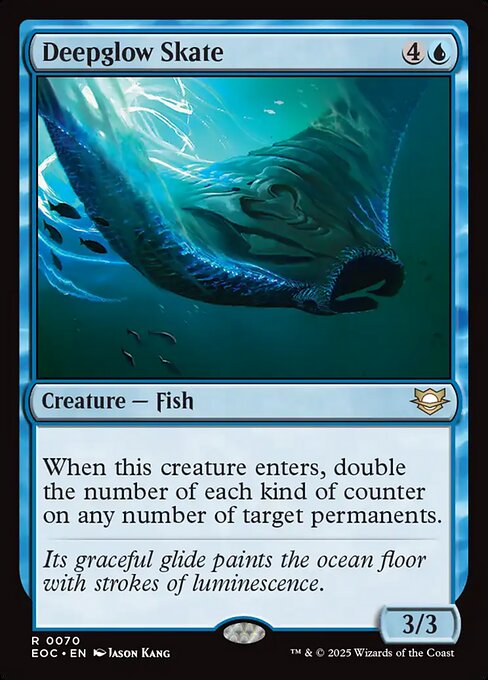
Deepglow Skate — about $0.38: Its enters-the-battlefield ability doubles every kind of counter on any number of target permanents. That can finish multiple Spacecraft at once and turn Picard's +1/+1 counter targets into real threats.
Tezzeret's Gambit — about $0.29: Drawing two cards triggers seek out, and proliferate adds another counter of every existing kind. It advances charge counters, +1/+1 counters, time counters on Kes, and Saga lore counters while replacing itself twice over.
Contentious Plan and Resourceful Defense: Cheap Counter Infrastructure
Contentious Plan | Illustration by Eric DeschampsResourceful Defense | Illustration by Francis Tneh
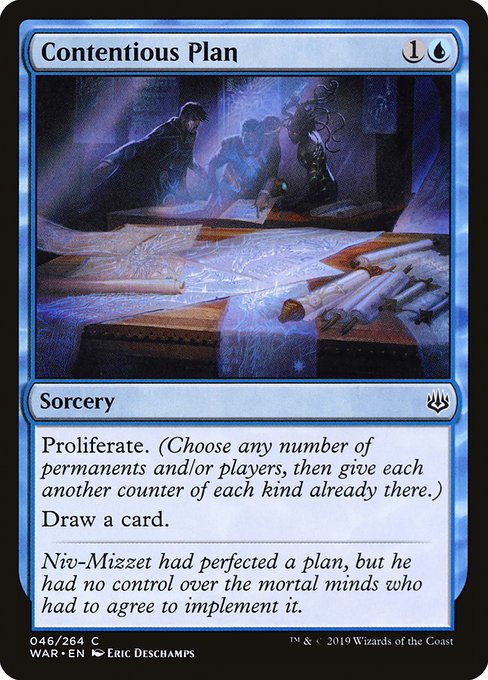
Contentious Plan — about $0.37: Proliferate first, then draw a card. After your normal draw step, that card is the second draw Picard needs. Two mana is exactly the kind of efficient bridge the stock deck lacks.
Resourceful Defense — about $0.30: When a permanent with counters leaves, Resourceful Defense moves those counters onto another permanent you control. It turns removal from a complete reset into a tactical retreat and can move counters between creatures and Spacecraft later.
Mangara and Strionic Resonator: More Triggers Without Helping the Table
Mangara, the Diplomat | Illustration by Howard LyonStrionic Resonator | Illustration by Sam White
Mangara, the Diplomat — about $0.70: Mangara draws when opponents cast a second spell or send multiple attackers at you. He is also a four-mana legendary creature, so Picard replaces him immediately when he enters. He is a cleaner source of opponent-turn cards than a symmetrical group-draw effect.
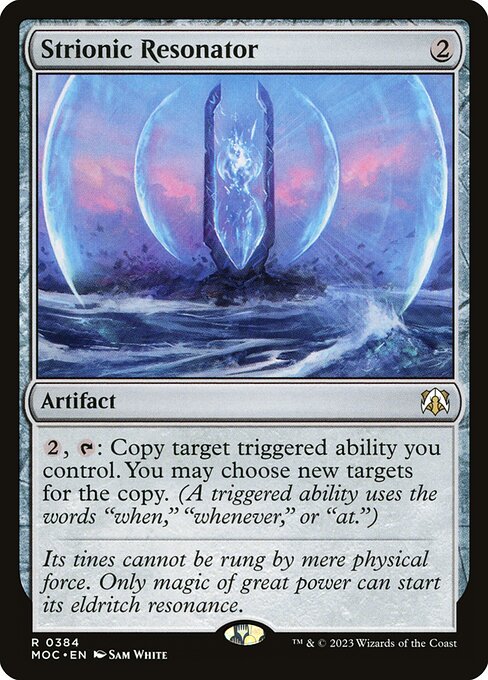
Strionic Resonator — about $6.64: Resonator can copy Picard's historic-entry draw trigger or the seek out trigger itself. Copy the draw trigger when you have drawn one card that turn to reach the second draw, or copy seek out to charge two ships and grow two creatures.
Three Premium Upgrades Worth Considering
Roaming Throne | Illustration by Cristi BalanescuAll Will Be One | Illustration by Chris Rahn
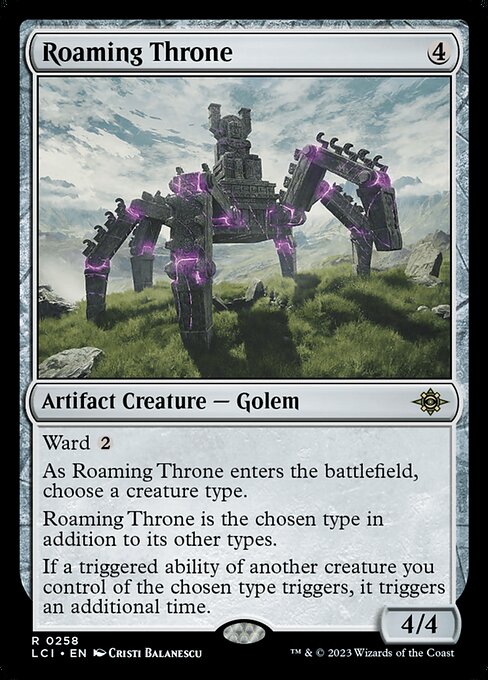
Roaming Throne — about $51.35: Choose Human or Officer and Picard's triggered abilities fire an additional time. Roaming Throne is also a four-mana artifact, which makes it historic and large enough to trigger Picard. It is the cleanest power upgrade, but it costs more than the entire budget package.
All Will Be One — about $16.74: Every counter Picard, O'Brien, or a proliferate effect places becomes damage. The card gives Federation Fleet a way to win without connecting in combat and makes O'Brien's doubling trigger especially dangerous.
Inexorable Tide — about $7.37: Every spell proliferates. Once two or three Spacecraft have charge counters, the Tide turns ordinary ramp and interaction into fleet-wide progress. It is powerful but costs five and is not historic, so it is better after the deck's curve has been cleaned up.
10 Cards to Cut From Federation Fleet
These are not the only possible cuts. If preserving every Star Trek character matters more than efficiency, remove slow reprints and tapped lands instead. For a focused Picard list, these ten cards contribute the least to the main plan.
1. Dr. Pulaski, Cynical Clinician — Four life per seek out is safe but does not advance the board or protect the engine.
2. Ambassador K'Ehleyr — She guarantees a second draw before combat, but every opponent receives a card too, and her growing body has no built-in evasion.
3. Ezri Dax, Newly Joined — Flash is useful, but her useful copy window depends on a creature card entering your graveyard from the battlefield that turn. She can trigger Picard if she copies a qualifying creature with mana value three or greater.
4. Kes, Evolving Telepath — The long-term card flow is real, but a fragile five-mana creature that starts by drawing one card is too slow for the upgraded curve.
5. Cmdr. Troi, Outgoing Empath — Giving an opponent a free spell can lose the game before the copied spell helps you.
6. Vic Fontaine, One Night Only — Temporary power and lifelink are less valuable than permanent counter growth or another fleet-wide payoff.
7. On the Shoulders of Giants — Flying is useful, but the Spacecraft already fly and Tom Paris supplies a much stronger finishing turn.
8. Chronomantic Escape — Repeated fogs are annoying, but the suspend schedule is visible and the card does not advance Picard, counters, or the fleet.
9. Promise of Loyalty — The deck already has Supreme Verdict and Chain Reaction. Leaving each opponent's best creature is a large downside at five mana.
10. Stonespeaker Crystal — Four-mana ramp is clunky, and the list still has nine other dedicated mana rocks after this cut.
The Enterprise-E is a five-mana 7/7 with flying and vigilance once it reaches eight counters. Its entry destroys all tapped creatures, giving the deck a powerful but dangerous board-control tool.
U.S.S. Defiant, Tough Little Ship
The Defiant destroys an artifact or enchantment when it enters and becomes a 7/4 flying hexproof creature at five counters. It is the easiest stock ship to protect after launch.
U.S.S. Enterprise-C, Time-Tossed
Enterprise-C activates at only three charge counters. Its enters-or-dies trigger lets you discard your hand and draw that many cards, which can rescue a bad hand or trigger seek out, but it is optional for a reason.
U.S.S. Prometheus, Prototype
Prometheus becomes a 6/6 flyer at four counters. At eight, combat damage to one opponent is repeated to every other opponent. It is the fleet's best built-in win condition.
U.S.S. Stargazer, Here and There
Stargazer costs three and activates at six counters. Each attack creates a tapped and attacking 4/3 flying Spacecraft Illusion until the end of combat. It is the cheapest ship and one of the best early Picard targets.
Federation Fleet Upgrade Priorities
If you are changing only five cards, start with Jhoira, Weatherlight Captain, Shorikai, Genesis Engine, Panharmonicon, Deepglow Skate, and Resourceful Defense. Those changes improve the deck's card engine, counter production, and resilience without changing its identity.
After that, decide how you want to win. Add All Will Be One and Inexorable Tide for a counter-combo finish. Keep Tom Paris and the Spacecraft package for a combat finish. Move Captain Janeway to the command zone and add more Officers if you want a faster creature deck.
The worst upgrade plan is adding ten powerful Jeskai staples with no relationship to historic permanents or counters. Federation Fleet already has enough good cards. It needs more cards that make its good cards happen twice.
Federation Fleet FAQ
Is Federation Fleet Commander-Legal Right Now?
The reprints retain their existing legality. Under Wizards' Prerelease legality policy, the new Star Trek Commander cards become legal in Commander at Prerelease on November 6, 2026. The global tabletop release is November 13. They are still preview cards as of October 27.
How Many Spacecraft Are in Federation Fleet?
The stock deck contains five Spacecraft: U.S.S. Enterprise-E, U.S.S. Defiant, U.S.S. Enterprise-C, U.S.S. Prometheus, and U.S.S. Stargazer.
Can Seek Out Trigger During an Opponent's Turn?
Yes. Seek out checks for the second card you draw in each turn, not only your turn. Faithful Mending, Frantic Search, Temporal Tribulation with Picard, Gandalf the White, and Shorikai can help trigger it during opponents' turns.
Does Commander Tax Change Picard's Mana Value?
No. Commander tax changes how much mana you pay to cast Picard from the command zone, but his mana value remains four. The same principle applies when Picard checks whether another historic permanent has mana value three or greater.
Should You Cut Howling Mine?
Not immediately. Howling Mine gives opponents cards, but it also guarantees that you draw a second card during your draw step while it remains untapped. Test the stock deck first. Cut it only after private draw engines such as Jhoira, Shorikai, Mangara, or Panharmonicon make the symmetrical effect unnecessary.
Is Captain Janeway a Better Commander Than Picard?
Janeway is better for Officer typal combat. Picard is better for the complete stock deck because he connects its historic permanents, second-card-draw cards, counters, and Spacecraft.
Is the Federation Fleet Collector's Edition a Different Decklist?
No. The Collector's Edition uses the same 100-card decklist. Its cards receive the surge foil treatment, and its tokens are surge foil on one side, but the mechanical contents are unchanged.
Final Verdict
Federation Fleet is not short on cards, mana, or recognizable characters. Its problem is that it spends too many slots politely asking three different strategies to cooperate.
Picard is the solution. Historic permanents replace themselves, the second draw stations the ships, and the ships give the pile of legends a way to end the game. Double those triggers, protect the counters, and trim the most generous group-hug cards. Suddenly the deck stops feeling like a committee meeting and starts feeling like a fleet.
The decklist, Oracle text, color identities, card images, and Commander legality were checked on October 27, 2026. Upgrade prices are dated October 27 and should be treated as snapshots rather than guaranteed sale prices.
U.S.S. Enterprise-E, Sovereign | Illustration by Jetfreak-7
The Federation Fleet decklist is finally here, and it is not quite the straightforward “put counters on a spaceship and turn it sideways” precon the box suggests. Jean-Luc Picard is running three plans at once: historic permanents, second-card-drawn triggers, and Spacecraft loaded with charge counters. When those systems cooperate, the deck draws an absurd number of cards and launches ships without spending half the game at Spacedock. When they do not, you are left with a hand full of five-drops and a very diplomatic collection of 2/2s.
The best way to play Federation Fleet is as a Jeskai historic midrange deck. Resolve Picard, follow him with artifacts and legendary permanents that cost three or more, use the extra cards to trigger seek out, and let those triggers do the slow work of stationing your Spacecraft. The stock list can do that out of the box. The first upgrades should make it do the same thing more often, without giving every opponent nearly as many cards as you draw.
That distinction matters. Federation Fleet does not need a total rebuild. It needs its three engines to stop taking separate shifts.
Federation Fleet at a Glance
- Face commander:Jean-Luc Picard, Luminary
- Backup commander:Captain Janeway, Endgame
- Colors: White, blue, and red (Jeskai)
- Main themes: Historic permanents, drawing a second card, +1/+1 counters, charge counters, Officers, and Spacecraft
- Deck size: 100 cards
- New-to-Magic cards: 32
- Release date: November 13, 2026
Wizards revealed the full list on October 27, 2026. Federation Fleet is one of four Magic: The Gathering | Star Trek Commander decks, alongside Landing Party, Klingon Fury, and We Are the Borg. You can compare the products in our guide to all four MTG Star Trek Commander decks.
The deck has 38 lands, ten dedicated mana rocks, five Spacecraft, and a dense concentration of legendary creatures. That is enough mana for its expensive middle game, although the mana base includes several lands that will enter tapped.
Jean-Luc Picard, Luminary | Illustration by Jason Pastrana
Jean-Luc Picard, Luminary costs {1}{U}{R}{W} for a 2/4 Human Officer. Whenever another historic permanent you control with mana value three or greater enters, you draw a card. Artifacts, legendary permanents, and Sagas are historic, so a large portion of the stock deck qualifies twice over.
There are three details worth catching before your first game.
First, the permanent must be another permanent. Picard does not draw a card for entering himself. Second, mana value matters: Ensign Harry Kim, Howling Mine, Mind Stone, Sol Ring, the Talismans, and Thought Vessel are historic, but their mana values are too low to trigger him. Third, the ability cares about entering the battlefield, not casting. Reanimating, blinking, or copying a qualifying permanent still draws the card. Ezri Dax normally has too little mana value, but she can trigger Picard if she enters as a copy of a creature with mana value three or greater.
Picard's seek out ability triggers whenever you draw your second card in a turn. It places a +1/+1 counter on another creature and two charge counters on a Spacecraft. This can trigger once on your turn and again on every opponent's turn if you find ways to draw two cards during those turns.
That last sentence is where the deck's real ceiling lives. Drawing two cards once per round is value. Drawing two cards on four separate turns is a launch sequence.
How Station and Charge Counters Work
Spacecraft begin as noncreature artifacts. Station lets you tap another creature you control at sorcery speed and put charge counters on the ship equal to that creature's power. At a charge-counter threshold that shows power and toughness, the Spacecraft becomes an artifact creature and gains that section's abilities. A threshold showing only rules text grants those abilities without itself making the ship a creature.
Summoning sickness does not stop a creature from stationing a ship because station's cost says to tap another untapped creature you control; it does not use the tap symbol. You can cast a creature and immediately tap it to station during the same main phase. You cannot station at instant speed, and the Spacecraft cannot tap itself once it becomes a creature.
Picard is unusually efficient because seek out adds two charge counters without tapping a crew member. That lets your small legends continue attacking, blocking, or activating their own abilities while the commander's card-draw engine quietly prepares the fleet.
The Stock Deck's Best Strategy
Early Game: Develop Mana Without Emptying the Historic Pipeline
Federation Fleet has ten mana rocks, but not every rock should hit the table before Picard. Sol Ring, Mind Stone, and the Talismans are excellent early acceleration because their mana values are too low to draw from Picard anyway. Commander's Sphere, Hedron Archive, Stonespeaker Crystal, and the five-mana artifacts are better after Picard when the game allows it.
The ideal opening establishes three colors, casts a cheap rock, and lands Picard on turn three or four. Do not station a ship simply because you can. Tapping every creature during your main phase makes it much easier for opponents to attack you, and U.S.S. Enterprise-E punishes tapped creatures without checking who controls them.
A single Faithful Mending during an opponent's turn draws two, triggers Picard, filters the hand, and can later do it again with flashback. Temporal Tribulation can blink two historic permanents and return them at the next end step. If both have mana value three or greater, Picard draws twice and seek out triggers without another card.
Endgame: Stop Building and Launch Something
The deck wins by converting its pile of counters and cards into combat damage. U.S.S. Prometheus, Prototype is the cleanest stock finisher: at eight charge counters, combat damage to one opponent is repeated to every other opponent. U.S.S. Stargazer, Here and There creates an attacking 4/3 Spacecraft Illusion. Tom Paris, Risk-Taker gives the entire team flying, double strike, vigilance, and haste after a seek out trigger.
Do not wait until every Spacecraft is active. One protected ship and a real clock are better than three half-stationed museum exhibits.
The Best Federation Fleet Synergies
Alhammarret's Archive | Illustration by Jonas De RoChief Miles O'Brien | Illustration by Alex Negrea
Alhammarret's Archive is already in the deck, and it may be the best non-Star Trek card in the box. Outside the first card drawn during your draw step, it replaces one card draw with two. A Picard trigger on an opponent's turn therefore becomes two cards and immediately fires seek out.
The Archive costs five, is an artifact, and has enough mana value to trigger Picard when it enters. It is slow, but Federation Fleet is one of the rare precons where every line of its text directly contributes to the commander's plan.
Temporal Tribulation exiles two permanents you control and returns them at the next end step. It can dodge removal, reset enters-the-battlefield abilities, and—most importantly—return two qualifying historic permanents on an opponent's turn. Two Picard triggers mean two cards, which means a seek out trigger.
Blink U.S.S. Defiant to remove another artifact or enchantment. Blink Loran of the Third Path for another removal trigger. Blink Reg Barclay after his temporary token has done its work. The flashback cost makes the same trick available later.
Chief Miles O'Brien and Picard both trigger when you draw your second card. Put Picard's seek out trigger on the stack so it resolves first, adding two charge counters to a Spacecraft. Then let O'Brien double every counter already on that artifact. A ship with four counters can jump to twelve during one second-card sequence.
This is the interaction opponents should respect most. O'Brien does not merely add two more counters; he scales with everything already invested.
Reg Barclay Copies the Deck's Best Creature for a Turn
Reg Barclay, Fidgety Fantasist creates a hasty, nonlegendary artifact copy of another creature whenever you seek out. Copy Loran for another piece of removal, or choose a creature with another immediate payoff. Copies of Data or Chief O'Brien do not trigger from the second draw that created them. Barclay exiles the copy at the beginning of the next end step, so a copy needs to survive into another turn and be present for that turn's second draw to use its own seek out ability.
Because the token is an artifact and keeps the copied card's mana value, a copy of a creature costing three or more also triggers Picard as it enters. That third draw will not trigger seek out again during the same turn, but it keeps the hand full and gives the copy immediate value.
Sequence U.S.S. Enterprise-E Carefully
U.S.S. Enterprise-E, Sovereign destroys every tapped creature when it enters. That can be a devastating post-combat board wipe, but it will also destroy the creatures you tapped to station another ship. Cast it before committing the crew, after opponents attack, or when you are happy to trade the board for a 7/7 flying vigilant Spacecraft waiting to come online.
Picard and the Enterprise both trigger when it enters. You control the order of your triggers, so plan the stack before resolving either one.
Picard or Janeway: Which Commander Is Better?
Captain Janeway, Endgame | Illustration by Jason Pastrana
Captain Janeway, Endgame costs the same four mana as Picard and offers a much more aggressive plan. Whenever one or more Officers deal combat damage to a player, she draws a card and creates a 1/1 Officer token. She can also make herself unblockable by paying {2} and tapping an untapped creature you control, including herself.
Janeway is the better choice if you want to rebuild Federation Fleet as Jeskai Officer combat. Worf, Son of Mogh becomes an anthem and token maker, Tom Paris ends games, On the Shoulders of Giants grants evasion, and Janeway keeps adding attackers.
Picard is the stronger commander for the stock 99. The deck contains five Spacecraft, several draw-two cards, Alhammarret's Archive, Temporal Tribulation, and a huge number of historic permanents. Janeway uses the Officers well but leaves the ships and counter cards without a reliable engine.
The clean verdict: keep Picard for a focused precon upgrade. Switch to Janeway only if you are willing to cut much of the Spacecraft package and add more evasive Officers, combat protection, and extra-combat effects.
Federation Fleet's Biggest Weaknesses
The Deck Is Pulled in Three Directions
Some cards care about historic permanents. Others care about Officers. Others exist solely to move or exploit counters. Picard connects the historic and Spacecraft halves, but the Officer combat package sometimes feels like it belongs to Janeway's version of the deck.
Howling Mine is worth testing before cutting because it guarantees a second draw during your draw step. Cmdr. Troi is much harder to defend: handing an opponent a free spell is a dangerous price for copying it.
The Mana Curve Is Heavy
Five Spacecraft cost between three and six mana. Picard costs four. Several legends cost four, five, or six, and many of the deck's best reprints cost five. Ten mana rocks and 38 lands support that curve, but a tapped-land opening can still make the deck feel one turn late.
Counters Are Easy to Lose
A charged Spacecraft that gets exiled takes every counter with it. The stock deck has Grand Crescendo and counterspells, but very little protection specifically for its artifacts and almost no way to preserve counters after removal.
10 Best Federation Fleet Upgrades Under $30
This package costs approximately $27.69 in total, using current nonfoil USD prices returned by Scryfall for the selected printings on October 27, 2026. Prices can change, and shipping and taxes are not included. The goal is not to turn the precon into a combo deck; it is to make Picard's existing plan fire more reliably.
Gandalf the White | Illustration by Magali VilleneuvePanharmonicon | Illustration by Volkan Baǵa
Gandalf the White — about $8.84: Gandalf lets you cast legendary and artifact spells with flash, opening the door to Picard draws and seek out triggers during opponents' turns. He also makes abilities caused by legendary permanents or artifacts entering or leaving trigger an additional time. Most of Federation Fleet qualifies.
Panharmonicon — about $6.55: Panharmonicon doubles Picard's draw trigger when an artifact or creature enters. It also doubles Loran, U.S.S. Enterprise-E, U.S.S. Defiant, and other useful enters-the-battlefield abilities. Unlike a generic draw enchantment, Panharmonicon is itself a four-mana artifact, so it belongs in the historic plan.
Jhoira and Shorikai: Build a Private Draw Engine
Jhoira, Weatherlight Captain | Illustration by Brad RigneyShorikai, Genesis Engine | Illustration by Wisnu Tan
Jhoira, Weatherlight Captain — about $0.40: Jhoira draws when you cast a historic spell. Picard draws when a qualifying historic permanent enters. Cast a three-mana legendary creature or artifact with both on the field and you draw on the way down, draw again when it arrives, and trigger seek out.
Shorikai, Genesis Engine — about $3.22: Shorikai draws two, discards one, and creates a Pilot for one mana plus a tap. That guarantees a seek out trigger, filters the hand, and supplies a creature that can station a Spacecraft. Shorikai is also a four-mana legendary artifact, so Picard draws when it enters.
Deepglow Skate | Illustration by Jason KangTezzeret's Gambit | Illustration by Bryan Sola
Deepglow Skate — about $0.38: Its enters-the-battlefield ability doubles every kind of counter on any number of target permanents. That can finish multiple Spacecraft at once and turn Picard's +1/+1 counter targets into real threats.
Tezzeret's Gambit — about $0.29: Drawing two cards triggers seek out, and proliferate adds another counter of every existing kind. It advances charge counters, +1/+1 counters, time counters on Kes, and Saga lore counters while replacing itself twice over.
Contentious Plan | Illustration by Eric DeschampsResourceful Defense | Illustration by Francis Tneh
Contentious Plan — about $0.37: Proliferate first, then draw a card. After your normal draw step, that card is the second draw Picard needs. Two mana is exactly the kind of efficient bridge the stock deck lacks.
Resourceful Defense — about $0.30: When a permanent with counters leaves, Resourceful Defense moves those counters onto another permanent you control. It turns removal from a complete reset into a tactical retreat and can move counters between creatures and Spacecraft later.
Mangara, the Diplomat | Illustration by Howard LyonStrionic Resonator | Illustration by Sam White
Mangara, the Diplomat — about $0.70: Mangara draws when opponents cast a second spell or send multiple attackers at you. He is also a four-mana legendary creature, so Picard replaces him immediately when he enters. He is a cleaner source of opponent-turn cards than a symmetrical group-draw effect.
Strionic Resonator — about $6.64: Resonator can copy Picard's historic-entry draw trigger or the seek out trigger itself. Copy the draw trigger when you have drawn one card that turn to reach the second draw, or copy seek out to charge two ships and grow two creatures.
Three Premium Upgrades Worth Considering
Roaming Throne | Illustration by Cristi BalanescuAll Will Be One | Illustration by Chris Rahn
Roaming Throne — about $51.35: Choose Human or Officer and Picard's triggered abilities fire an additional time. Roaming Throne is also a four-mana artifact, which makes it historic and large enough to trigger Picard. It is the cleanest power upgrade, but it costs more than the entire budget package.
All Will Be One — about $16.74: Every counter Picard, O'Brien, or a proliferate effect places becomes damage. The card gives Federation Fleet a way to win without connecting in combat and makes O'Brien's doubling trigger especially dangerous.
Inexorable Tide — about $7.37: Every spell proliferates. Once two or three Spacecraft have charge counters, the Tide turns ordinary ramp and interaction into fleet-wide progress. It is powerful but costs five and is not historic, so it is better after the deck's curve has been cleaned up.
10 Cards to Cut From Federation Fleet
These are not the only possible cuts. If preserving every Star Trek character matters more than efficiency, remove slow reprints and tapped lands instead. For a focused Picard list, these ten cards contribute the least to the main plan.
1. Dr. Pulaski, Cynical Clinician — Four life per seek out is safe but does not advance the board or protect the engine.
2. Ambassador K'Ehleyr — She guarantees a second draw before combat, but every opponent receives a card too, and her growing body has no built-in evasion.
3. Ezri Dax, Newly Joined — Flash is useful, but her useful copy window depends on a creature card entering your graveyard from the battlefield that turn. She can trigger Picard if she copies a qualifying creature with mana value three or greater.
4. Kes, Evolving Telepath — The long-term card flow is real, but a fragile five-mana creature that starts by drawing one card is too slow for the upgraded curve.
5. Cmdr. Troi, Outgoing Empath — Giving an opponent a free spell can lose the game before the copied spell helps you.
6. Vic Fontaine, One Night Only — Temporary power and lifelink are less valuable than permanent counter growth or another fleet-wide payoff.
7. On the Shoulders of Giants — Flying is useful, but the Spacecraft already fly and Tom Paris supplies a much stronger finishing turn.
8. Chronomantic Escape — Repeated fogs are annoying, but the suspend schedule is visible and the card does not advance Picard, counters, or the fleet.
9. Promise of Loyalty — The deck already has Supreme Verdict and Chain Reaction. Leaving each opponent's best creature is a large downside at five mana.
10. Stonespeaker Crystal — Four-mana ramp is clunky, and the list still has nine other dedicated mana rocks after this cut.
U.S.S. Enterprise-E, Sovereign | Illustration by Jetfreak-7
The Enterprise-E is a five-mana 7/7 with flying and vigilance once it reaches eight counters. Its entry destroys all tapped creatures, giving the deck a powerful but dangerous board-control tool.
U.S.S. Defiant, Tough Little Ship | Illustration by John Di Giovanni
The Defiant destroys an artifact or enchantment when it enters and becomes a 7/4 flying hexproof creature at five counters. It is the easiest stock ship to protect after launch.
U.S.S. Enterprise-C, Time-Tossed | Illustration by Dofresh
Enterprise-C activates at only three charge counters. Its enters-or-dies trigger lets you discard your hand and draw that many cards, which can rescue a bad hand or trigger seek out, but it is optional for a reason.
U.S.S. Prometheus, Prototype | Illustration by Jetfreak-7
Prometheus becomes a 6/6 flyer at four counters. At eight, combat damage to one opponent is repeated to every other opponent. It is the fleet's best built-in win condition.
U.S.S. Stargazer, Here and There | Illustration by Alexander Forssberg
Stargazer costs three and activates at six counters. Each attack creates a tapped and attacking 4/3 flying Spacecraft Illusion until the end of combat. It is the cheapest ship and one of the best early Picard targets.
After that, decide how you want to win. Add All Will Be One and Inexorable Tide for a counter-combo finish. Keep Tom Paris and the Spacecraft package for a combat finish. Move Captain Janeway to the command zone and add more Officers if you want a faster creature deck.
The worst upgrade plan is adding ten powerful Jeskai staples with no relationship to historic permanents or counters. Federation Fleet already has enough good cards. It needs more cards that make its good cards happen twice.
Federation Fleet FAQ
Is Federation Fleet Commander-Legal Right Now?
The reprints retain their existing legality. Under Wizards' Prerelease legality policy, the new Star Trek Commander cards become legal in Commander at Prerelease on November 6, 2026. The global tabletop release is November 13. They are still preview cards as of October 27.
How Many Spacecraft Are in Federation Fleet?
The stock deck contains five Spacecraft: U.S.S. Enterprise-E, U.S.S. Defiant, U.S.S. Enterprise-C, U.S.S. Prometheus, and U.S.S. Stargazer.
No. Commander tax changes how much mana you pay to cast Picard from the command zone, but his mana value remains four. The same principle applies when Picard checks whether another historic permanent has mana value three or greater.
Not immediately. Howling Mine gives opponents cards, but it also guarantees that you draw a second card during your draw step while it remains untapped. Test the stock deck first. Cut it only after private draw engines such as Jhoira, Shorikai, Mangara, or Panharmonicon make the symmetrical effect unnecessary.
Is Captain Janeway a Better Commander Than Picard?
Janeway is better for Officer typal combat. Picard is better for the complete stock deck because he connects its historic permanents, second-card-draw cards, counters, and Spacecraft.
Is the Federation Fleet Collector's Edition a Different Decklist?
No. The Collector's Edition uses the same 100-card decklist. Its cards receive the surge foil treatment, and its tokens are surge foil on one side, but the mechanical contents are unchanged.
Final Verdict
Federation Fleet is not short on cards, mana, or recognizable characters. Its problem is that it spends too many slots politely asking three different strategies to cooperate.
Picard is the solution. Historic permanents replace themselves, the second draw stations the ships, and the ships give the pile of legends a way to end the game. Double those triggers, protect the counters, and trim the most generous group-hug cards. Suddenly the deck stops feeling like a committee meeting and starts feeling like a fleet.
The decklist, Oracle text, color identities, card images, and Commander legality were checked on October 27, 2026. Upgrade prices are dated October 27 and should be treated as snapshots rather than guaranteed sale prices.
FROM IDEA TO DECK
Build around a commander from this article
Choose your commander, name your deck, and make it your own. We’ll put your choice in the command zone to get you started.