30 Best Selesnya Commanders: Top Green-White MTG Picks
By ElderArticles · Updated 10/16/2026 · 21 min read
Discover 30 of the best Selesnya commanders for MTG, with green-white picks for tokens, enchantments, counters, lifegain, and creature engines.
Table of contents
Sythis, Harvest's Hand is our best overall Selesnya commander for consistent card advantage. Rhys the Redeemed is our pick for classic token armies, while Ellivere of the Wild Court combines enchantments with aggressive combat. The right choice depends on whether you want to build a swarm, grow counters, reuse creatures, or assemble an enchantment engine.
Selesnya is Magic: The Gathering's green-white color pair. Its commanders can support far more than simply playing large creatures: the combination offers mana development, creature protection, token production, and several ways to turn permanent-based synergies into cards.
This guide ranks 30 green-white commanders for multiplayer Commander and explains what each one does well, what it needs from the rest of the deck, and where it can struggle.
How we ranked these Selesnya commanders
These are editorial recommendations for multiplayer Commander, not a tournament leaderboard or an ordering of measured win rates. We prioritize a commander's efficiency, access to cards or mana, ability to support a coherent plan, and usefulness across a range of ordinary playgroups. Synergy and room to customize matter more here than maximum combo speed.
Every selection has exactly green-white color identity in the ElderCodex catalog. We focus on individual commanders, rather than partner or background pairings. Card text and catalog legality were checked while preparing this draft; EDHREC's Selesnya page provided community context, not the ranking order. Check the current official banned list before building, and discuss your deck's intended power with your group.
A lower position does not mean a commander cannot beat a higher one. A focused Saffi deck can be substantially stronger than a relaxed Sythis deck. Budget, interaction, consistency, and the other 99 cards change the result.
Quick picks by play style
Best overall engine: Sythis, Harvest's Hand.
Best aggressive enchantment commander: Ellivere of the Wild Court.
Best classic token commander: Rhys the Redeemed.
Best creature-ramp commander: Karametra, God of Harvests.
Best legendary toolbox: Captain Sisay.
Best counter-and-anthem engine: Sovereign Okinec Ahau.
Best lifegain-to-counters commander: Lathiel, the Bounteous Dawn.
Best Cat commander in this selection: Arahbo, Roar of the World.
The top 30 green-white commanders
#1. Sythis, Harvest's Hand
Best for: enchantress decks and consistent card advantage.
Sythis is our best overall Selesnya commander because she rewards a deck for doing something it already wants to do: cast enchantments. For just two mana, she turns each enchantment spell into a card and a point of life. That makes it easier to keep developing your board without emptying your hand.
AI-generated article, published by an ElderDecks editor.
Build with inexpensive enchantments, enchantment-based interaction, and a clear way to finish. The temptation is to fill every slot with another engine piece; resist it. Sythis needs protection and a win condition as much as she needs card draw. She ranks first for efficiency and consistency, not because every Sythis list belongs at a competitive table.
#2. Ellivere of the Wild Court
Best for: aggressive enchantment decks.
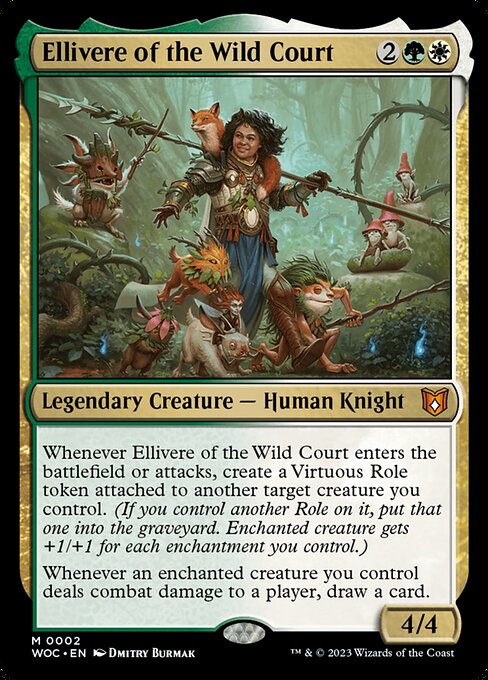
Ellivere bridges the gap between an enchantress engine and a combat deck. Entering or attacking creates a Virtuous Role on another creature, and those Roles grow stronger as your enchantment count increases. Enchanted creatures that connect with players then draw cards individually.
Spread your Auras across several attackers instead of putting everything on one threat. Evasion helps turn the combat-damage triggers into a steady stream of cards. Ellivere earns this position because she supplies both pressure and resources, but she needs creatures to enchant and opponents she can damage. A stalled battlefield can slow her considerably.
#3. Captain Sisay
Best for: legendary toolboxes and carefully planned creature engines.
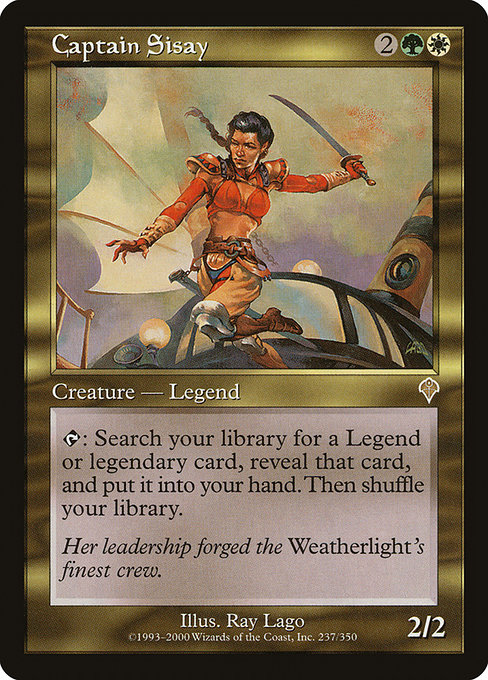
Captain Sisay can tap to find any legendary card and put it into your hand. That flexibility reaches beyond creatures to eligible legendary lands, artifacts, and enchantments. You can build a toolbox that finds protection, mana, or a finishing piece according to the board.
The strength is access to the right card; the cost is time. Sisay normally needs to survive summoning sickness, then you still have to cast what you found. Haste, untapping, and protection make a meaningful difference. Choose her if you enjoy planning several turns ahead and are comfortable with the repetition that frequent searching can introduce.
#4. Karametra, God of Harvests
Best for: creature-heavy ramp and resilient mana development.
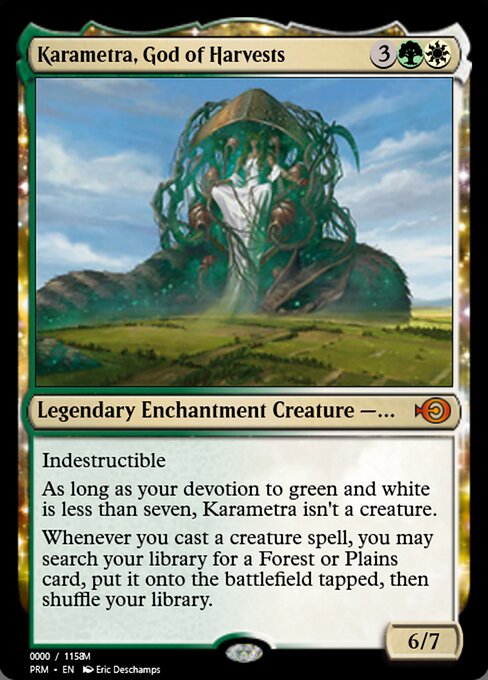
Karametra rewards each creature spell you cast with a tapped Forest or Plains from your library. The ability checks land types rather than requiring basic lands, giving you more flexibility when constructing the mana base. Once she is established, inexpensive creatures help turn ordinary turns into major mana development.
Her five-mana entry point is the main hurdle. You need early ramp and enough creatures left in hand to benefit after she resolves. Because the trigger is tied to casting, simply blinking a creature will not produce another land. Karametra is a strong choice for players who want their late-game mana to survive creature sweepers.
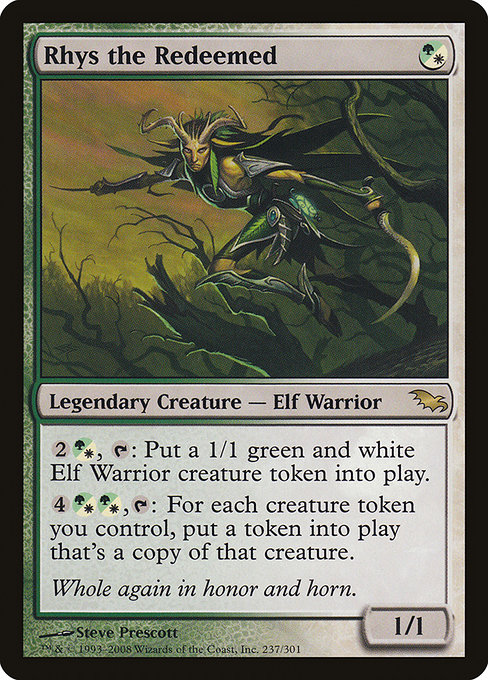
#5. Rhys the Redeemed
Best for: classic green-white creature tokens.
Rhys costs only one hybrid mana, making him easy to deploy early. His smaller activated ability starts a board with an Elf Warrior; his larger one creates a copy of every creature token you control. That ceiling makes him a natural home for both small armies and large individual tokens.
The six-mana copying ability is powerful but demands a board worth copying. Support Rhys with independent token production rather than expecting him to do all the work. Protection and ways to push damage through blockers matter more than another expensive payoff. He is our first recommendation for readers who specifically want a traditional Selesnya token commander.
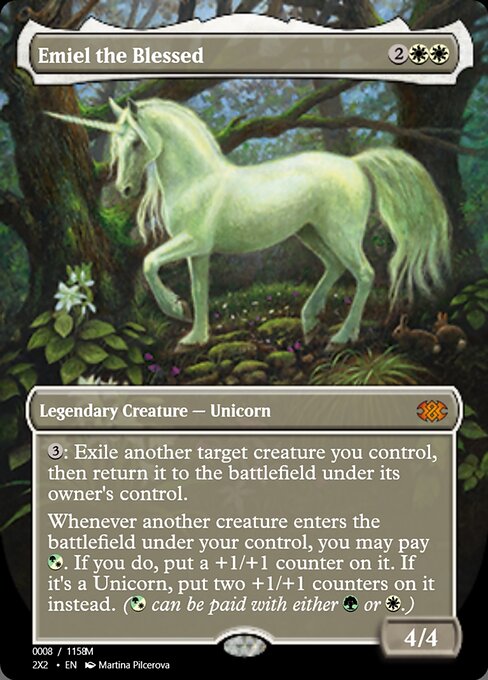
#6. Emiel the Blessed
Best for: repeatable blink and creature-based engines.
Emiel lets you spend three mana to exile another creature you control and return it under its owner's control. Reusing creatures with useful enters-the-battlefield abilities can generate cards, remove problems, or rebuild resources. The optional counter ability is welcome, but the repeatable blink is the main reason to choose this commander.
Count the mana your engine actually needs. A strong creature plus repeated three-mana activations can consume a whole turn. Emiel also cannot target herself with that ability, so protection for the commander needs its own slots. She rewards players who like flexible value engines and are willing to tune the supporting creatures carefully.
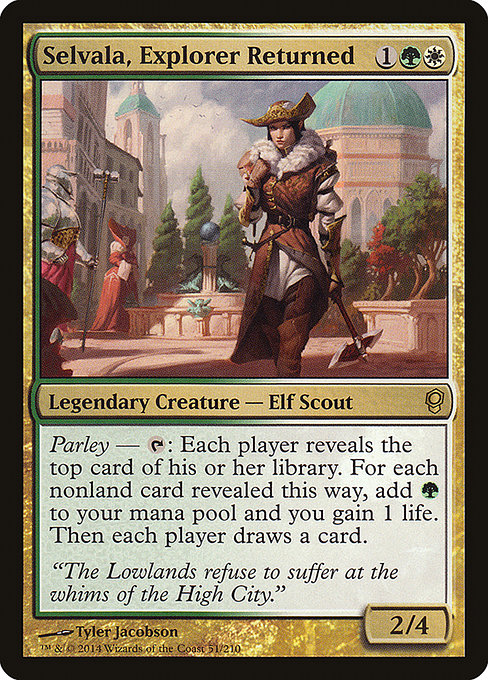
#7. Selvala, Explorer Returned
Best for: untap engines and explosive resource turns.
Selvala's parley ability reveals the top card of each player's library, produces green mana and life for the revealed nonland cards, then gives everyone a draw. In multiplayer, one activation can produce several resources at once. Untapping Selvala is therefore an especially attractive direction.
The output is variable, and opponents receive cards too. Your list should be built to use the additional resources better than the rest of the table, rather than assuming generosity is harmless. Also note that the ability is activated at instant timing; do not treat it as an ordinary mana ability while paying for another spell. Selvala has a high ceiling but needs thoughtful sequencing.
#8. Kutzil, Malamet Exemplar
Best for: enhanced attackers and protected main phases.
Kutzil prevents opponents from casting spells during your turn and rewards combat damage from creatures whose power exceeds their base power. Counters and anthem effects are natural ways to qualify. Connecting with different players can provide multiple draws, making a wide attack particularly appealing.
The protection is useful, but it is not a blanket shield: opponents can still use activated abilities, and they can cast spells on other turns. Kutzil also needs creatures to connect before the draw engine works. He ranks highly because he combines two jobs that aggressive Selesnya decks want, keeping your engine compact without forcing a single creature type.
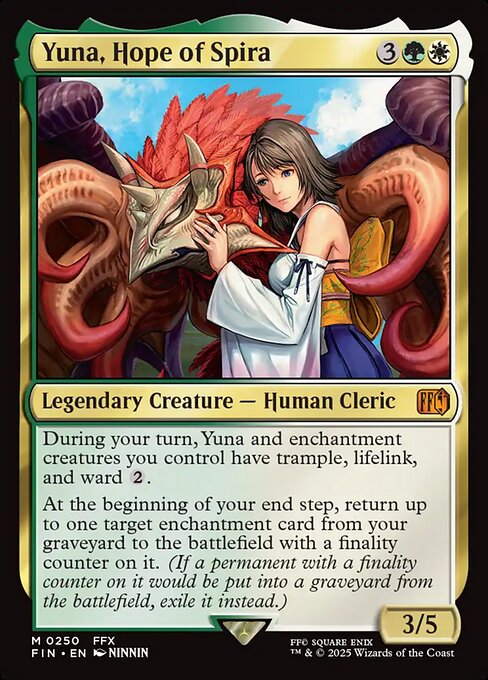
#9. Yuna, Hope of Spira
Best for: enchantment recursion and enchantment creatures.
Yuna returns up to one enchantment from your graveyard to the battlefield at your end step, with a finality counter. During your turn, she and your enchantment creatures also gain trample, lifelink, and ward two. The package supports a deck that turns discarded or removed enchantments into renewed board presence.
The finality counter is a real limitation: if that permanent would go to a graveyard from the battlefield, it is exiled instead. This is not unrestricted repeatable recursion for the same card. Yuna also costs five mana, and her keyword package applies during your turn. Choose her for a graveyard-centered enchantment plan rather than as a direct substitute for Sythis.
#10. Calix, Guided by Fate
Best for: copying enchantments through combat.
Calix places a counter when he or another enchantment you control enters, then offers a copy of a nonlegendary enchantment when he or one of your enchanted creatures deals combat damage to a player. This creates a satisfying connection between developing your enchantments and attacking with them.
The copy effect happens only once each turn, even if several qualifying attackers connect. Plan around one valuable copy rather than an entire wave. Evasive creatures and protection help make that connection reliable. Calix has an exciting ceiling, but an expensive enchantment with no safe attack available can leave your engine waiting for another turn.
#11. Katilda, Dawnhart Prime
Best for: Humans that double as mana producers.
Katilda grants your Humans a tap ability that produces mana of one of that creature's colors. A board full of small Humans can suddenly help cast much larger spells, and her own activated ability gives every creature you control a counter. At two mana, she comes down early enough to shape the whole game.
New creatures still need to respect summoning sickness when using the granted tap ability. Creature colors also matter; a white Human does not automatically produce green. Katilda asks you to commit to Humans, and a sweeper can take both your attackers and your mana. Keep some land-based development so rebuilding is practical.
#12. Sovereign Okinec Ahau
Best for: counters combined with temporary or static power boosts.
Sovereign Okinec Ahau checks your creatures when he attacks and adds counters based on how much their power exceeds their base power. Existing counters can contribute, but so can other power increases. That lets anthem effects help create permanent growth rather than merely improving one combat.
He does not simply double every counter on every permanent. The calculation is about each creature's power, and he must attack to trigger it. Build a board before committing him, then protect the turn when the engine starts. He is a particularly good choice if ordinary counter decks feel too linear and you want more interaction between different kinds of pump effects.
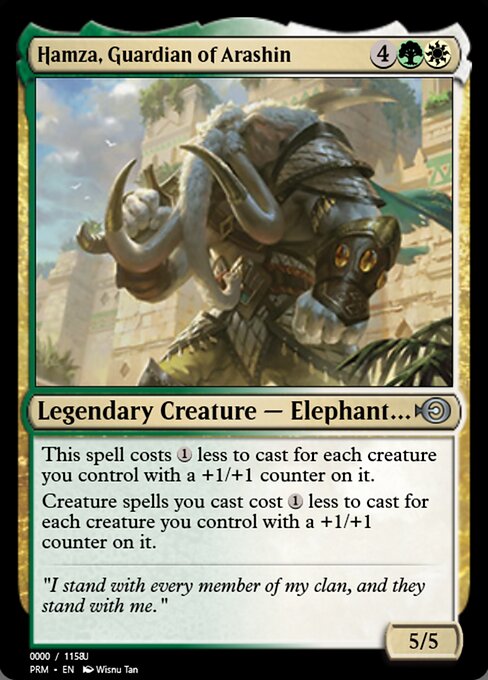
#13. Hamza, Guardian of Arashin
Best for: counter decks with a creature-heavy curve.
Hamza reduces his own generic mana cost for each creature you control with a counter, then applies that same kind of discount to your other creature spells. A few enhanced creatures can therefore make an apparently expensive hand much easier to deploy.
The number of creatures with counters matters, not the total number of counters. Spreading early counters often does more for your development than building one enormous attacker. The reduction also does not remove colored mana requirements. Hamza is a rewarding engine for creature-based lists, but he will not solve a hand full of noncreature spells or recover a board on his own.
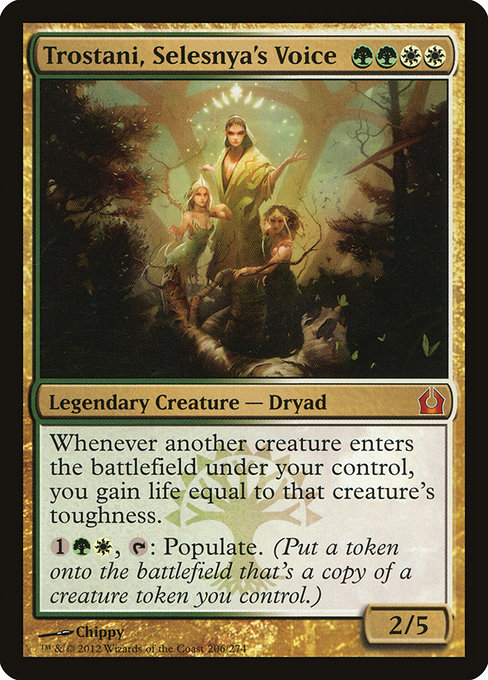
#14. Trostani, Selesnya's Voice
Best for: large tokens and lifegain.
Trostani gains life based on the toughness of another creature entering under your control and can tap to populate. That makes a single substantial creature token a renewable resource: populate creates another copy, which can also trigger more life gain.
Favor token quality as well as token quantity. Repeatedly copying an impressive token can accomplish more than filling your list with unrelated lifegain effects. The drawback is setup: Trostani does not create the initial creature token herself, and gaining life does not automatically defeat opponents. Make sure the deck converts its growing board or life total into a concrete route to victory.
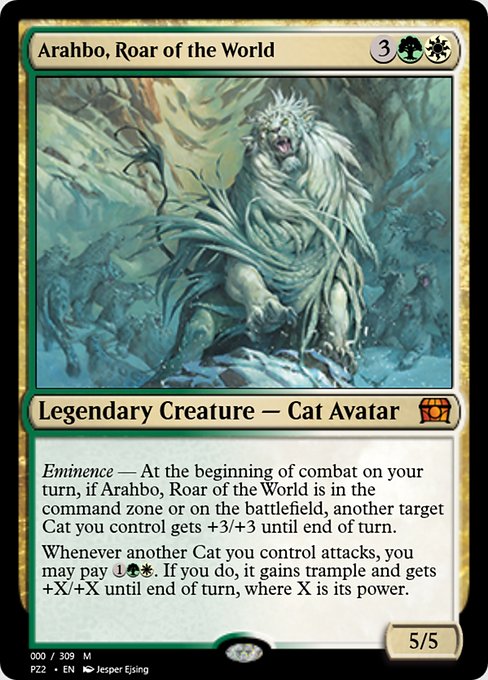
#15. Arahbo, Roar of the World
Best for: Cat decks and early combat pressure.
Arahbo's eminence ability can give another Cat a substantial power boost at the beginning of combat even while Arahbo remains in the command zone. That makes inexpensive Cats threatening without requiring you to cast a five-mana commander first.
Once on the battlefield, Arahbo also offers a paid attack trigger that grants another attacking Cat trample and additional power. Focus on Cats that can connect or provide useful utility rather than choosing every card solely for its type. The command-zone boost is dependable, but Arahbo does not provide a card-draw engine. Your support package must keep the deck from running out of threats.
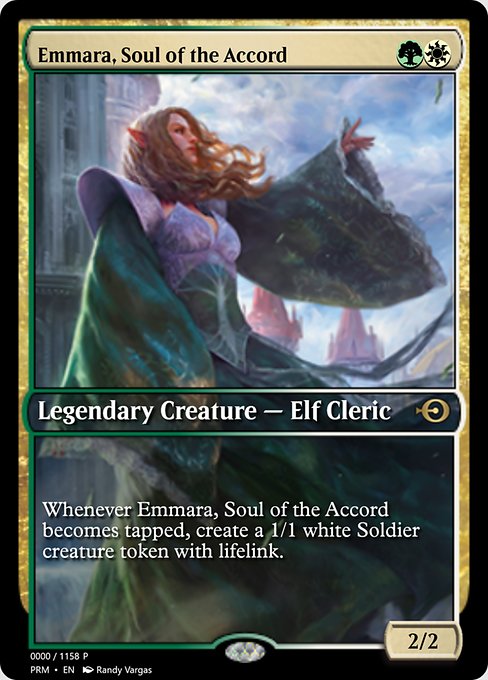
#16. Emmara, Soul of the Accord
Best for: low-curve tokens and tapping synergies.
Whenever Emmara becomes tapped, you get a Soldier token with lifelink. Attacking is one option, but crew, convoke, and other effects that tap your creatures give you additional ways to use the ability. She turns a small action into another body that can support the next turn.
The distinction is becoming tapped, not merely remaining tapped. Multiple triggers need ways to untap and tap her again. Build around useful enablers so the deck still functions when Emmara is removed. She is an approachable commander with room for technical play, although the tokens need a payoff to become a serious threat.
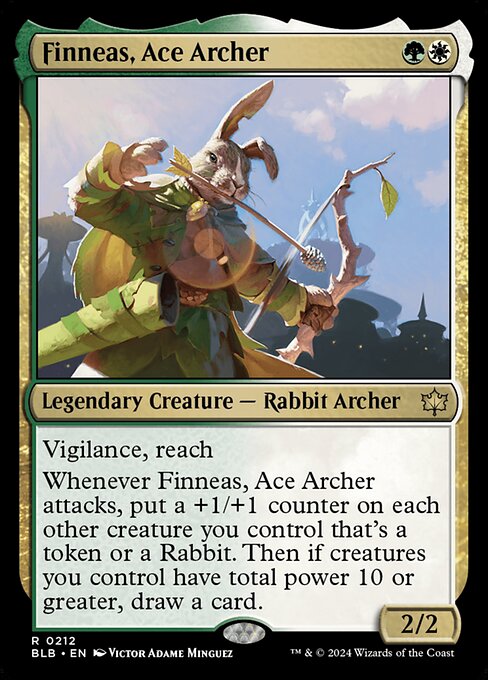
#17. Finneas, Ace Archer
Best for: aggressive token decks with a low-cost commander.
Finneas puts counters on your other creatures that are tokens or Rabbits when he attacks. After that, a total creature power of at least ten earns a card. He encourages a compact plan: establish a board, attack, grow the team, and keep resources moving.
You do not have to build Rabbit typal to benefit, because other creature tokens qualify as well. However, Finneas must attack, and his ability does not put the counter on himself. Protect him from unfavorable combat and include token makers that work without him. He is a clean option for players who prefer a proactive board to a complicated engine.
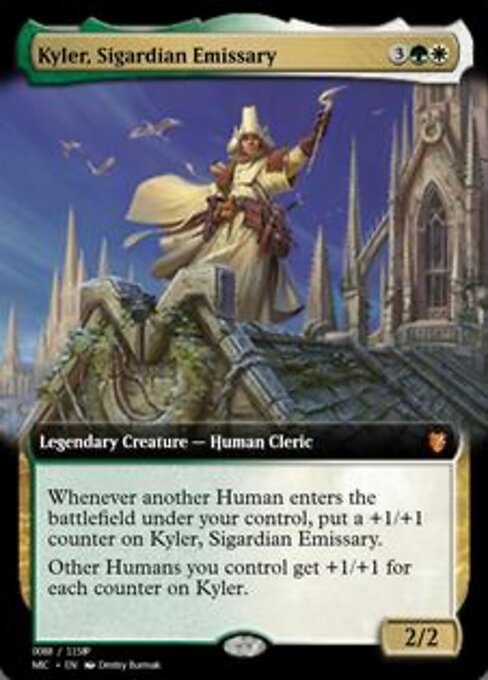
#18. Kyler, Sigardian Emissary
Best for: Human armies and enormous team bonuses.
Each other Human entering under your control adds a counter to Kyler, and your other Humans receive a bonus based on the number of counters on him. Producing several Human tokens can increase both the size of the army and the strength of every member.
This concentration of power is also the risk. Removing Kyler removes the bonus, so blocks and attacks that looked safe can change dramatically. At five mana, repeated recasting can be costly. Build with protection and useful Humans that can function independently. Kyler is excellent for players who want their creature-type theme to produce a clear, visible payoff.
#19. Sigarda, Font of Blessings
Best for: protected Human and Angel decks.
Sigarda gives your other permanents hexproof and allows you to cast Human and Angel spells from the top of your library. That supports a board whose important pieces are harder to target while giving you access to creatures beyond the cards in hand.
The protection does not cover Sigarda herself, and it does not stop sweepers that do not target. Her casting permission also will not let you play an arbitrary land or noncreature spell from the top. A high density of eligible creatures and some ways to move unwanted top cards improve reliability. She is a strong fit when both protection and creature-type identity matter to your deck.
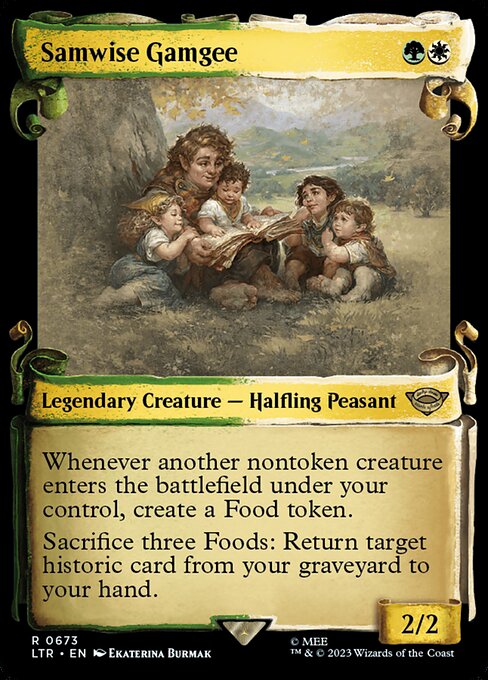
#20. Samwise Gamgee
Best for: Food and historic-card recursion.
Samwise produces Food whenever another nontoken creature enters under your control. Sacrificing three Foods returns a historic card from your graveyard to your hand, connecting creature development with recursion for artifacts, legendary cards, and Sagas.
This Food is more than a reserve of life; it is fuel for recovering a useful card. Reusable creature-entry effects are appealing, but creature tokens do not trigger Samwise's Food ability. Recursion also returns the card to your hand rather than directly to the battlefield. He rewards patient value play, with a stronger ceiling when the rest of the deck makes use of both creatures and artifacts.
#21. Yenna, Redtooth Regent
Best for: deliberate enchantment-copy engines.
Yenna can copy an enchantment you control that does not share a name with another permanent you control. Her copy is not legendary, and copying an Aura untaps Yenna and gives you a scry. The ability makes interesting enchantments worth building around in their own right.
The name restriction prevents simply choosing the same original again while its same-name copy remains. Activating only as a sorcery also limits reactive tricks. Yenna works best when you have several worthwhile targets and a plan for the extra copies. She ranks below the more immediate enchantment engines because she asks for more mana, setup, and careful sequencing.
#22. Kudo, King Among Bears
Best for: unusual creature combat and anthem effects.
Kudo makes other creatures base 2/2 Bears in addition to their existing types. That affects opponents as well as you, letting a small creature strategy challenge bodies that would otherwise dominate combat. Counters and anthem effects can then help your side rise above the shared baseline.
Kudo does not remove abilities, and base power and toughness are not the same as final power and toughness. An opposing creature can still be dangerous because of its text, counters, or other modifiers. Build to exploit the symmetrical effect instead of assuming it is universal removal. This is a distinctive choice for players who enjoy changing how the whole table evaluates creatures.
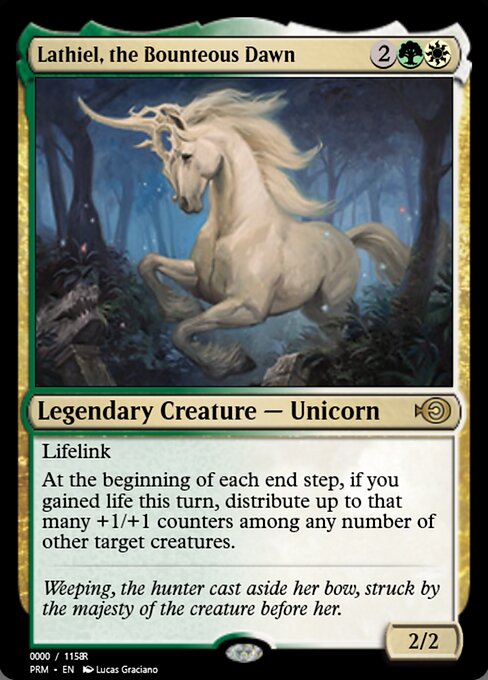
#23. Lathiel, the Bounteous Dawn
Best for: turning lifegain into counters.
At each end step, Lathiel can distribute counters among other creatures based on how much life you gained that turn. The phrase each end step is important: life gained during an opponent's turn can become another opportunity to grow your board.
Include ways to gain life outside your own combat, plus enough creatures to receive the counters. Lathiel cannot target herself with this trigger, and a large life total alone does not provide attackers. She is an appealing commander when you want lifegain to advance a board-based win condition, but she depends on both halves of that plan remaining available.
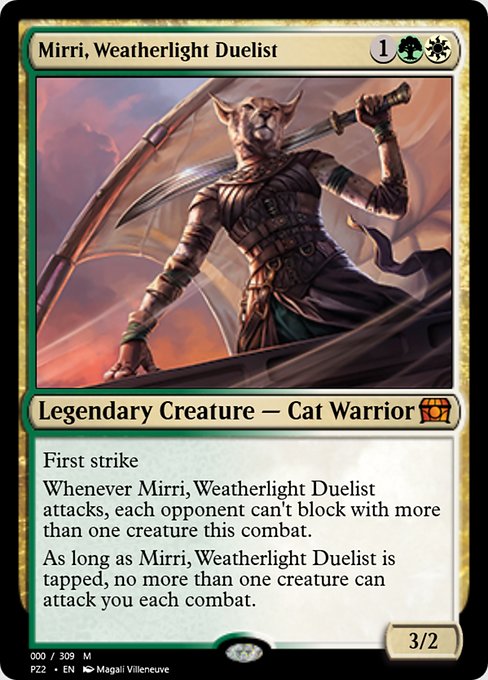
#24. Mirri, Weatherlight Duelist
Best for: managing combat in creature-heavy games.
When Mirri attacks, each opponent can block with only one creature that combat. While she is tapped, only one creature can attack you each combat. Those two restrictions can help a wide army connect while reducing the size of a retaliatory attack.
Protecting Mirri matters more than maximizing her individual damage. Also be cautious with vigilance: if she does not become tapped when attacking, her defensive restriction will not switch on from that attack. Mirri offers excellent combat utility, but she does not inherently draw cards or produce a board. Her ranking improves at tables where creature combat decides most games.
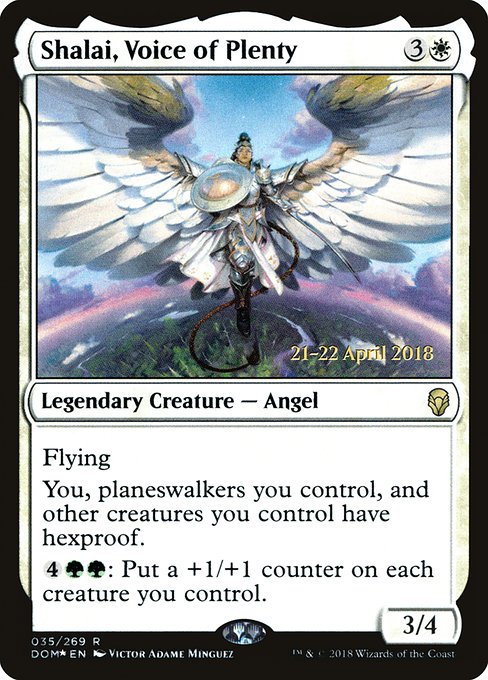
#25. Shalai, Voice of Plenty
Best for: protecting a creature board with a late-game mana outlet.
Shalai grants hexproof to you, your planeswalkers, and your other creatures. Her activated ability then puts a counter on each creature you control, giving excess mana a productive use. Although her casting cost contains only white, the green symbols in her rules text give her green-white color identity.
She does not protect herself with her own ability. Targeted removal aimed at Shalai can reopen the rest of the board, and untargeted sweepers remain effective. Treat her as a protection-oriented commander with a useful mana outlet rather than your sole source of growth or cards. She suits players who already know which creature engine they want to preserve.
#26. Cadira, Caller of the Small
Best for: turning mixed token resources into a Rabbit army.
When Cadira deals combat damage to a player, she makes a Rabbit for each token you control. That counts more than creature tokens: Foods, Treasures, and other token types can increase the output. Her built-in trample helps make a successful connection possible.
The deck still needs to get a three-mana creature through combat. Power boosts, protection, and other ways to improve access to a player make the engine more dependable. Cadira is especially attractive when your cards already create several kinds of tokens, but she can feel slow if you draw payoffs without either an initial token supply or a safe attack.
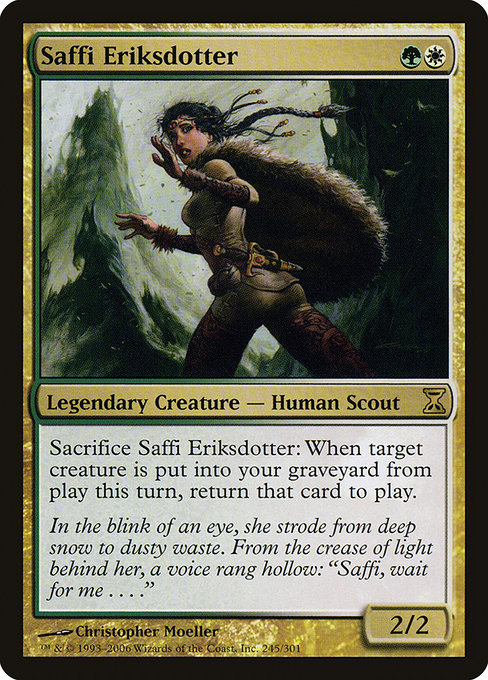
#27. Saffi Eriksdotter
Best for: creature recursion and intricate engines.
Saffi can sacrifice herself to set up a return for a target creature if that creature goes to your graveyard during the turn. That can preserve an important creature through destruction or support a larger recursion engine with the right supporting pieces.
The destination and timing matter: exile does not satisfy the condition, and the return is tied to that turn. Saffi also needs other cards to turn recursion into a sustained advantage. She sits lower on this general-purpose list because her strongest builds demand more precise construction, not because her ceiling is low. Pick her if you enjoy assembling interactions and explaining their sequence clearly.
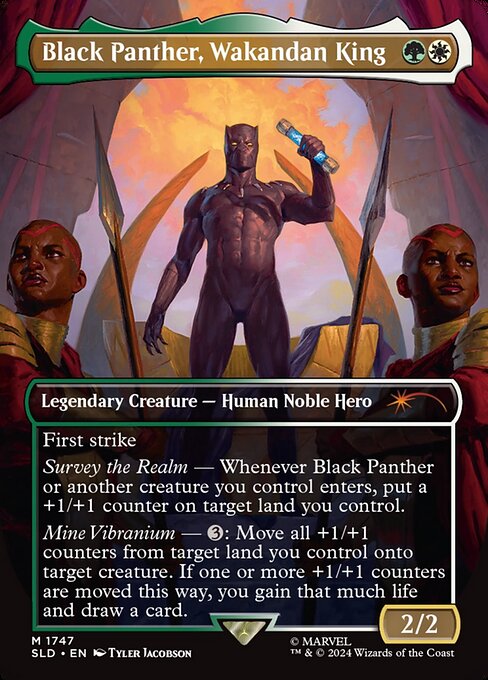
#28. Black Panther, Wakandan King
Best for: counters stored on lands and creature-entry value.
Black Panther places a counter on a land whenever he or another creature enters under your control. His activated ability can move all those counters from a chosen land onto a creature; if counters move, you gain that much life and draw a card.
A counter on an ordinary noncreature land does not turn it into an attacker. The appeal is storing resources and choosing when to move them. The activation draws one card when it moves counters, rather than a card for each counter. This is a flexible and unusual engine, but repeated three-mana activations require planning around the rest of your turn.
#29. Ghalta and Mavren
Best for: large creatures and spectacular token combat.
Ghalta and Mavren offer two rewards when you attack: a tapped attacking Dinosaur based on the greatest power among your other attackers, or lifelinking Vampires based on the number of other attackers. The commander does not have to attack to trigger the ability, so an existing board can benefit immediately after you cast it.
Seven mana is the substantial tradeoff. You need early development and other attackers to make the trigger worthwhile, and the two modes produce very different combat outcomes. This is a satisfying commander for a battlecruiser-style table, but it is less efficient than the cheap engines above it when opponents interact frequently.
#30. Wylie Duke, Atiin Hero
Best for: tapping engines that produce cards.
Wylie Duke draws a card and gains a life whenever he becomes tapped. That turns crew, convoke, and other tapping effects into potential resource engines. His simple trigger gives you a lot of freedom to choose how the surrounding deck operates.
Vigilance means attacking alone normally will not tap Wylie, so the deck must supply an enabler. You also need an untap before another tap can trigger him again. He rounds out this list as a compelling specialist: excellent when the list is constructed around his requirement, less reliable if included as a generic combat commander.
Building a better Selesnya Commander deck
Start with the action your commander rewards. Sythis wants enchantment spells; Katilda wants Humans; Cadira wants tokens and combat access. Cards that support that action while also drawing, interacting, or developing mana tend to make the deck more cohesive.
Then identify what your commander does not supply. Rhys creates tokens but does not draw cards. Karametra develops lands but needs creatures to cast. Mirri changes combat but cannot assemble an army by herself. Fill those gaps before adding more expensive finishers.
Finally, plan for removal. Protection can help preserve a board, but recovery matters too. Keep enough independent card advantage and mana development that losing your commander does not end your participation in the game. A deck that functions after one sweeper will usually feel better to play than one built entirely around its best opening hand.
Frequently asked questions
What does Selesnya mean in MTG?
Selesnya refers to green and white together. A Selesnya Commander deck uses a commander with green-white color identity and cards allowed by that identity. Color identity is not determined solely by the mana cost printed at the top of the card.
Who is the best Selesnya commander overall?
Our recommendation is Sythis, Harvest's Hand for her inexpensive, repeatable card-advantage engine. That is a general deck-building recommendation, not a claim that she wins every matchup. Choose Rhys for a classic token plan or Ellivere if attacking with enchanted creatures sounds more appealing.
Who is the best green-white commander for tokens?
Rhys the Redeemed is our first pick for a dedicated creature-token deck because he can create copies of every creature token you control. Trostani rewards large individual tokens, Emmara rewards tapping synergies, and Cadira can turn even noncreature tokens into an army.
Which Selesnya commander is good for a first deck?
Emmara and Finneas offer clear plans with relatively inexpensive commanders: produce creatures and use them to build an advantage. Rhys is also easy to understand, although his larger activation needs substantial mana. Choose a play pattern you enjoy, and compare current prices before deciding on a list.
Are Selesnya decks always creature decks?
No. Enchantments can be the central engine, particularly with Sythis, Calix, Yenna, or Yuna. Many green-white decks still use creatures, but the main source of advantage can come from casting, copying, or recurring enchantments rather than simply attacking with the largest body.
Why are Emiel and Shalai on a green-white list?
Both have green-white color identity even though their casting costs contain only white mana. Their rules text includes green or green-white hybrid mana symbols. Use color identity, rather than only the casting cost or visual card frame, when checking a commander's deck-building colors.
Can green-white commanders support highly optimized decks?
Yes. Repeatable tutoring, efficient card draw, and creature engines give Selesnya powerful tools. This article does not rank current cEDH results, and a commander's name alone does not establish a deck's power level. Explain the actual speed, interaction, and combos in your list when choosing a game.
Which Selesnya commander should you build?
Choose the engine you want to repeat throughout a game. Cast enchantments with Sythis, multiply tokens with Rhys, turn creatures into lands with Karametra, or search a legendary toolbox with Captain Sisay. Those choices lead to very different decks even though they share two colors.
Use this ranking as a shortlist, then inspect the exact card text and the supporting cards you already own. A commander that makes your preferred style of Magic work smoothly is a better starting point than choosing a name solely because it ranks a few places higher.
Sources and editorial notes
Rules analysis uses the Oracle text and Commander legality records in the ElderCodex card catalog. Individual card images in the published article link to card searches for further inspection. Rankings and strategic evaluations are original editorial judgments; no playtesting or measured win rates are claimed.
Community reference: EDHREC, Top Selesnya Commanders — https://edhrec.com/commanders/selesnya
Legality reference: Wizards of the Coast, Banned & Restricted — https://magic.wizards.com/en/banned-restricted-list
30 Best Selesnya Commanders: Top Green-White MTG Picks
By ElderArticles · Updated 10/16/2026 · 21 min read
Sythis, Harvest's Hand | Illustration by Craig Drake
Discover 30 of the best Selesnya commanders for MTG, with green-white picks for tokens, enchantments, counters, lifegain, and creature engines.
Table of contents
Sythis, Harvest's Hand is our best overall Selesnya commander for consistent card advantage. Rhys the Redeemed is our pick for classic token armies, while Ellivere of the Wild Court combines enchantments with aggressive combat. The right choice depends on whether you want to build a swarm, grow counters, reuse creatures, or assemble an enchantment engine.
Selesnya is Magic: The Gathering's green-white color pair. Its commanders can support far more than simply playing large creatures: the combination offers mana development, creature protection, token production, and several ways to turn permanent-based synergies into cards.
This guide ranks 30 green-white commanders for multiplayer Commander and explains what each one does well, what it needs from the rest of the deck, and where it can struggle.
How we ranked these Selesnya commanders
These are editorial recommendations for multiplayer Commander, not a tournament leaderboard or an ordering of measured win rates. We prioritize a commander's efficiency, access to cards or mana, ability to support a coherent plan, and usefulness across a range of ordinary playgroups. Synergy and room to customize matter more here than maximum combo speed.
Every selection has exactly green-white color identity in the ElderCodex catalog. We focus on individual commanders, rather than partner or background pairings. Card text and catalog legality were checked while preparing this draft; EDHREC's Selesnya page provided community context, not the ranking order. Check the current official banned list before building, and discuss your deck's intended power with your group.
A lower position does not mean a commander cannot beat a higher one. A focused Saffi deck can be substantially stronger than a relaxed Sythis deck. Budget, interaction, consistency, and the other 99 cards change the result.
Sythis, Harvest's Hand | Illustration by Craig Drake
Best for: enchantress decks and consistent card advantage.
Sythis is our best overall Selesnya commander because she rewards a deck for doing something it already wants to do: cast enchantments. For just two mana, she turns each enchantment spell into a card and a point of life. That makes it easier to keep developing your board without emptying your hand.
Build with inexpensive enchantments, enchantment-based interaction, and a clear way to finish. The temptation is to fill every slot with another engine piece; resist it. Sythis needs protection and a win condition as much as she needs card draw. She ranks first for efficiency and consistency, not because every Sythis list belongs at a competitive table.
Ellivere of the Wild Court | Illustration by Dmitry Burmak
Best for: aggressive enchantment decks.
Ellivere bridges the gap between an enchantress engine and a combat deck. Entering or attacking creates a Virtuous Role on another creature, and those Roles grow stronger as your enchantment count increases. Enchanted creatures that connect with players then draw cards individually.
Spread your Auras across several attackers instead of putting everything on one threat. Evasion helps turn the combat-damage triggers into a steady stream of cards. Ellivere earns this position because she supplies both pressure and resources, but she needs creatures to enchant and opponents she can damage. A stalled battlefield can slow her considerably.
Best for: legendary toolboxes and carefully planned creature engines.
Captain Sisay can tap to find any legendary card and put it into your hand. That flexibility reaches beyond creatures to eligible legendary lands, artifacts, and enchantments. You can build a toolbox that finds protection, mana, or a finishing piece according to the board.
The strength is access to the right card; the cost is time. Sisay normally needs to survive summoning sickness, then you still have to cast what you found. Haste, untapping, and protection make a meaningful difference. Choose her if you enjoy planning several turns ahead and are comfortable with the repetition that frequent searching can introduce.
Karametra, God of Harvests | Illustration by Eric Deschamps
Best for: creature-heavy ramp and resilient mana development.
Karametra rewards each creature spell you cast with a tapped Forest or Plains from your library. The ability checks land types rather than requiring basic lands, giving you more flexibility when constructing the mana base. Once she is established, inexpensive creatures help turn ordinary turns into major mana development.
Her five-mana entry point is the main hurdle. You need early ramp and enough creatures left in hand to benefit after she resolves. Because the trigger is tied to casting, simply blinking a creature will not produce another land. Karametra is a strong choice for players who want their late-game mana to survive creature sweepers.
Rhys the Redeemed | Illustration by Steve Prescott
Best for: classic green-white creature tokens.
Rhys costs only one hybrid mana, making him easy to deploy early. His smaller activated ability starts a board with an Elf Warrior; his larger one creates a copy of every creature token you control. That ceiling makes him a natural home for both small armies and large individual tokens.
The six-mana copying ability is powerful but demands a board worth copying. Support Rhys with independent token production rather than expecting him to do all the work. Protection and ways to push damage through blockers matter more than another expensive payoff. He is our first recommendation for readers who specifically want a traditional Selesnya token commander.
Emiel the Blessed | Illustration by Martina Pilcerova
Best for: repeatable blink and creature-based engines.
Emiel lets you spend three mana to exile another creature you control and return it under its owner's control. Reusing creatures with useful enters-the-battlefield abilities can generate cards, remove problems, or rebuild resources. The optional counter ability is welcome, but the repeatable blink is the main reason to choose this commander.
Count the mana your engine actually needs. A strong creature plus repeated three-mana activations can consume a whole turn. Emiel also cannot target herself with that ability, so protection for the commander needs its own slots. She rewards players who like flexible value engines and are willing to tune the supporting creatures carefully.
Selvala, Explorer Returned | Illustration by Tyler Jacobson
Best for: untap engines and explosive resource turns.
Selvala's parley ability reveals the top card of each player's library, produces green mana and life for the revealed nonland cards, then gives everyone a draw. In multiplayer, one activation can produce several resources at once. Untapping Selvala is therefore an especially attractive direction.
The output is variable, and opponents receive cards too. Your list should be built to use the additional resources better than the rest of the table, rather than assuming generosity is harmless. Also note that the ability is activated at instant timing; do not treat it as an ordinary mana ability while paying for another spell. Selvala has a high ceiling but needs thoughtful sequencing.
Kutzil, Malamet Exemplar | Illustration by Livia Prima
Best for: enhanced attackers and protected main phases.
Kutzil prevents opponents from casting spells during your turn and rewards combat damage from creatures whose power exceeds their base power. Counters and anthem effects are natural ways to qualify. Connecting with different players can provide multiple draws, making a wide attack particularly appealing.
The protection is useful, but it is not a blanket shield: opponents can still use activated abilities, and they can cast spells on other turns. Kutzil also needs creatures to connect before the draw engine works. He ranks highly because he combines two jobs that aggressive Selesnya decks want, keeping your engine compact without forcing a single creature type.
Best for: enchantment recursion and enchantment creatures.
Yuna returns up to one enchantment from your graveyard to the battlefield at your end step, with a finality counter. During your turn, she and your enchantment creatures also gain trample, lifelink, and ward two. The package supports a deck that turns discarded or removed enchantments into renewed board presence.
The finality counter is a real limitation: if that permanent would go to a graveyard from the battlefield, it is exiled instead. This is not unrestricted repeatable recursion for the same card. Yuna also costs five mana, and her keyword package applies during your turn. Choose her for a graveyard-centered enchantment plan rather than as a direct substitute for Sythis.
Calix places a counter when he or another enchantment you control enters, then offers a copy of a nonlegendary enchantment when he or one of your enchanted creatures deals combat damage to a player. This creates a satisfying connection between developing your enchantments and attacking with them.
The copy effect happens only once each turn, even if several qualifying attackers connect. Plan around one valuable copy rather than an entire wave. Evasive creatures and protection help make that connection reliable. Calix has an exciting ceiling, but an expensive enchantment with no safe attack available can leave your engine waiting for another turn.
Katilda, Dawnhart Prime | Illustration by Tyler Crook
Best for: Humans that double as mana producers.
Katilda grants your Humans a tap ability that produces mana of one of that creature's colors. A board full of small Humans can suddenly help cast much larger spells, and her own activated ability gives every creature you control a counter. At two mana, she comes down early enough to shape the whole game.
New creatures still need to respect summoning sickness when using the granted tap ability. Creature colors also matter; a white Human does not automatically produce green. Katilda asks you to commit to Humans, and a sweeper can take both your attackers and your mana. Keep some land-based development so rebuilding is practical.
Sovereign Okinec Ahau | Illustration by Gary Baseman
Best for: counters combined with temporary or static power boosts.
Sovereign Okinec Ahau checks your creatures when he attacks and adds counters based on how much their power exceeds their base power. Existing counters can contribute, but so can other power increases. That lets anthem effects help create permanent growth rather than merely improving one combat.
He does not simply double every counter on every permanent. The calculation is about each creature's power, and he must attack to trigger it. Build a board before committing him, then protect the turn when the engine starts. He is a particularly good choice if ordinary counter decks feel too linear and you want more interaction between different kinds of pump effects.
Hamza, Guardian of Arashin | Illustration by Wisnu Tan
Best for: counter decks with a creature-heavy curve.
Hamza reduces his own generic mana cost for each creature you control with a counter, then applies that same kind of discount to your other creature spells. A few enhanced creatures can therefore make an apparently expensive hand much easier to deploy.
The number of creatures with counters matters, not the total number of counters. Spreading early counters often does more for your development than building one enormous attacker. The reduction also does not remove colored mana requirements. Hamza is a rewarding engine for creature-based lists, but he will not solve a hand full of noncreature spells or recover a board on his own.
Trostani, Selesnya's Voice | Illustration by Chippy
Best for: large tokens and lifegain.
Trostani gains life based on the toughness of another creature entering under your control and can tap to populate. That makes a single substantial creature token a renewable resource: populate creates another copy, which can also trigger more life gain.
Favor token quality as well as token quantity. Repeatedly copying an impressive token can accomplish more than filling your list with unrelated lifegain effects. The drawback is setup: Trostani does not create the initial creature token herself, and gaining life does not automatically defeat opponents. Make sure the deck converts its growing board or life total into a concrete route to victory.
Arahbo, Roar of the World | Illustration by Jesper Ejsing
Best for: Cat decks and early combat pressure.
Arahbo's eminence ability can give another Cat a substantial power boost at the beginning of combat even while Arahbo remains in the command zone. That makes inexpensive Cats threatening without requiring you to cast a five-mana commander first.
Once on the battlefield, Arahbo also offers a paid attack trigger that grants another attacking Cat trample and additional power. Focus on Cats that can connect or provide useful utility rather than choosing every card solely for its type. The command-zone boost is dependable, but Arahbo does not provide a card-draw engine. Your support package must keep the deck from running out of threats.
Emmara, Soul of the Accord | Illustration by Randy Vargas
Best for: low-curve tokens and tapping synergies.
Whenever Emmara becomes tapped, you get a Soldier token with lifelink. Attacking is one option, but crew, convoke, and other effects that tap your creatures give you additional ways to use the ability. She turns a small action into another body that can support the next turn.
The distinction is becoming tapped, not merely remaining tapped. Multiple triggers need ways to untap and tap her again. Build around useful enablers so the deck still functions when Emmara is removed. She is an approachable commander with room for technical play, although the tokens need a payoff to become a serious threat.
Finneas, Ace Archer | Illustration by Victor Adame Minguez
Best for: aggressive token decks with a low-cost commander.
Finneas puts counters on your other creatures that are tokens or Rabbits when he attacks. After that, a total creature power of at least ten earns a card. He encourages a compact plan: establish a board, attack, grow the team, and keep resources moving.
You do not have to build Rabbit typal to benefit, because other creature tokens qualify as well. However, Finneas must attack, and his ability does not put the counter on himself. Protect him from unfavorable combat and include token makers that work without him. He is a clean option for players who prefer a proactive board to a complicated engine.
Kyler, Sigardian Emissary | Illustration by Dmitry Burmak
Best for: Human armies and enormous team bonuses.
Each other Human entering under your control adds a counter to Kyler, and your other Humans receive a bonus based on the number of counters on him. Producing several Human tokens can increase both the size of the army and the strength of every member.
This concentration of power is also the risk. Removing Kyler removes the bonus, so blocks and attacks that looked safe can change dramatically. At five mana, repeated recasting can be costly. Build with protection and useful Humans that can function independently. Kyler is excellent for players who want their creature-type theme to produce a clear, visible payoff.
Sigarda, Font of Blessings | Illustration by Justyna Dura
Best for: protected Human and Angel decks.
Sigarda gives your other permanents hexproof and allows you to cast Human and Angel spells from the top of your library. That supports a board whose important pieces are harder to target while giving you access to creatures beyond the cards in hand.
The protection does not cover Sigarda herself, and it does not stop sweepers that do not target. Her casting permission also will not let you play an arbitrary land or noncreature spell from the top. A high density of eligible creatures and some ways to move unwanted top cards improve reliability. She is a strong fit when both protection and creature-type identity matter to your deck.
Samwise produces Food whenever another nontoken creature enters under your control. Sacrificing three Foods returns a historic card from your graveyard to your hand, connecting creature development with recursion for artifacts, legendary cards, and Sagas.
This Food is more than a reserve of life; it is fuel for recovering a useful card. Reusable creature-entry effects are appealing, but creature tokens do not trigger Samwise's Food ability. Recursion also returns the card to your hand rather than directly to the battlefield. He rewards patient value play, with a stronger ceiling when the rest of the deck makes use of both creatures and artifacts.
Yenna, Redtooth Regent | Illustration by Justyna Dura
Best for: deliberate enchantment-copy engines.
Yenna can copy an enchantment you control that does not share a name with another permanent you control. Her copy is not legendary, and copying an Aura untaps Yenna and gives you a scry. The ability makes interesting enchantments worth building around in their own right.
The name restriction prevents simply choosing the same original again while its same-name copy remains. Activating only as a sorcery also limits reactive tricks. Yenna works best when you have several worthwhile targets and a plan for the extra copies. She ranks below the more immediate enchantment engines because she asks for more mana, setup, and careful sequencing.
Kudo, King Among Bears | Illustration by Ekaterina Burmak
Best for: unusual creature combat and anthem effects.
Kudo makes other creatures base 2/2 Bears in addition to their existing types. That affects opponents as well as you, letting a small creature strategy challenge bodies that would otherwise dominate combat. Counters and anthem effects can then help your side rise above the shared baseline.
Kudo does not remove abilities, and base power and toughness are not the same as final power and toughness. An opposing creature can still be dangerous because of its text, counters, or other modifiers. Build to exploit the symmetrical effect instead of assuming it is universal removal. This is a distinctive choice for players who enjoy changing how the whole table evaluates creatures.
Lathiel, the Bounteous Dawn | Illustration by Lucas Graciano
Best for: turning lifegain into counters.
At each end step, Lathiel can distribute counters among other creatures based on how much life you gained that turn. The phrase each end step is important: life gained during an opponent's turn can become another opportunity to grow your board.
Include ways to gain life outside your own combat, plus enough creatures to receive the counters. Lathiel cannot target herself with this trigger, and a large life total alone does not provide attackers. She is an appealing commander when you want lifegain to advance a board-based win condition, but she depends on both halves of that plan remaining available.
Mirri, Weatherlight Duelist | Illustration by Magali Villeneuve
Best for: managing combat in creature-heavy games.
When Mirri attacks, each opponent can block with only one creature that combat. While she is tapped, only one creature can attack you each combat. Those two restrictions can help a wide army connect while reducing the size of a retaliatory attack.
Protecting Mirri matters more than maximizing her individual damage. Also be cautious with vigilance: if she does not become tapped when attacking, her defensive restriction will not switch on from that attack. Mirri offers excellent combat utility, but she does not inherently draw cards or produce a board. Her ranking improves at tables where creature combat decides most games.
Shalai, Voice of Plenty | Illustration by Victor Adame Minguez
Best for: protecting a creature board with a late-game mana outlet.
Shalai grants hexproof to you, your planeswalkers, and your other creatures. Her activated ability then puts a counter on each creature you control, giving excess mana a productive use. Although her casting cost contains only white, the green symbols in her rules text give her green-white color identity.
She does not protect herself with her own ability. Targeted removal aimed at Shalai can reopen the rest of the board, and untargeted sweepers remain effective. Treat her as a protection-oriented commander with a useful mana outlet rather than your sole source of growth or cards. She suits players who already know which creature engine they want to preserve.
Cadira, Caller of the Small | Illustration by Alexandr Leskinen
Best for: turning mixed token resources into a Rabbit army.
When Cadira deals combat damage to a player, she makes a Rabbit for each token you control. That counts more than creature tokens: Foods, Treasures, and other token types can increase the output. Her built-in trample helps make a successful connection possible.
The deck still needs to get a three-mana creature through combat. Power boosts, protection, and other ways to improve access to a player make the engine more dependable. Cadira is especially attractive when your cards already create several kinds of tokens, but she can feel slow if you draw payoffs without either an initial token supply or a safe attack.
Saffi Eriksdotter | Illustration by Christopher Moeller
Best for: creature recursion and intricate engines.
Saffi can sacrifice herself to set up a return for a target creature if that creature goes to your graveyard during the turn. That can preserve an important creature through destruction or support a larger recursion engine with the right supporting pieces.
The destination and timing matter: exile does not satisfy the condition, and the return is tied to that turn. Saffi also needs other cards to turn recursion into a sustained advantage. She sits lower on this general-purpose list because her strongest builds demand more precise construction, not because her ceiling is low. Pick her if you enjoy assembling interactions and explaining their sequence clearly.
Black Panther, Wakandan King | Illustration by Tyler Jacobson
Best for: counters stored on lands and creature-entry value.
Black Panther places a counter on a land whenever he or another creature enters under your control. His activated ability can move all those counters from a chosen land onto a creature; if counters move, you gain that much life and draw a card.
A counter on an ordinary noncreature land does not turn it into an attacker. The appeal is storing resources and choosing when to move them. The activation draws one card when it moves counters, rather than a card for each counter. This is a flexible and unusual engine, but repeated three-mana activations require planning around the rest of your turn.
Best for: large creatures and spectacular token combat.
Ghalta and Mavren offer two rewards when you attack: a tapped attacking Dinosaur based on the greatest power among your other attackers, or lifelinking Vampires based on the number of other attackers. The commander does not have to attack to trigger the ability, so an existing board can benefit immediately after you cast it.
Seven mana is the substantial tradeoff. You need early development and other attackers to make the trigger worthwhile, and the two modes produce very different combat outcomes. This is a satisfying commander for a battlecruiser-style table, but it is less efficient than the cheap engines above it when opponents interact frequently.
Wylie Duke, Atiin Hero | Illustration by Ekaterina Burmak
Best for: tapping engines that produce cards.
Wylie Duke draws a card and gains a life whenever he becomes tapped. That turns crew, convoke, and other tapping effects into potential resource engines. His simple trigger gives you a lot of freedom to choose how the surrounding deck operates.
Vigilance means attacking alone normally will not tap Wylie, so the deck must supply an enabler. You also need an untap before another tap can trigger him again. He rounds out this list as a compelling specialist: excellent when the list is constructed around his requirement, less reliable if included as a generic combat commander.
Building a better Selesnya Commander deck
Start with the action your commander rewards. Sythis wants enchantment spells; Katilda wants Humans; Cadira wants tokens and combat access. Cards that support that action while also drawing, interacting, or developing mana tend to make the deck more cohesive.
Then identify what your commander does not supply. Rhys creates tokens but does not draw cards. Karametra develops lands but needs creatures to cast. Mirri changes combat but cannot assemble an army by herself. Fill those gaps before adding more expensive finishers.
Finally, plan for removal. Protection can help preserve a board, but recovery matters too. Keep enough independent card advantage and mana development that losing your commander does not end your participation in the game. A deck that functions after one sweeper will usually feel better to play than one built entirely around its best opening hand.
Frequently asked questions
What does Selesnya mean in MTG?
Selesnya refers to green and white together. A Selesnya Commander deck uses a commander with green-white color identity and cards allowed by that identity. Color identity is not determined solely by the mana cost printed at the top of the card.
Who is the best Selesnya commander overall?
Our recommendation is Sythis, Harvest's Hand for her inexpensive, repeatable card-advantage engine. That is a general deck-building recommendation, not a claim that she wins every matchup. Choose Rhys for a classic token plan or Ellivere if attacking with enchanted creatures sounds more appealing.
Who is the best green-white commander for tokens?
Rhys the Redeemed is our first pick for a dedicated creature-token deck because he can create copies of every creature token you control. Trostani rewards large individual tokens, Emmara rewards tapping synergies, and Cadira can turn even noncreature tokens into an army.
Which Selesnya commander is good for a first deck?
Emmara and Finneas offer clear plans with relatively inexpensive commanders: produce creatures and use them to build an advantage. Rhys is also easy to understand, although his larger activation needs substantial mana. Choose a play pattern you enjoy, and compare current prices before deciding on a list.
Are Selesnya decks always creature decks?
No. Enchantments can be the central engine, particularly with Sythis, Calix, Yenna, or Yuna. Many green-white decks still use creatures, but the main source of advantage can come from casting, copying, or recurring enchantments rather than simply attacking with the largest body.
Why are Emiel and Shalai on a green-white list?
Both have green-white color identity even though their casting costs contain only white mana. Their rules text includes green or green-white hybrid mana symbols. Use color identity, rather than only the casting cost or visual card frame, when checking a commander's deck-building colors.
Can green-white commanders support highly optimized decks?
Yes. Repeatable tutoring, efficient card draw, and creature engines give Selesnya powerful tools. This article does not rank current cEDH results, and a commander's name alone does not establish a deck's power level. Explain the actual speed, interaction, and combos in your list when choosing a game.
Which Selesnya commander should you build?
Choose the engine you want to repeat throughout a game. Cast enchantments with Sythis, multiply tokens with Rhys, turn creatures into lands with Karametra, or search a legendary toolbox with Captain Sisay. Those choices lead to very different decks even though they share two colors.
Use this ranking as a shortlist, then inspect the exact card text and the supporting cards you already own. A commander that makes your preferred style of Magic work smoothly is a better starting point than choosing a name solely because it ranks a few places higher.
Sources and editorial notes
Rules analysis uses the Oracle text and Commander legality records in the ElderCodex card catalog. Individual card images in the published article link to card searches for further inspection. Rankings and strategic evaluations are original editorial judgments; no playtesting or measured win rates are claimed.
Community reference: EDHREC, Top Selesnya Commanders — https://edhrec.com/commanders/selesnya
Legality reference: Wizards of the Coast, Banned & Restricted — https://magic.wizards.com/en/banned-restricted-list