By ElderArticles · Updated 11/4/2026 · 15 min read
Find the best goad commanders in MTG, ranked with key synergies, honest drawbacks, rules tips, and winning plans for the last opponent at your Commander table.
Table of contents
Making everyone fight sounds like a winning strategy. Then the third player dies, the last opponent untaps, and all those enormous creatures are looking at you.
That is the test a good goad commander has to pass. Redirecting combat buys time, but the best decks turn that time into cards, resources, or a finishing attack of their own.
Here are fifteen Commander-legal leaders that genuinely use goad, ranked for four-player games. We are counting down to the commander that best combines a repeatable engine with a practical plan for the endgame.
Disrupt Decorum | Illustration by Sidharth Chaturvedi
How We Ranked the Best Goad Commanders
This is an editorial ranking, not a tournament win-rate table. Repeatable goad, coverage across multiple opponents, card advantage, recovery after removal, and the ability to beat the final player carry the most weight. A commander that wins through a harmful gift can be stronger in a vacuum while ranking lower as a goad experience.
All fifteen featured leaders were checked against Scryfall's Commander legality on November 4, 2026. Preview-only cards are excluded. Background choices change color identity; the Baeloth entry specifies its recommended pairing. Synergies discussed in each entry belong to that commander's colors, including that Background where applicable.
Goad Rules to Know Before You Build
A goaded creature attacks each combat if able and attacks a player other than the player responsible for goading it if able. Its controller chooses the legal attack; you do not choose for them. Ordinary one-shot goad lasts until your next turn, while some cards explicitly apply it for longer.
Goad does not give haste, untap creatures, or override defender. A player is not forced to pay an attack tax. It also does not universally prevent attacks against you: if no other player is a legal option, the creature may have to attack you, a planeswalker, or a battle instead. That is why a plan for the last opponent matters.
Kardur, Doomscourge is a useful forced-combat alternative, but its printed effect is not the goad designation. This list sticks to commanders whose text actually uses goad.
#15. Bhaal, Lord of Murder
AI-generated article, published by an ElderDecks editor.
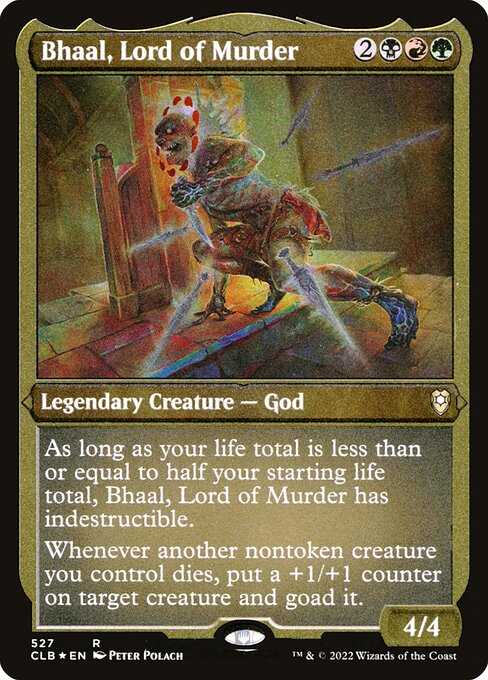
Bhaal, Lord of Murder | Illustration by Peter Polach
Bhaal turns your own casualties into somebody else's combat problem. Whenever another nontoken creature you control dies, you put a counter on a target creature and goad it. That makes sacrifice outlets useful for more than recycling your board.
Viscera Seer lets you time those deaths; Reassembling Skeleton supplies repeatable nontoken material; Blood Artist adds a closing plan that does not depend on opponents attacking each other. The trade-off is real: putting counters on opposing threats makes them more dangerous if Bhaal's political cover disappears. Token deaths do not trigger him.
Choose Bhaal if you want Jund aristocrats with a combat-control layer. He ranks lower because the sacrifice engine does more work than the goad engine, and five mana is a substantial setup cost.
#14. Kaima, the Fractured Calm
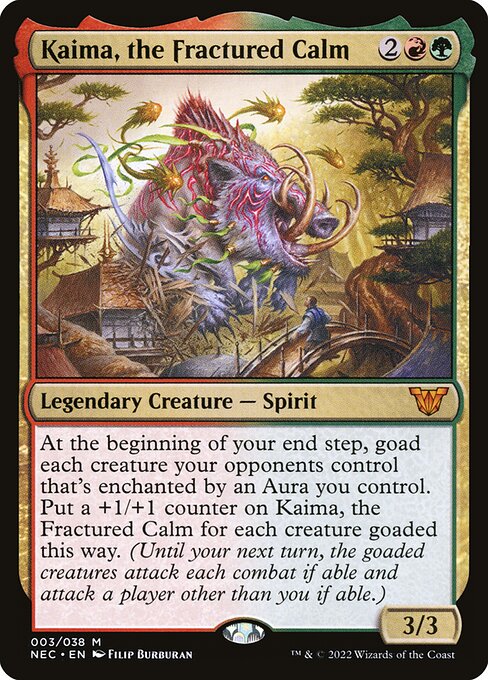
Kaima, the Fractured Calm | Illustration by Filip Burburan
Kaima asks you to decorate opposing creatures, then sends them away from you at your end step. Each opposing creature enchanted by one of your Auras is goaded, and Kaima receives a counter for each creature goaded this way.
Shiny Impetus supplies Treasures when its creature attacks. Rancor is cheap and can return to your hand when it goes from the battlefield to the graveyard. Enchantress's Presence rewards the enchantments you cast. Don't pile everything onto a single creature: Kaima counts creatures, not attached Auras.
This is the choice for players who enjoy strange enchantress decks. Kaima can eventually threaten commander damage, but investing cards in an opponent's board creates awkward removal exchanges. Keep enough interaction to answer the monster you helped build.
#13. Kitt Kanto, Mayhem Diva
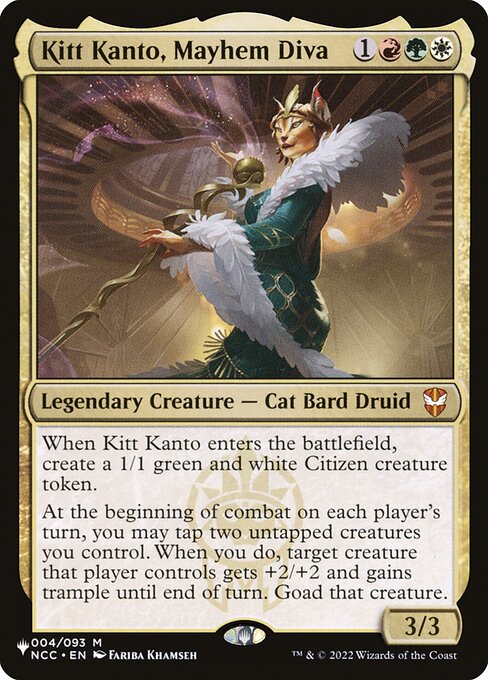
Kitt Kanto, Mayhem Diva | Illustration by Fariba Khamseh
Kitt Kanto is a token commander who hires out combat bonuses. At the beginning of combat on each player's turn, tapping two of your creatures lets you give one of that player's creatures +2/+2, trample, and goad.
Seedborn Muse replenishes your available tappers each opponent's turn. Awakening Zone makes bodies without demanding another creature spell. Skullclamp converts expendable tokens into cards. Newly created creatures can pay Kitt's tapping cost; it isn't their own tap-symbol ability.
You only influence one creature per trigger, and keeping two creatures available competes with attacking. The upside is a credible token army when the game becomes a duel. Play Kitt if you want negotiations backed by an actual battlefield, rather than a deck that collapses when opponents stop supplying attackers.
#12. Kros, Defense Contractor
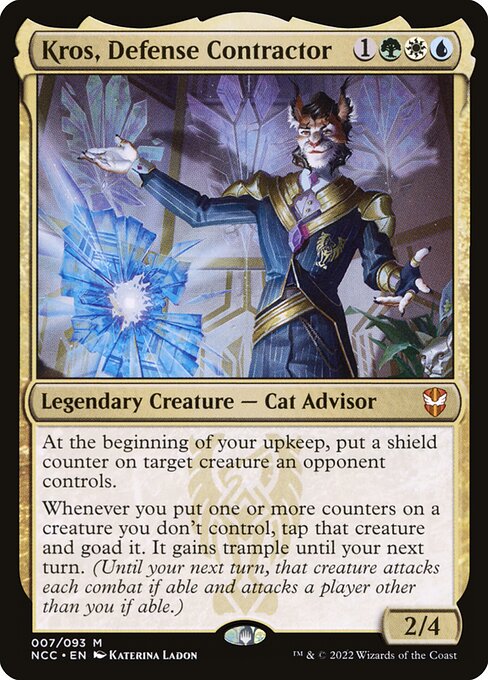
Kros, Defense Contractor | Illustration by Katerina Ladon
Kros makes generosity suspicious. His upkeep shield counter helps an opposing creature survive, while his other ability taps and goads creatures you don't control whenever you put counters on them. They also gain trample until your next turn.
Bounty Board can place bounty counters on opposing creatures. Forgotten Ancient can move counters onto opposing creatures as well as your own. Evolutionary Escalation gives you a repeatable way to build two threats at once. Check who actually places the counters: an opponent putting counters on their own creature does not trigger Kros merely because you enabled the effect.
Bant supplies protection and efficient creature engines, but you are strengthening the opposition. Kros suits careful political players. Save a real answer for the opponent you expect to face last; a shielded trampler is not going to retire politely when the other players leave.
#11. The Rani
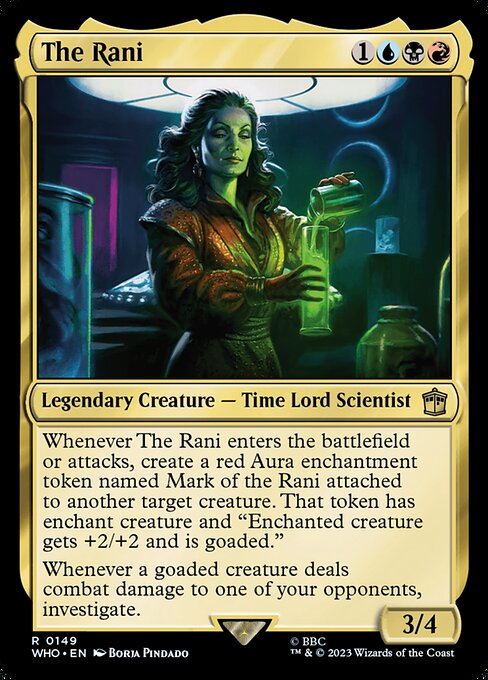
The Rani | Illustration by Borja Pindado
The Rani packages goad and card advantage into a Grixis enchantment-and-artifact shell. Entering or attacking creates a Mark of the Rani Aura on another creature. Goaded creatures damaging your opponents then produce Clues.
Strionic Resonator can copy the Aura-making trigger. Academy Manufactor turns Clues into a much broader resource package. Marionette Master gives those artifacts a way to matter after combat politics expire. Clues still require mana to crack, so producing ten of them is not the same as immediately drawing ten cards.
The Rani wants opponents with creatures and a game long enough to spend the proceeds. Pick her for value-heavy games and artifact payoffs. She is less efficient when everyone is winning through spells, and the Auras make opposing creatures larger as well as redirecting them.
#10. Jon Irenicus, Shattered One
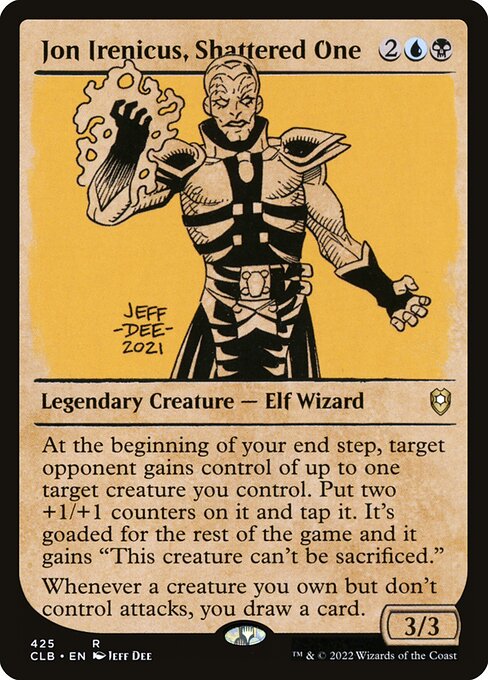
Jon Irenicus, Shattered One | Illustration by Jeff Dee
Jon doesn't wait for opponents to supply suitable attackers. At your end step, he can donate one of your creatures, add two counters, tap it, and permanently goad it. You draw whenever a creature you own but don't control attacks.
Abyssal Persecutor is a particularly pointed gift: its controller can't win and their opponents can't lose. Steel Golem restricts its recipient's creature casting. Homeward Path can reclaim your creatures when the arrangement stops benefiting you. Jon's gift cannot be sacrificed, but that does not protect it from exile, bounce, or ordinary destruction.
The drawback is the last opponent. Permanently goaded does not mean permanently unable to attack you. Choose Jon for carefully selected bad gifts, not just enormous beaters. Explain that theme before the game; some groups enjoy the puzzle far more than others.
#9. The Beamtown Bullies
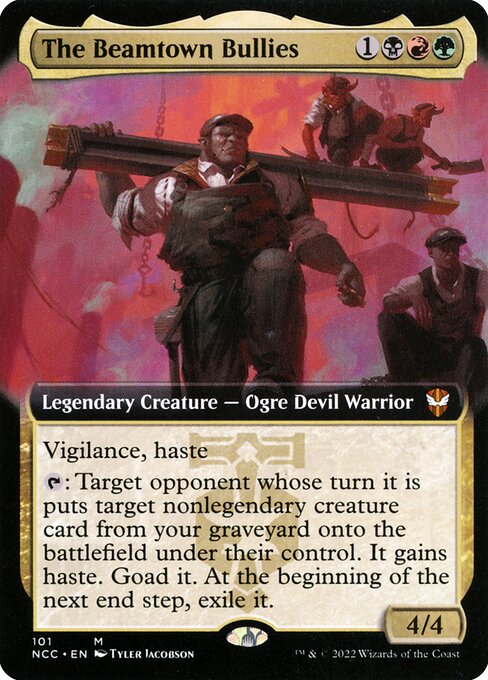
The Beamtown Bullies | Illustration by Tyler Jacobson
The Beamtown Bullies weaponize the graveyard rather than the hand. During an opponent's turn, they can give that player a nonlegendary creature from your graveyard with haste and goad, then exile it at the next end step.
Faithless Looting puts intended gifts where they belong. Leveler can exile the recipient's library on entry, while Eater of Days makes that player skip their next two turns. Thousand-Year Elixir supplies another untap and makes rebuilding around the commander easier. These are brutal interactions, not casual favors.
Their lower placement is deliberate: this list ranks goad gameplay, not the fastest way to eliminate somebody with a harmful trigger. The Bullies have a decisive endgame but attract graveyard hate and removal. Choose them only when the table welcomes a sharper, more hostile donation strategy.
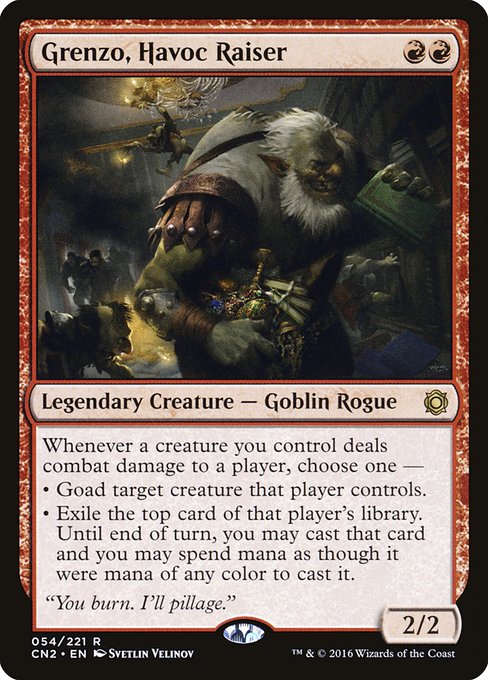
#8. Grenzo, Havoc Raiser
Grenzo, Havoc Raiser | Illustration by Svetlin Velinov
Grenzo costs just two mana and turns every creature that connects into a choice: goad a creature that player controls or exile their top card for you to cast that turn. A wide attack can generate several triggers, rather than just one per opponent.
Goblin War Drums helps a crowd connect. Goblin Rabblemaster keeps supplying attackers. Professional Face-Breaker adds Treasures to successful combat, helping pay for the cards Grenzo borrows. His permission lets you cast spells, not play exiled lands.
Mono-red limits your defensive tools, and blockers can switch off the entire operation. Grenzo belongs with players who like cheap, proactive decks. Once only one opponent remains, stop choosing goad by habit: the stolen-spell mode and your own attackers become the important half of the card.
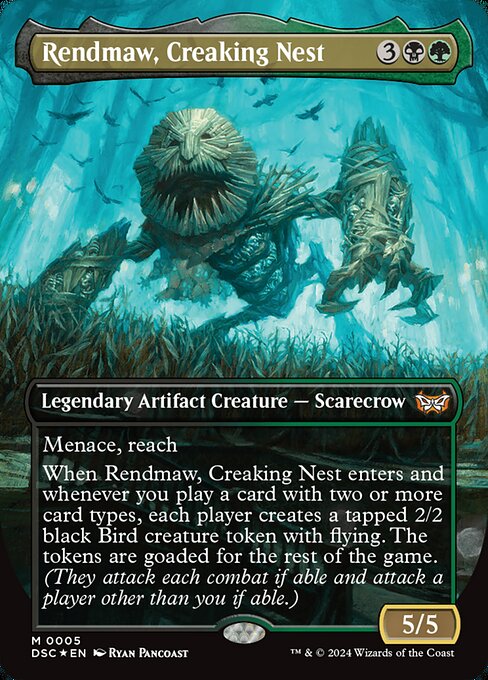
#7. Rendmaw, Creaking Nest
Rendmaw, Creaking Nest | Illustration by Ryan Pancoast
Rendmaw solves a central problem with goad: opponents might not have creatures worth attacking with. Entering and playing cards with at least two card types gives every player a tapped flying Bird, goaded for the rest of the game.
Darksteel Citadel and Tree of Tales qualify as artifact lands. Solemn Simulacrum qualifies as an artifact creature while helping your mana. Bow of Nylea gives your attacking Birds deathtouch, making your own flock less appealing to block. You still need enough functional cards, not just cards that happen to tick two type boxes.
Golgari's recursion keeps the engine supplied, and your own Birds offer a win condition. But every trigger also arms your opponents. Rendmaw rewards players who can judge when to stop distributing threats and start ending the game. Permanent goad does not protect you in the final duel.
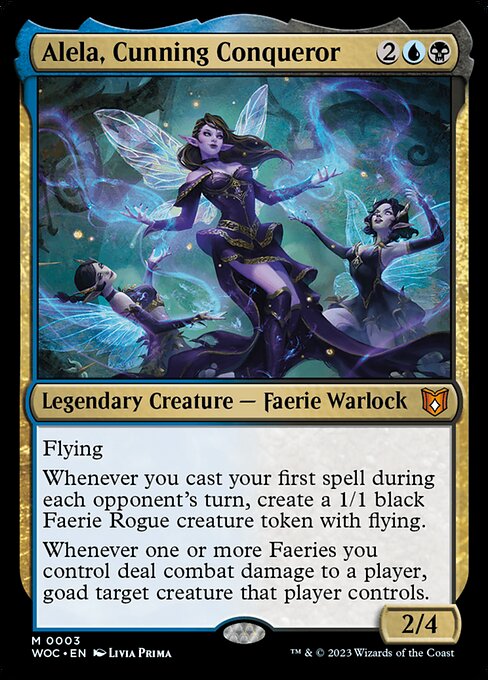
#6. Alela, Cunning Conqueror
Alela, Cunning Conqueror | Illustration by Livia Prima
Alela gets to play the patient game without abandoning the battlefield. Your first spell during each opponent's turn makes a flying Faerie. Connecting with Faeries lets you goad a creature controlled by each player they damage.
Opt is a cheap way to start that engine. Faerie Mastermind supports the flash plan, while Reconnaissance Mission turns your evasive army into cards. Scion of Oona offers protection and a power boost for other Faeries. Casting three spells during one opponent's turn produces only one token from Alela, not three.
She is excellent when you want interaction first and goad second. Her limitation is coverage: one successful hit does not redirect an entire board. Unlike many dedicated political commanders, though, Alela can finish the last player with the army she has been building all game.
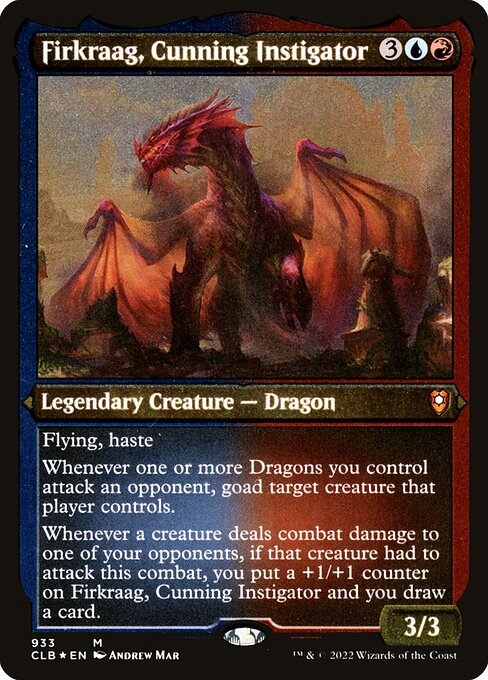
#5. Firkraag, Cunning Instigator
Firkraag, Cunning Instigator | Illustration by Andrew Mar
Firkraag turns forced combat into personal growth and actual cards. Attacking with Dragons goads opposing creatures; whenever a creature that had to attack deals combat damage to one of your opponents, Firkraag grows and you draw.
Bothersome Quasit expands the goad plan while making goaded creatures unable to block. Bloodthirsty Blade keeps a threat moving. Vengeful Ancestor supplies another goad effect and punishes goaded attacks. You do not need to fill every slot with expensive Dragons just to switch on the commander.
Five mana is a meaningful investment, and a commander removal spell can erase a large stack of counters. Still, a growing flying commander is an unusually clear answer to the final-opponent problem. Pick Firkraag if you want the table's fights to build your own eventual knockout punch.
#4. Karazikar, the Eye Tyrant
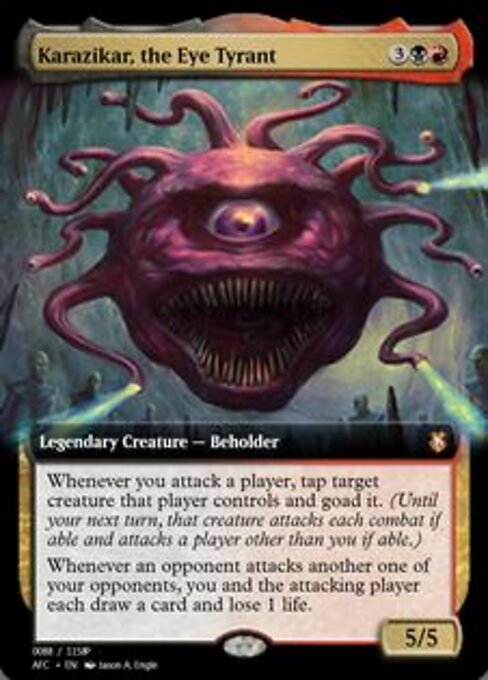
Karazikar, the Eye Tyrant | Illustration by Jason A. Engle
Karazikar pays you before combat damage, which is a major advantage over engines that need creatures to connect. Whenever an opponent attacks another opponent, both of you draw a card and lose a life. Your own attacks also tap and goad an opposing creature.
Curse of Opulence encourages attacks at a chosen player. Dauthi Embrace can help your small creatures slip through. Disrupt Decorum creates a broad opening, and Exsanguinate provides a finish after life totals have been whittled down. The shared cards matter: you are helping opponents find answers as well as advancing your own game.
Choose Karazikar for Rakdos combat politics with dependable resource generation. He does not need a board full of Dragons or an Aura package, but he needs a plan beyond feeding everyone cards. Your draw trigger loses its purpose when there is no other opponent left to attack.
#3. Baeloth Barrityl, Entertainer
Baeloth Barrityl, Entertainer | Illustration by Joshua Raphael
Baeloth's goad is continuous: opposing creatures with power lower than his are goaded while the condition holds. He also makes Treasures when goaded attacking or blocking creatures die. One power boost can therefore redirect a substantial part of the table.
With Raised by Giants as his Background, his base power and toughness become 10/10 and green joins your color identity. Blackblade Reforged scales him further with your lands; Swiftfoot Boots protects the investment; Kessig Wolf Run gives a late attack trample. Different Backgrounds create different decks, so this entry evaluates the Raised by Giants version in particular.
The six-mana Background is a real cost, and removing Baeloth immediately removes his static goad effect. This is the pick for players who want a broad combat-control effect and a large commander as the payoff, while accepting that both plans depend on keeping him around.
#2. Marisi, Breaker of the Coil
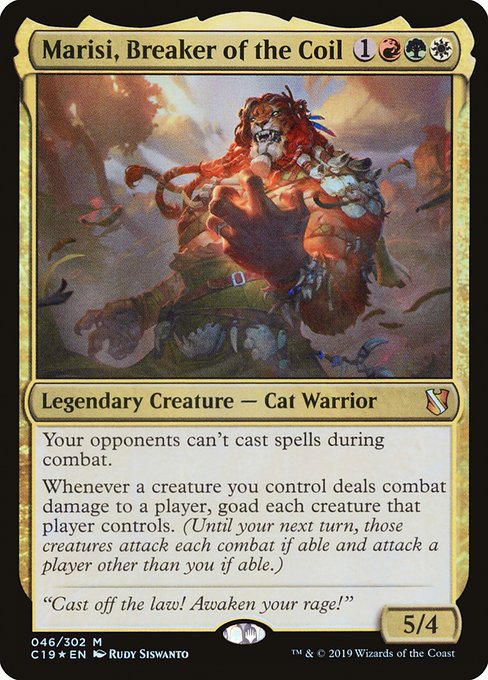
Marisi, Breaker of the Coil | Illustration by Rudy Siswanto
Marisi can turn one small hit into an entire opposing army being goaded. Spread damage across the table and you can redirect far more creatures than a single-target engine. Opponents also cannot cast spells during combat, though activated and triggered abilities still work.
Gingerbrute is an inexpensive evasive attacker. Reconnaissance helps manage risky attacks. Toski, Bearer of Secrets rewards connections with cards, and Duelist's Heritage can turn either your own attack or a carefully chosen opposing attack into a serious threat.
The catch is getting through in the first place. Fog effects cast before combat, removal before attackers, and creature abilities can still interfere. Pick Marisi if you enjoy proactive combat rather than sitting behind a wall. He earns this position through broad goad coverage, but his final win still comes from the creatures you brought yourself.
#1. Nelly Borca, Impulsive Accuser
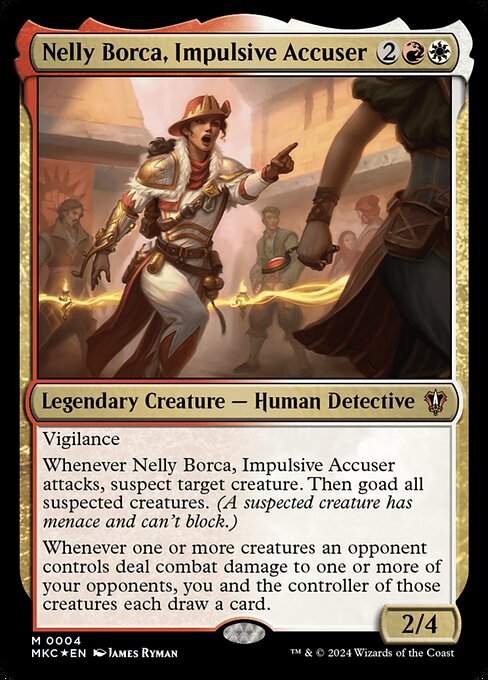
Nelly Borca, Impulsive Accuser | Illustration by James Ryman
Nelly ties the whole plan together: attack, suspect a creature, goad all suspected creatures, and collect cards when opponents deal combat damage to each other. Suspected creatures have menace and cannot block, so repeated attacks change both offense and defense across the table.
Swiftfoot Boots helps keep Nelly attacking. Duelist's Heritage can improve a favorable combat. Rite of the Raging Storm supplies recurring attackers that cannot attack you, and Gisela, Blade of Goldnight offers a powerful, expensive way to turn depleted life totals into a finish. Suspecting is not temporary; the goad from each attack is.
Nelly takes first place for combining repeatable redirection, card flow, and shrinking opposing defenses in one commander. She still needs protection and an actual finisher. Her draw also benefits the opponent dealing damage, and it triggers once for the relevant group of creatures dealing damage, not once per creature. Choose her for a focused goad deck whose decisions remain interesting after the novelty wears off.
Building a Goad Deck That Can Actually Finish
Bring an engine, not just instructions
Disrupt Decorum can open a turn cycle, but it does not replace ramp or card draw. Decide whether your commander supplies resources or merely directs traffic. Marisi needs draw engines in the ninety-nine; Karazikar needs ways to convert his cards into a closing play.
Keep real removal
A goaded creature can still have a devastating activated ability or a dangerous attack trigger. Do not redirect a creature when destroying or exiling it is the necessary play. Likewise, a spell-based combo deck may have almost nothing worth goading. Your interaction must still function in that game.
Plan the final duel before it starts
Commander damage, a flying token army, artifact drain, or a large life-drain spell can all finish the job. Choose a route your deck already supports. Adding a random expensive finisher is less reliable than recognizing the resources your engine naturally produces.
Frequently Asked Questions
Does goad stop creatures from attacking me?
Not absolutely. It creates attack requirements, including attacking another player if able. When no other player can be attacked, you can become the legal target. Do not treat it as protection.
Can a goaded creature block?
Yes, if it is untapped and nothing else prevents it from blocking. Goad itself does not prohibit blocks. Nelly's suspected designation and Bothersome Quasit's separate ability are examples of effects that do.
Do goaded creatures have to attack again in extra combats?
Yes, if they are able and the goad effect still applies. Attacking once does not remove it.
Is goad good in two-player Commander?
It loses much of its political value. Forcing a creature to attack may still expose it or enable a payoff, but there is no third player to absorb the attack. Build for that setting deliberately rather than expecting a multiplayer list to work unchanged.
Which goad commander is best for a first deck?
Nelly provides a clear starting point because her attack trigger advances the plan and her damage trigger supplies cards. That does not make her effortless: protecting a four-mana attacker and knowing when shared cards help the wrong player are central skills.
Final Verdict
The right goad commander depends on what you want to do while everyone else fights. Nelly brings a focused package, Marisi rewards evasive aggression, and Baeloth turns a power boost into table-wide leverage. Alela and Rendmaw give you armies of your own; the donation commanders offer a more confrontational game.
Whatever you choose, ask one question before submitting the list: if the last opponent survived at twenty life, how would this deck beat them? If the answer is only “goad their creatures,” you have another few cuts to make.
Start assembling your list in the ElderDecks Commander deck builder, then check that your ramp, interaction, and finishing plan work even when nobody gives you a useful attacker.
By ElderArticles · Updated 11/4/2026 · 15 min read
Find the best goad commanders in MTG, ranked with key synergies, honest drawbacks, rules tips, and winning plans for the last opponent at your Commander table.
Making everyone fight sounds like a winning strategy. Then the third player dies, the last opponent untaps, and all those enormous creatures are looking at you.
That is the test a good goad commander has to pass. Redirecting combat buys time, but the best decks turn that time into cards, resources, or a finishing attack of their own.
Here are fifteen Commander-legal leaders that genuinely use goad, ranked for four-player games. We are counting down to the commander that best combines a repeatable engine with a practical plan for the endgame.
Disrupt Decorum | Illustration by Sidharth Chaturvedi
How We Ranked the Best Goad Commanders
This is an editorial ranking, not a tournament win-rate table. Repeatable goad, coverage across multiple opponents, card advantage, recovery after removal, and the ability to beat the final player carry the most weight. A commander that wins through a harmful gift can be stronger in a vacuum while ranking lower as a goad experience.
All fifteen featured leaders were checked against Scryfall's Commander legality on November 4, 2026. Preview-only cards are excluded. Background choices change color identity; the Baeloth entry specifies its recommended pairing. Synergies discussed in each entry belong to that commander's colors, including that Background where applicable.
Goad Rules to Know Before You Build
A goaded creature attacks each combat if able and attacks a player other than the player responsible for goading it if able. Its controller chooses the legal attack; you do not choose for them. Ordinary one-shot goad lasts until your next turn, while some cards explicitly apply it for longer.
Goad does not give haste, untap creatures, or override defender. A player is not forced to pay an attack tax. It also does not universally prevent attacks against you: if no other player is a legal option, the creature may have to attack you, a planeswalker, or a battle instead. That is why a plan for the last opponent matters.
Kardur, Doomscourge is a useful forced-combat alternative, but its printed effect is not the goad designation. This list sticks to commanders whose text actually uses goad.
Bhaal turns your own casualties into somebody else's combat problem. Whenever another nontoken creature you control dies, you put a counter on a target creature and goad it. That makes sacrifice outlets useful for more than recycling your board.
Viscera Seer lets you time those deaths; Reassembling Skeleton supplies repeatable nontoken material; Blood Artist adds a closing plan that does not depend on opponents attacking each other. The trade-off is real: putting counters on opposing threats makes them more dangerous if Bhaal's political cover disappears. Token deaths do not trigger him.
Choose Bhaal if you want Jund aristocrats with a combat-control layer. He ranks lower because the sacrifice engine does more work than the goad engine, and five mana is a substantial setup cost.
Kaima asks you to decorate opposing creatures, then sends them away from you at your end step. Each opposing creature enchanted by one of your Auras is goaded, and Kaima receives a counter for each creature goaded this way.
Shiny Impetus supplies Treasures when its creature attacks. Rancor is cheap and can return to your hand when it goes from the battlefield to the graveyard. Enchantress's Presence rewards the enchantments you cast. Don't pile everything onto a single creature: Kaima counts creatures, not attached Auras.
This is the choice for players who enjoy strange enchantress decks. Kaima can eventually threaten commander damage, but investing cards in an opponent's board creates awkward removal exchanges. Keep enough interaction to answer the monster you helped build.
Kitt Kanto is a token commander who hires out combat bonuses. At the beginning of combat on each player's turn, tapping two of your creatures lets you give one of that player's creatures +2/+2, trample, and goad.
Seedborn Muse replenishes your available tappers each opponent's turn. Awakening Zone makes bodies without demanding another creature spell. Skullclamp converts expendable tokens into cards. Newly created creatures can pay Kitt's tapping cost; it isn't their own tap-symbol ability.
You only influence one creature per trigger, and keeping two creatures available competes with attacking. The upside is a credible token army when the game becomes a duel. Play Kitt if you want negotiations backed by an actual battlefield, rather than a deck that collapses when opponents stop supplying attackers.
Kros makes generosity suspicious. His upkeep shield counter helps an opposing creature survive, while his other ability taps and goads creatures you don't control whenever you put counters on them. They also gain trample until your next turn.
Bounty Board can place bounty counters on opposing creatures. Forgotten Ancient can move counters onto opposing creatures as well as your own. Evolutionary Escalation gives you a repeatable way to build two threats at once. Check who actually places the counters: an opponent putting counters on their own creature does not trigger Kros merely because you enabled the effect.
Bant supplies protection and efficient creature engines, but you are strengthening the opposition. Kros suits careful political players. Save a real answer for the opponent you expect to face last; a shielded trampler is not going to retire politely when the other players leave.
The Rani packages goad and card advantage into a Grixis enchantment-and-artifact shell. Entering or attacking creates a Mark of the Rani Aura on another creature. Goaded creatures damaging your opponents then produce Clues.
Strionic Resonator can copy the Aura-making trigger. Academy Manufactor turns Clues into a much broader resource package. Marionette Master gives those artifacts a way to matter after combat politics expire. Clues still require mana to crack, so producing ten of them is not the same as immediately drawing ten cards.
The Rani wants opponents with creatures and a game long enough to spend the proceeds. Pick her for value-heavy games and artifact payoffs. She is less efficient when everyone is winning through spells, and the Auras make opposing creatures larger as well as redirecting them.
Jon doesn't wait for opponents to supply suitable attackers. At your end step, he can donate one of your creatures, add two counters, tap it, and permanently goad it. You draw whenever a creature you own but don't control attacks.
Abyssal Persecutor is a particularly pointed gift: its controller can't win and their opponents can't lose. Steel Golem restricts its recipient's creature casting. Homeward Path can reclaim your creatures when the arrangement stops benefiting you. Jon's gift cannot be sacrificed, but that does not protect it from exile, bounce, or ordinary destruction.
The drawback is the last opponent. Permanently goaded does not mean permanently unable to attack you. Choose Jon for carefully selected bad gifts, not just enormous beaters. Explain that theme before the game; some groups enjoy the puzzle far more than others.
The Beamtown Bullies weaponize the graveyard rather than the hand. During an opponent's turn, they can give that player a nonlegendary creature from your graveyard with haste and goad, then exile it at the next end step.
Faithless Looting puts intended gifts where they belong. Leveler can exile the recipient's library on entry, while Eater of Days makes that player skip their next two turns. Thousand-Year Elixir supplies another untap and makes rebuilding around the commander easier. These are brutal interactions, not casual favors.
Their lower placement is deliberate: this list ranks goad gameplay, not the fastest way to eliminate somebody with a harmful trigger. The Bullies have a decisive endgame but attract graveyard hate and removal. Choose them only when the table welcomes a sharper, more hostile donation strategy.
Grenzo costs just two mana and turns every creature that connects into a choice: goad a creature that player controls or exile their top card for you to cast that turn. A wide attack can generate several triggers, rather than just one per opponent.
Goblin War Drums helps a crowd connect. Goblin Rabblemaster keeps supplying attackers. Professional Face-Breaker adds Treasures to successful combat, helping pay for the cards Grenzo borrows. His permission lets you cast spells, not play exiled lands.
Mono-red limits your defensive tools, and blockers can switch off the entire operation. Grenzo belongs with players who like cheap, proactive decks. Once only one opponent remains, stop choosing goad by habit: the stolen-spell mode and your own attackers become the important half of the card.
Rendmaw solves a central problem with goad: opponents might not have creatures worth attacking with. Entering and playing cards with at least two card types gives every player a tapped flying Bird, goaded for the rest of the game.
Darksteel Citadel and Tree of Tales qualify as artifact lands. Solemn Simulacrum qualifies as an artifact creature while helping your mana. Bow of Nylea gives your attacking Birds deathtouch, making your own flock less appealing to block. You still need enough functional cards, not just cards that happen to tick two type boxes.
Golgari's recursion keeps the engine supplied, and your own Birds offer a win condition. But every trigger also arms your opponents. Rendmaw rewards players who can judge when to stop distributing threats and start ending the game. Permanent goad does not protect you in the final duel.
Alela gets to play the patient game without abandoning the battlefield. Your first spell during each opponent's turn makes a flying Faerie. Connecting with Faeries lets you goad a creature controlled by each player they damage.
Opt is a cheap way to start that engine. Faerie Mastermind supports the flash plan, while Reconnaissance Mission turns your evasive army into cards. Scion of Oona offers protection and a power boost for other Faeries. Casting three spells during one opponent's turn produces only one token from Alela, not three.
She is excellent when you want interaction first and goad second. Her limitation is coverage: one successful hit does not redirect an entire board. Unlike many dedicated political commanders, though, Alela can finish the last player with the army she has been building all game.
Firkraag turns forced combat into personal growth and actual cards. Attacking with Dragons goads opposing creatures; whenever a creature that had to attack deals combat damage to one of your opponents, Firkraag grows and you draw.
Bothersome Quasit expands the goad plan while making goaded creatures unable to block. Bloodthirsty Blade keeps a threat moving. Vengeful Ancestor supplies another goad effect and punishes goaded attacks. You do not need to fill every slot with expensive Dragons just to switch on the commander.
Five mana is a meaningful investment, and a commander removal spell can erase a large stack of counters. Still, a growing flying commander is an unusually clear answer to the final-opponent problem. Pick Firkraag if you want the table's fights to build your own eventual knockout punch.
Karazikar pays you before combat damage, which is a major advantage over engines that need creatures to connect. Whenever an opponent attacks another opponent, both of you draw a card and lose a life. Your own attacks also tap and goad an opposing creature.
Curse of Opulence encourages attacks at a chosen player. Dauthi Embrace can help your small creatures slip through. Disrupt Decorum creates a broad opening, and Exsanguinate provides a finish after life totals have been whittled down. The shared cards matter: you are helping opponents find answers as well as advancing your own game.
Choose Karazikar for Rakdos combat politics with dependable resource generation. He does not need a board full of Dragons or an Aura package, but he needs a plan beyond feeding everyone cards. Your draw trigger loses its purpose when there is no other opponent left to attack.
Baeloth's goad is continuous: opposing creatures with power lower than his are goaded while the condition holds. He also makes Treasures when goaded attacking or blocking creatures die. One power boost can therefore redirect a substantial part of the table.
With Raised by Giants as his Background, his base power and toughness become 10/10 and green joins your color identity. Blackblade Reforged scales him further with your lands; Swiftfoot Boots protects the investment; Kessig Wolf Run gives a late attack trample. Different Backgrounds create different decks, so this entry evaluates the Raised by Giants version in particular.
The six-mana Background is a real cost, and removing Baeloth immediately removes his static goad effect. This is the pick for players who want a broad combat-control effect and a large commander as the payoff, while accepting that both plans depend on keeping him around.
Marisi can turn one small hit into an entire opposing army being goaded. Spread damage across the table and you can redirect far more creatures than a single-target engine. Opponents also cannot cast spells during combat, though activated and triggered abilities still work.
Gingerbrute is an inexpensive evasive attacker. Reconnaissance helps manage risky attacks. Toski, Bearer of Secrets rewards connections with cards, and Duelist's Heritage can turn either your own attack or a carefully chosen opposing attack into a serious threat.
The catch is getting through in the first place. Fog effects cast before combat, removal before attackers, and creature abilities can still interfere. Pick Marisi if you enjoy proactive combat rather than sitting behind a wall. He earns this position through broad goad coverage, but his final win still comes from the creatures you brought yourself.
Nelly ties the whole plan together: attack, suspect a creature, goad all suspected creatures, and collect cards when opponents deal combat damage to each other. Suspected creatures have menace and cannot block, so repeated attacks change both offense and defense across the table.
Swiftfoot Boots helps keep Nelly attacking. Duelist's Heritage can improve a favorable combat. Rite of the Raging Storm supplies recurring attackers that cannot attack you, and Gisela, Blade of Goldnight offers a powerful, expensive way to turn depleted life totals into a finish. Suspecting is not temporary; the goad from each attack is.
Nelly takes first place for combining repeatable redirection, card flow, and shrinking opposing defenses in one commander. She still needs protection and an actual finisher. Her draw also benefits the opponent dealing damage, and it triggers once for the relevant group of creatures dealing damage, not once per creature. Choose her for a focused goad deck whose decisions remain interesting after the novelty wears off.
Building a Goad Deck That Can Actually Finish
Bring an engine, not just instructions
Disrupt Decorum can open a turn cycle, but it does not replace ramp or card draw. Decide whether your commander supplies resources or merely directs traffic. Marisi needs draw engines in the ninety-nine; Karazikar needs ways to convert his cards into a closing play.
Keep real removal
A goaded creature can still have a devastating activated ability or a dangerous attack trigger. Do not redirect a creature when destroying or exiling it is the necessary play. Likewise, a spell-based combo deck may have almost nothing worth goading. Your interaction must still function in that game.
Plan the final duel before it starts
Commander damage, a flying token army, artifact drain, or a large life-drain spell can all finish the job. Choose a route your deck already supports. Adding a random expensive finisher is less reliable than recognizing the resources your engine naturally produces.
Frequently Asked Questions
Does goad stop creatures from attacking me?
Not absolutely. It creates attack requirements, including attacking another player if able. When no other player can be attacked, you can become the legal target. Do not treat it as protection.
Can a goaded creature block?
Yes, if it is untapped and nothing else prevents it from blocking. Goad itself does not prohibit blocks. Nelly's suspected designation and Bothersome Quasit's separate ability are examples of effects that do.
Do goaded creatures have to attack again in extra combats?
Yes, if they are able and the goad effect still applies. Attacking once does not remove it.
Is goad good in two-player Commander?
It loses much of its political value. Forcing a creature to attack may still expose it or enable a payoff, but there is no third player to absorb the attack. Build for that setting deliberately rather than expecting a multiplayer list to work unchanged.
Which goad commander is best for a first deck?
Nelly provides a clear starting point because her attack trigger advances the plan and her damage trigger supplies cards. That does not make her effortless: protecting a four-mana attacker and knowing when shared cards help the wrong player are central skills.
Final Verdict
The right goad commander depends on what you want to do while everyone else fights. Nelly brings a focused package, Marisi rewards evasive aggression, and Baeloth turns a power boost into table-wide leverage. Alela and Rendmaw give you armies of your own; the donation commanders offer a more confrontational game.
Whatever you choose, ask one question before submitting the list: if the last opponent survived at twenty life, how would this deck beat them? If the answer is only “goad their creatures,” you have another few cuts to make.
Start assembling your list in the ElderDecks Commander deck builder, then check that your ramp, interaction, and finishing plan work even when nobody gives you a useful attacker.