
Best Foundations Commander Deck: All 5 Precons Ranked
Which Foundations Commander deck should you buy? Compare all five precons for beginners, with standout cards, common mistakes, and practical upgrade advice.
Table of contents
Calling All Angels is my pick for the best Foundations Commander deck for beginners. Giada gives you an early play, helps pay for your Angels, and makes the next one bigger. You can understand the plan before you finish shuffling.
That does not make it everybody's best purchase. If your idea of a good evening is turning a huge Dinosaur sideways, Tramplesaurus Rex has a compelling sales pitch. If you want a deck you can keep tinkering with, Keen Engineering would be my choice.

The five mono-color precons released on October 2, 2026, alongside Reality Fracture. This guide evaluates their published decklists for a newcomer playing ordinary multiplayer Commander. These are editorial judgments from the cards and their interactions, not results from a playtesting league or a claim about win rates.
How I ranked the Foundations Commander decks
I put the most weight on a clear plan and useful early turns. A beginner should get to participate before worrying about clever sequencing. I also considered access to extra cards, recovery after removal, how demanding the deck's decisions are, and whether upgrades can improve the existing plan without rebuilding everything.
Price and resale value are not ranking factors here. Compare actual retailer prices before buying; a recommendation at one price can become a poor purchase at another.
All five face commanders have a single-color identity: white for Giada, green for Ghalta, blue for Sai, black for Gisa, and red for Lathliss. The support cards discussed below are in the official Foundations Commander decklists.
#1. Calling All Angels — Giada, Font of Hope

Best for: a first Commander deck with an obvious plan and satisfying growth.
Giada, Font of Hope does two jobs an Angel deck wants badly: she helps you cast its creatures and makes them more threatening. Starting your commander at two mana also means you can begin building around her early, instead of spending the opening turns waiting for the centerpiece.
Her counter ability counts Angels you already control, including Giada. Play your creatures one at a time and the later arrivals benefit from the earlier ones. That makes sequencing visible and rewarding: the board itself shows you why the order mattered.
Righteous Valkyrie gives that growth another purpose. It gains life when another Angel or Cleric enters based on that creature's toughness, then boosts your creatures once you reach seven life above your starting total. In a normal 40-life game, that means 47. Bigger Angels help you get there; taking damage can switch the bonus off again.
Bishop of Wings adds a useful safety net by leaving flying Spirits when your Angels die. Those Spirits are not replacement Angels, though, and exile removal does not count as dying.
The weakness is commitment. It is tempting to empty your hand because every Angel improves the next one. A sweeper can punish that enthusiasm. Keep a follow-up creature when you already have enough pressure, and prioritize draw and protection when tuning the list.
First-game tip: Giada's mana only pays for Angel spells. You cannot use it for an artifact or a removal spell just because that spell belongs in your Angel deck.
#2. Tramplesaurus Rex — Ghalta, Primal Hunger
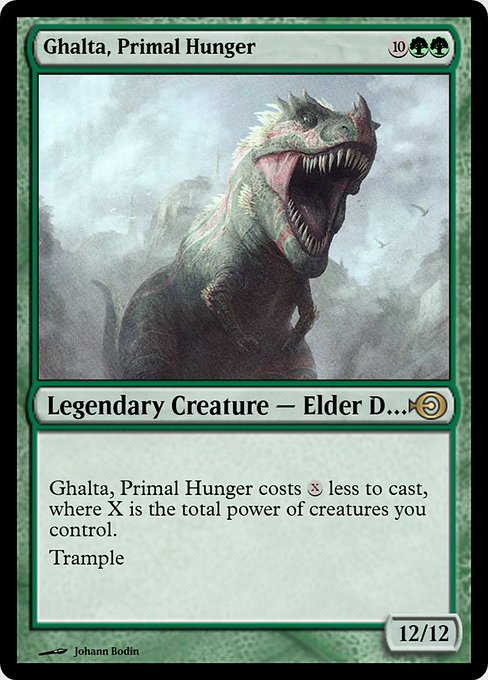
Best for: someone who wants big creatures and a direct combat plan.
There is a particular pleasure in putting a 12/12 on the table and letting the card speak for itself. Ghalta, Primal Hunger delivers that moment without necessarily asking you to pay twelve mana. The combined power of your creatures reduces its generic cost; enough power gets the cost down to two green mana.
That makes developing your board feel productive twice. Your creatures threaten damage, and their power brings Ghalta closer. It is a good teaching deck for the connection between early development and a large payoff.
Garruk's Uprising is one of the cards I would be happiest to see in an opening hand with a workable mana plan. It can replace itself when it enters if you have a creature with at least 4 power, draws when another qualifying creature arrives, and gives your whole team trample. Ghalta already has trample, but your other attackers appreciate the help.
The awkward part comes after a board wipe. Losing creatures also removes Ghalta's discount, so “I'll just cast my commander again” may be much harder than it sounds. Avoid treating every opening hand containing a huge creature as a good hand. You need a way to get moving.
First-game tip: Ghalta's reduction can offset the generic mana added by commander tax, but you still need enough creature power. After one previous command-zone cast, twelve total power reduces the usual fourteen-mana total to two green.
For upgrades, concentrate on keeping cards flowing and protecting a developed board. The deck already knows how to make something enormous.
#3. Keen Engineering — Sai, Master Thopterist
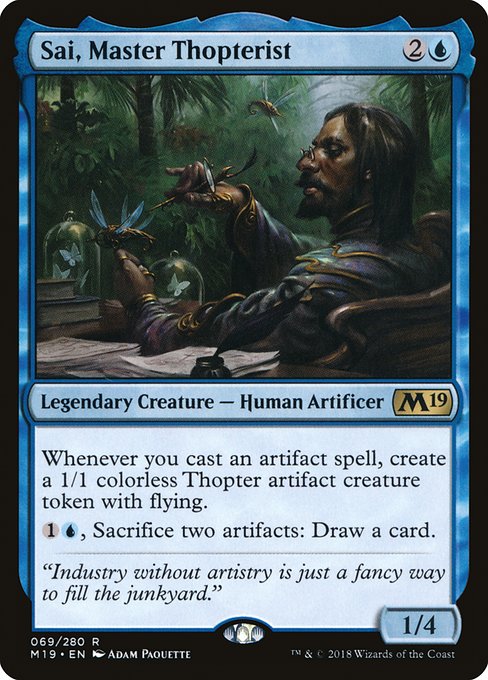
Best for: a player who likes assembling an engine and learning its little tricks.
Sai, Master Thopterist makes your artifact spells bring a friend: a flying Thopter token. A modest artifact can therefore contribute to both your resources and your battlefield. Those extra bodies give you something to do while the larger pieces come together.
The important word is cast. Putting an artifact straight onto the battlefield does not trigger Sai. Conversely, his token trigger can still resolve if an opponent counters the artifact spell. That distinction is worth learning early.
Ichor Wellspring is an excellent example of the deck's appeal. It draws when it enters and again when it goes from the battlefield to a graveyard. Sai can sacrifice it alongside another artifact, paying one generic and one blue mana, to draw an additional card. You are getting useful work out of the same small piece at several stages.
That flexibility is also why I put this third for beginners. Should those Thopters attack, block, or become cards? Is an artifact expendable, or do you need it next turn? The decisions are interesting, but there are more of them.
First-game tip: If you can afford to wait, play Sai before an artifact you want to turn into a Thopter. Do not sacrifice your functioning mana supply merely because the draw ability is available.
This is my favorite long-term tinkering project of the five. I would start upgrades with inexpensive-to-cast artifacts that accomplish something useful, then make sure the deck still has enough ways to turn all that activity into a win.
#4. Wretched Ranks — Ghoulcaller Gisa
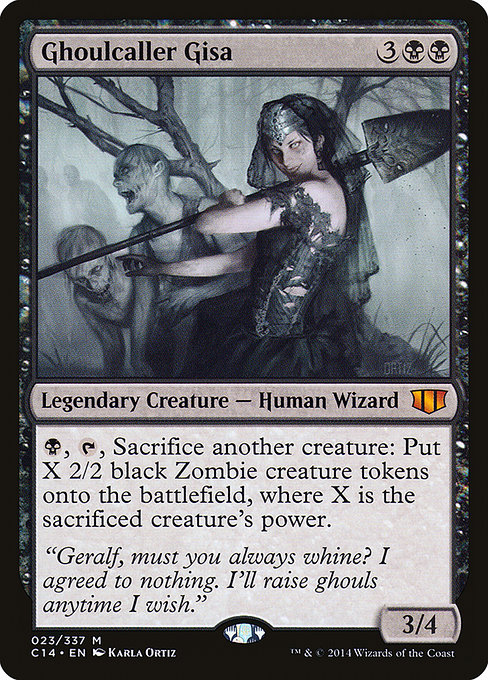
Best for: someone who likes Zombies and making sacrifices pay off.
Ghoulcaller Gisa sees a large creature and wonders how many smaller corpses she could get out of it. Pay one black mana, tap her, and sacrifice another creature: you receive a number of 2/2 Zombie tokens equal to its power. A 5-power creature becomes five Zombies. That is an appealing exchange when you can use the bodies.
The catch is getting the operation running. Gisa costs five mana, needs another creature to sacrifice, and normally cannot use her tap ability the turn she enters. A newcomer who expects an immediate army can be disappointed when opponents remove her before she untaps.
Undead Augur helps make the army less disposable than it looks. It draws you a card and costs you a life whenever it or another Zombie you control dies, including tokens. If a destroy effect takes the whole Zombie board with it, the Augur can leave you with a replacement hand. Watch your life total: that draw is compulsory, and losing a large army can hurt.
I like this deck for someone who already understands attacking and blocking and wants another way to think about creatures. A creature can be a threat now and material for something better later.
First-game tip: Gisa cannot sacrifice herself to her own ability, and activating it requires tapping her. It is not a repeatable, unlimited sacrifice outlet just because you have plenty of black mana.
My first upgrade priorities would be commander protection and reliable sacrifice material, while preserving the Zombie support already doing useful work.
#5. Reign of Dragons — Lathliss, Dragon Queen
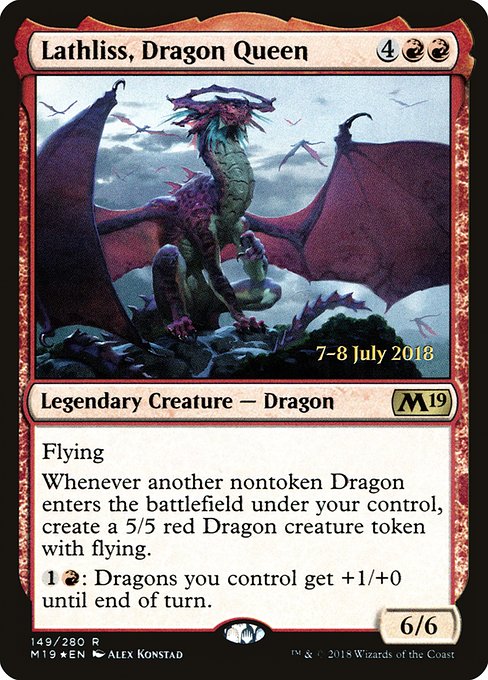
Best for: the player who was going to choose Dragons regardless of this ranking.
That is a perfectly respectable reason to buy a deck. Lathliss, Dragon Queen offers exactly the sort of excess a Dragon player wants: another nontoken Dragon entering under your control creates an extra 5/5 flying Dragon. Once she stays in play, each qualifying arrival can make your battlefield look considerably less fair.
Dragon Tempest is the supporting card that makes the plan especially threatening. It gives your arriving flying creatures haste and makes each entering Dragon deal damage based on your Dragon count. Lathliss's tokens count for Tempest, even though they do not trigger Lathliss again. There is no self-sustaining infinite Dragon loop here.
Why last? The six-mana commander needs a follow-up Dragon to start multiplying your board. For a brand-new player, that creates more opportunities for an opening hand full of exciting cards to do very little early. Spending a turn casting Lathliss, then losing her before the next payoff, also feels rough.
This ranking is about the first-deck experience. The deck can produce spectacular turns; I simply want a newcomer to know what must happen before the fireworks.
First-game tip: Judge your starting hand by how it reaches the expensive spells. Several impressive Dragons with no early development is a plan for admiring your hand.
When upgrading, resist adding every new seven-mana Dragon you discover. Improve the early mana and access to cards first, then decide which expensive threats have earned their slots.
Before you upgrade your first precon
Play the stock list long enough to identify a recurring problem. “I cannot cast my spells” calls for a different fix from “I cast everything and ran out of cards.” Write down the actual problem after a game, then change a few slots with that problem in mind.
Keep the cards you remove together so changes are easy to reverse. Resist replacing lands with exciting spells simply because lands look less interesting. A spectacular card stranded in your hand is contributing very little to the evening.
Tell the table you are playing an unmodified beginner precon. That gives everyone a useful starting point for choosing decks; a product label alone cannot guarantee a balanced game.
Foundations Commander FAQs
Which Foundations Commander deck is best for a complete beginner?
My recommendation is Calling All Angels. Its commander is inexpensive to cast, its main plan is easy to follow, and the growth of your creatures makes the rewards clear. Choose a theme you actually enjoy, though. Enthusiasm is a good reason to accept a slightly steeper learning curve.
Which deck has the most upgrade potential?
Keen Engineering is my pick for a player who enjoys experimenting. Sai rewards artifact spells and lets you turn spare artifacts into cards, giving you multiple decisions to explore. That is an assessment of flexibility, not a claim that every upgraded Sai deck will beat the other four.
Can you play these decks straight out of the box?
Yes. Each is sold as a ready-to-play 100-card Commander deck with tokens. You do not need to buy singles first. Sleeve the cards if you wish, learn your commander's abilities, and find a table expecting precons.
Are the featured commanders legal in Commander?
Yes. The card records checked for this guide list all five as Commander-legal. Each is a legendary creature with the single-color identity listed above. Check current format rules when adding cards or changing commanders.
Are these the same product as Foundations Jumpstart?
No. This article covers the five named Foundations Commander precons released in October 2026. Check the product name carefully when shopping; a shared Foundations label does not mean a product contains one of these complete Commander decks.
Which one would I buy?
For a newcomer asking me to choose, I would hand them Calling All Angels. Its commander starts working early, the deck tells a clear story, and growing a board of flying creatures is a satisfying introduction to Commander.
But if they point at Lathliss and say, “I want the Dragons,” I am not going to argue them into Angels. I would explain how to choose an opening hand, help them through the first few turns, and let the Dragons do the recruiting.
Sources and card references
Research checked October 18, 2026. Rankings and upgrade priorities are ElderCodex editorial judgments. Card images are illustrative printings; they may differ from the versions supplied in the sealed decks.
- Wizards: official Foundations Commander decklists and release date - Wizards: Foundations release notes, including Giada, Ghalta, and Lathliss rulings - Giada, Font of Hope: rules and legality - Ghalta, Primal Hunger: rules and legality - Sai, Master Thopterist: rules and legality - Ghoulcaller Gisa: rules and legality - Lathliss, Dragon Queen: rules and legality - Righteous Valkyrie, Bishop of Wings, and Garruk's Uprising - Ichor Wellspring, Undead Augur, and Dragon Tempest
AI-generated article, published by an ElderDecks editor.