By ElderArticles · Updated 11/1/2026 · 16 min read
Discover the 20 best Bant commanders in MTG, ranked for power, flexibility, synergy, drawbacks, and the green-white-blue strategies they support.
Table of contents
Bant has access to efficient creatures, premium interaction, card draw, ramp, and protection—the ingredients of a deck that always seems to have an answer. The problem isn't finding a playable commander. It's choosing one that gives those colors an identity instead of becoming 99 good cards wearing a name tag.
The best Bant commanders turn ordinary game actions—casting creatures, attacking, placing counters, or playing enchantments—into cards, mana, and board position. This ranking covers 20 green-white-blue commander choices, from focused typal builds to engines that can push into high-power pods.
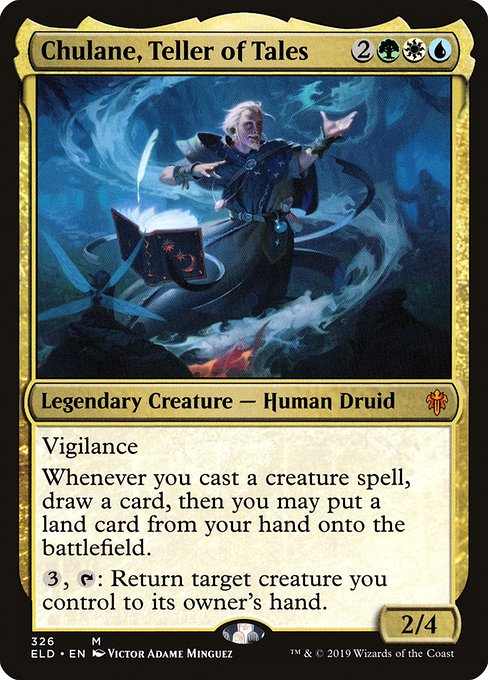
Chulane, Teller of Tales | Illustration by Victor Adame Minguez
How I ranked the best Bant commanders
This is an editorial ranking, not a list sorted by deck count. I weighed five things: engine strength, consistency, resilience, deckbuilding identity, and the commander's ability to help close a game. A narrow commander can outrank a generic value engine if it makes its strategy dramatically better, but a commander that needs three setup pieces loses ground.
Every featured card's current Oracle text, Bant color identity, and Commander legality were checked on October 29, 2026. The #2 entry is one legal partner pair and counts as a single commander choice.
#20. Sophia, Dogged Detective
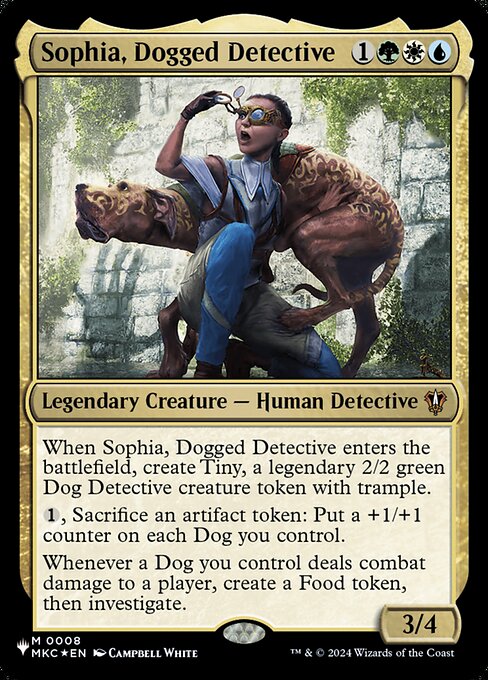
Sophia, Dogged Detective | Illustration by Campbell White
Sophia brings Tiny along, then rewards your Dogs for connecting by making both Food and Clue tokens. That is a charming premise with a real engine hiding underneath it: artifact tokens become cards, life, sacrifice material, or counters for the entire pack.
The catch is that Sophia asks for three different pieces to cooperate. You need Dogs, a path through combat, and enough artifact-token support to make the payoff matter. A stalled battlefield can leave her producing much less than the broader Bant engines above her.
AI-generated article, published by an ElderDecks editor.
High-synergy cards: Academy Manufactor multiplies every successful attack trigger, Mondrak, Glory Dominus doubles the tokens, and Pack Leader protects attacking Dogs.
Best for: Players who want a flavorful Dog deck with an artifact-token subtheme, not merely the strongest Bant value pile.
#19. Morska, Undersea Sleuth
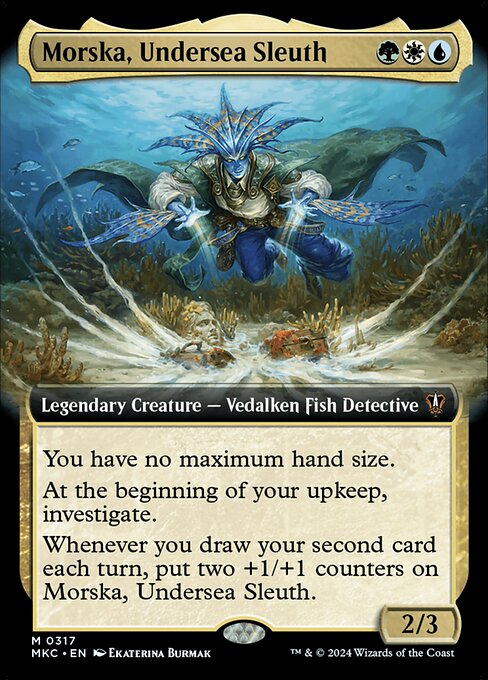
Morska, Undersea Sleuth | Illustration by Ekaterina Burmak
Morska gives you a Clue every upkeep, removes your maximum hand size, and grows whenever you draw your second card in a turn. The result can play as Clue control, artifact tokens, or an unexpectedly dangerous Voltron deck.
Morska is dependable rather than explosive. One free Clue per turn is useful, but cracking it costs mana, and the commander still needs evasion or protection before those +1/+1 counters become a win condition.
High-synergy cards: Academy Manufactor expands the token output, Teferi's Ageless Insight turns a Clue into two cards, and Detective of the Month rewards the same Clue-heavy plan.
Best for: Methodical players who enjoy keeping mana open, investigating, and turning incremental advantage into commander damage.
#18. Roon of the Hidden Realm
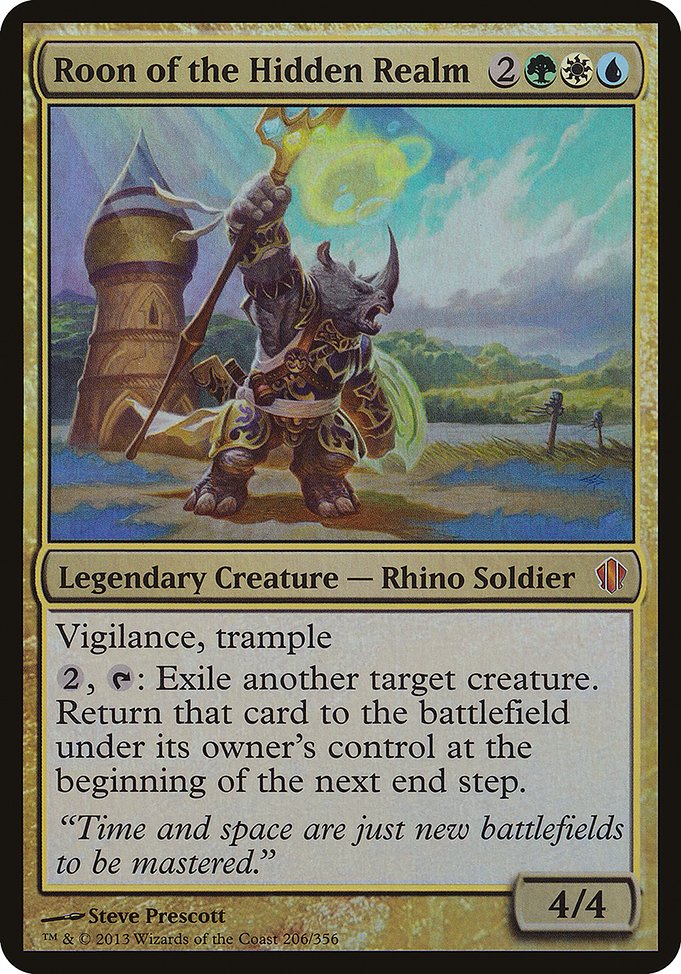
Roon of the Hidden Realm | Illustration by Steve Prescott
Roon is old-school Bant blink: fill the deck with creatures that do something when they enter, then reuse the best trigger every turn. His ability can also save one of your creatures or temporarily remove a blocker, which gives the deck more play than a pile of value creatures suggests.
Five mana, summoning sickness, and an additional two mana per activation make Roon slower than modern blink commanders. The creature also returns at the next end step, so he cannot immediately retrigger an enter-the-battlefield effect during your main phase.
High-synergy cards: Panharmonicon doubles the triggers, Teleportation Circle adds a free blink each end step, and Agent of Treachery converts repeated blinks into permanent theft.
Best for: Blink fans who prefer a toolbox game and do not mind advertising their engine from the command zone.
#17. Galea, Kindler of Hope
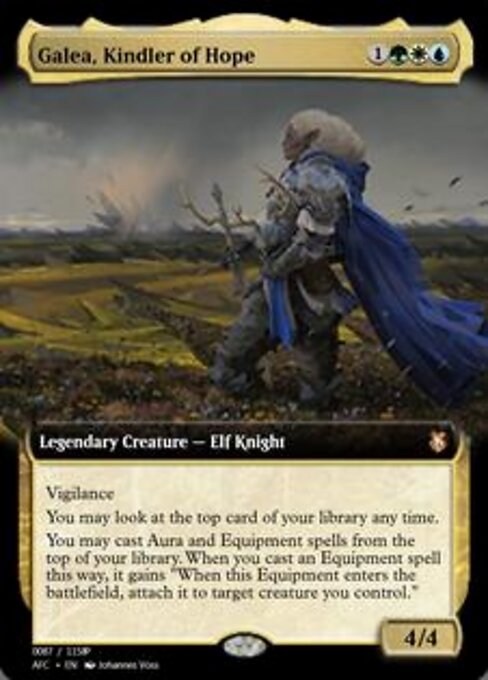
Galea, Kindler of Hope | Illustration by Johannes Voss
Galea lets you play Auras and Equipment from the top of your library, and Equipment cast that way arrives attached for free. That turns the top card into a second hand while sidestepping some of the enormous equip costs attached to Commander’s flashiest weapons.
She still has the traditional Voltron problem: one removal spell can strand several cards and reset your clock. Lands or unrelated spells on top also stop the engine until you manipulate the library.
High-synergy cards: Sigarda's Aid adds flash and free attachment, Sword of the Animist fixes the mana while Galea attacks, and Scroll Rack clears unusable top cards.
Best for: Voltron players who cannot decide between Auras and Equipment and want room for both.
#16. Brenard, Ginger Sculptor
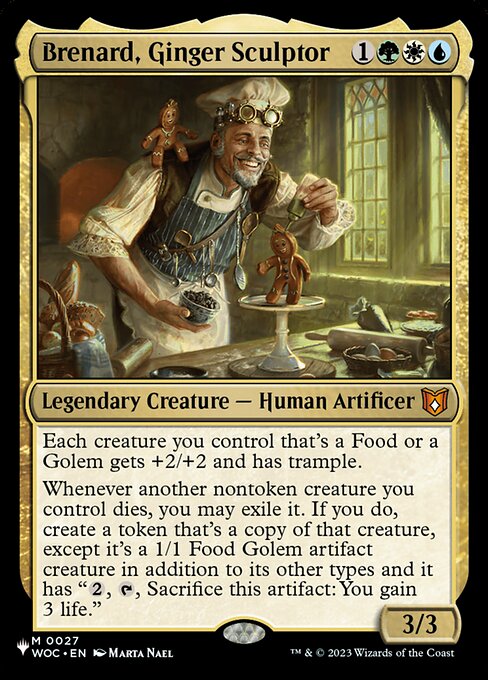
Brenard, Ginger Sculptor | Illustration by Marta Nael
When one of your nontoken creatures dies, Brenard can turn it into a 1/1 Food Golem copy. The original statistics disappear, but the abilities remain—and Brenard immediately gives the new Food Golem +2/+2 and trample. Creatures with enter, death, and sacrifice effects become especially sticky.
Exiling the original creature is part of Brenard's replacement plan, so you cannot recur that same card later. Graveyard hate is less painful than it looks, but token sweepers and exile removal can erase the copied board cleanly.
High-synergy cards: Solemn Simulacrum ramps, draws, and returns as another useful copy; Duplicant repeats its removal trigger; and Ashnod's Altar supplies the sacrifice outlet and mana.
Best for: Players who like sacrifice engines but want them wrapped in a strange, resilient Bant creature deck.
#15. Estrid, the Masked
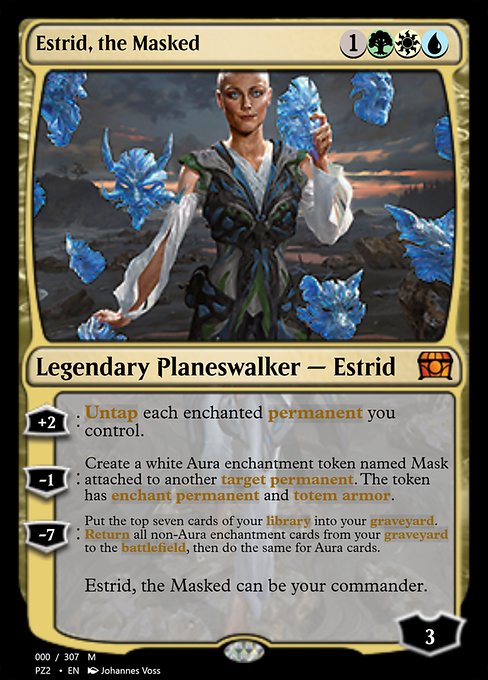
Estrid, the Masked | Illustration by Johannes Voss
Estrid is one of the few planeswalkers that explicitly can be your commander. Her +2 untaps every enchanted permanent you control, which turns land Auras into a serious mana engine. Her Mask tokens give key permanents umbra armor, and the ultimate can rebuild a battlefield from the graveyard.
The deck is powerful when it untaps with several enchanted lands, but fragile when opponents remove those Auras or attack Estrid before she generates value. She also encourages elaborate combo lines that may be more bookkeeping than some tables want.
High-synergy cards: Wild Growth and Overgrowth make the +2 produce extra mana, while The Chain Veil can turn that mana into repeated planeswalker activations.
Best for: Enchantress players who enjoy sequencing, mana engines, and combo potential more than attacking early.
#14. Mr. Foxglove
Mr. Foxglove | Illustration by Anna Podedworna
Mr. Foxglove attacks the player with the fullest hand and either refills yours to match or drops a creature from your hand directly onto the battlefield. The trigger only requires an attack, not combat damage, so even a chump attack can turn into an Eldrazi-sized problem.
That flexibility is also awkward. A full hand switches off the creature-cheating mode, while attacking the wrong opponent may draw too few cards to justify risking your commander. The deck needs large creatures, protection, and ways to manage its own hand.
High-synergy cards: Ghalta, Stampede Tyrant can unload the rest of your creatures, while Sire of Seven Deaths and Pathrazer of Ulamog are terrifying free arrivals.
Best for: Battlecruiser players who want huge creatures without committing the entire deck to conventional ramp.
#13. Tuvasa the Sunlit
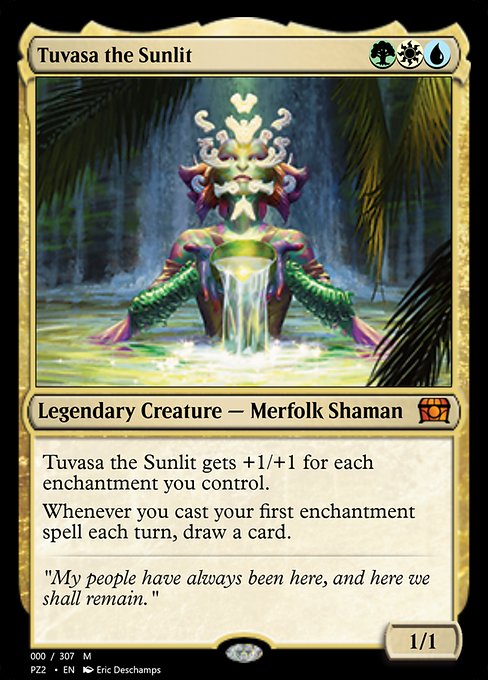
Tuvasa the Sunlit | Illustration by Eric Deschamps
Tuvasa draws from the first enchantment you cast each turn and grows for every enchantment you control. She is simultaneously an enchantress engine and a commander-damage threat, so pillow-fort pieces and removal Auras quietly increase the pressure.
The draw trigger is capped at one enchantment per turn. You can work around that with flash, but Tuvasa is less explosive than engines that reward every enchantment. Her size also means little without evasion or protection.
High-synergy cards: Sythis, Harvest's Hand adds uncapped draw, Ethereal Armor supplies power and first strike, and Enchantress's Presence keeps cards flowing after Tuvasa is removed.
Best for: Enchantress pilots who want a clean combat finish instead of relying only on locks or combo pieces.
#12. Falco Spara, Pactweaver
Falco Spara, Pactweaver | Illustration by Jack Hughes
Falco lets you look at the top card of your library and cast it by removing a counter from one of your creatures. Shield, +1/+1, flying, and even expendable negative counters can all become fuel, giving Bant counters a genuine card-advantage engine.
A land on top stops the show, and the deck can run out of removable counters after a few spells. Falco also enters protected by a shield counter, but spending that counter immediately makes him easier to kill.
High-synergy cards: Sensei's Divining Top fixes the top card, Devoted Druid supplies a counter you are happy to remove, and The Ozolith preserves counters through creature removal.
Best for: Players who enjoy top-deck manipulation and want +1/+1 counters to function as a resource, not just extra power.
#11. Kellan, the Kid
Kellan, the Kid | Illustration by Magali Villeneuve
Kellan rewards you whenever you cast from anywhere other than your hand. Each qualifying spell can cast a cheaper permanent from your hand for free; if you decline, a land can enter instead. Adventures, foretell, plot, flashback, rebound, and top-of-library casting all become value engines.
The deck can become mechanically scattered. Too many setup cards leave you with payoffs but nothing useful to cast, and Kellan does not trigger when a card is merely put onto the battlefield.
High-synergy cards: Future Sight provides repeatable casts from the library, Vega, the Watcher draws from the same behavior, and Doc Aurlock, Grizzled Genius discounts Adventures, plot, and foretell cards.
Best for: Brewers who enjoy juggling several alternate-casting mechanics and finding unusual interactions.
#10. Yuna, Grand Summoner
Yuna, Grand Summoner | Illustration by Miki Yamashita
Yuna taps for any color and makes your next creature enter with two additional +1/+1 counters. More importantly, when another permanent with counters goes to the graveyard, she moves that many +1/+1 counters onto another creature. Board development and insurance live on the same card.
Yuna needs to survive a turn before tapping, and she does not draw cards by herself. Exile and bounce also avoid the graveyard trigger, so the counter-transfer plan is less universal than it first appears.
High-synergy cards: The Ozolith saves counters again, Ozolith, the Shattered Spire increases every placement, and Hangarback Walker converts its counters into a flying army when it dies.
Best for: Counter players who hate watching a large creature's investment disappear to an ordinary destroy spell.
#9. Choco, Seeker of Paradise
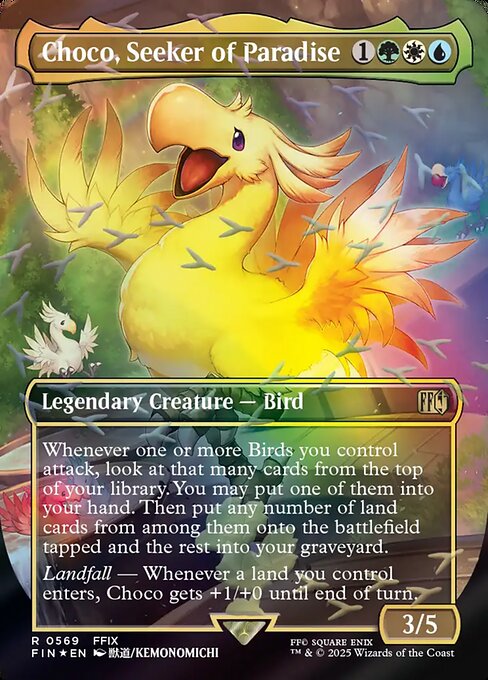
Choco, Seeker of Paradise | Illustration by Kemonomichi
Choco turns attacking Birds into selection, cards, land ramp, and graveyard setup. You look at cards equal to the number of attacking Birds, keep one, put any lands among the rest onto the battlefield tapped, and bin what remains. Even a modest flock can produce several landfall triggers.
The deck needs Birds to attack safely before its engine starts. Nonland cards you do not keep go to the graveyard, which is useful only if the build includes recursion or deliberately exploits that setup.
High-synergy cards: Emeria Angel turns land drops into more Birds, Tireless Provisioner produces resources from the extra lands, and Scute Swarm converts the same ramp into a lethal board.
Best for: Landfall players who want an aggressive typal shell instead of another commander that simply plays extra lands.
#8. Tidus, Yuna's Guardian
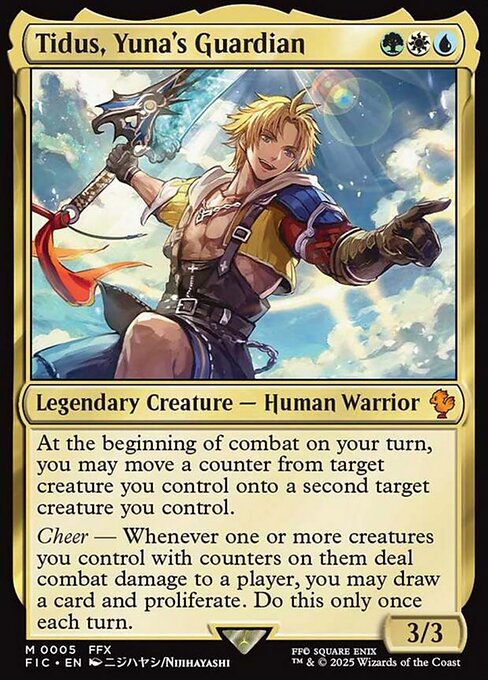
Tidus, Yuna's Guardian | Illustration by Nijihayashi
Tidus moves a counter at the beginning of combat, then rewards creatures with counters for hitting a player by drawing a card and proliferating. Moving a counter can rescue it from a creature about to die, switch on a modified payoff, or place an unusual counter where it matters more.
Cheer triggers only once each turn, so going wide does not draw five cards. You also need both counters and a way through combat, which makes protection and evasion essential rather than optional.
High-synergy cards: Evolution Sage proliferates from land drops, Herald of Secret Streams makes the counter-bearing team unblockable, and Resourceful Defense gives you precise control over counter movement.
Best for: Players who like counters but want combat decisions and counter types beyond a simple +1/+1 swarm.
#7. Galadriel, Light of Valinor
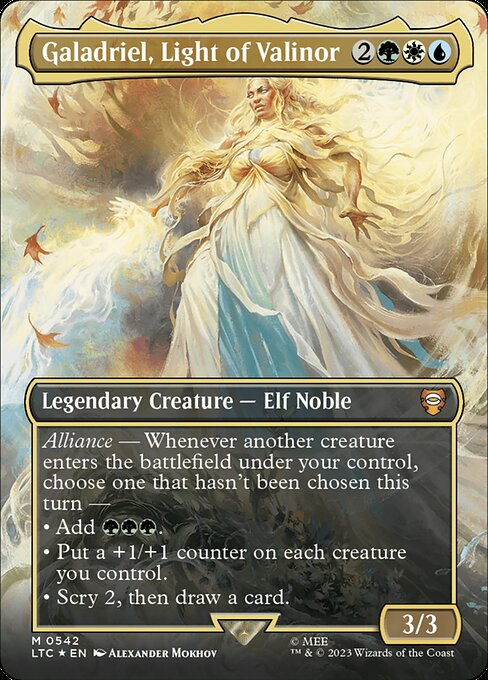
Galadriel, Light of Valinor | Illustration by Alexander Mokhov
Galadriel's Alliance ability offers three rewards when another creature enters: three green mana, a counter on every creature you control, or scry 2 followed by a draw. Each mode can be chosen only once per turn, but three creature entries give you the full package.
She is exceptional at snowballing and poor at rebuilding alone. A board wipe removes the creatures that turn her counters into pressure, while a removal spell before the second or third trigger can cut off the best part of the turn.
High-synergy cards: Emiel the Blessed repeatedly retriggers creatures, Scute Swarm supplies bodies from land drops, and Cathars' Crusade makes every arrival multiply the counters.
Best for: Creature-combo and token players who want mana, cards, and a team-wide payoff in the command zone.
#6. Ms. Bumbleflower
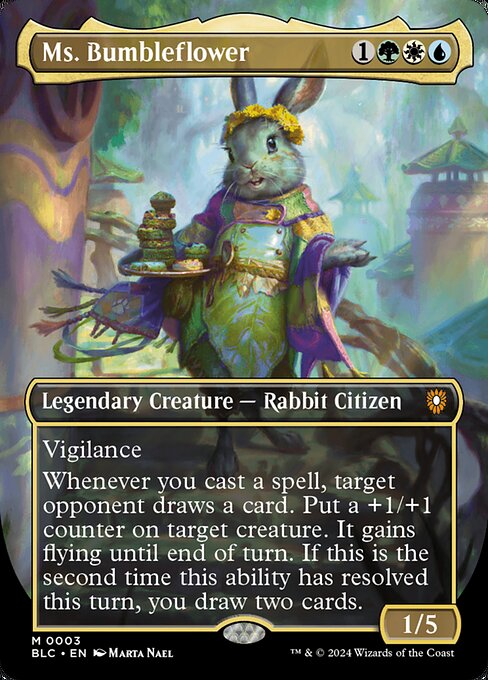
Ms. Bumbleflower | Illustration by Marta Nael
Ms. Bumbleflower turns every spell you cast into a counter and temporary flying for one creature. An opponent draws too, but the second resolution each turn also draws you two cards. Cheap interaction and cantrips let you trigger her on every turn cycle while growing a real aerial threat.
The gift is not cosmetic. Feeding opponents cards helps them find removal and win conditions, and the table may stop treating you as harmless once the second-spell engine becomes obvious.
High-synergy cards: Smothering Tithe taxes or monetizes the extra draws, Forgotten Ancient spreads the spell-based counters, and Consecrated Sphinx turns every gifted card into even more cards for you.
Best for: Political players who enjoy appearing generous while quietly building a counters-and-cards machine.
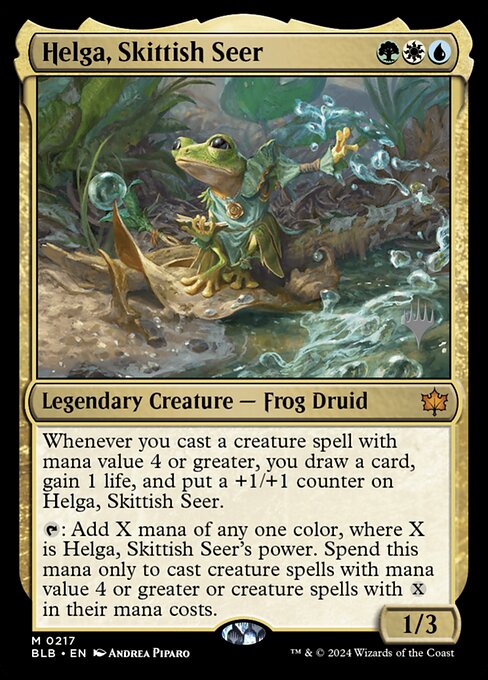
#5. Helga, Skittish Seer
Helga, Skittish Seer | Illustration by Andrea Piparo
Helga rewards every creature spell with mana value four or greater by drawing a card, gaining life, and growing herself. She then taps for mana equal to her power to cast more large or X-cost creatures. One successful turn can transform a three-mana Frog into the deck's largest mana source.
She is still a small creature that must tap. Removal before your untap step is a serious tempo loss, and a hand full of cheap utility creatures fails to trigger the engine.
High-synergy cards: Hydroid Krasis scales with all that mana, Kiora's Follower untaps Helga, and Great Oak Guardian both uses her mana and untaps the board for another burst.
Best for: Big-creature players who want their commander to provide ramp and cards without abandoning interaction.
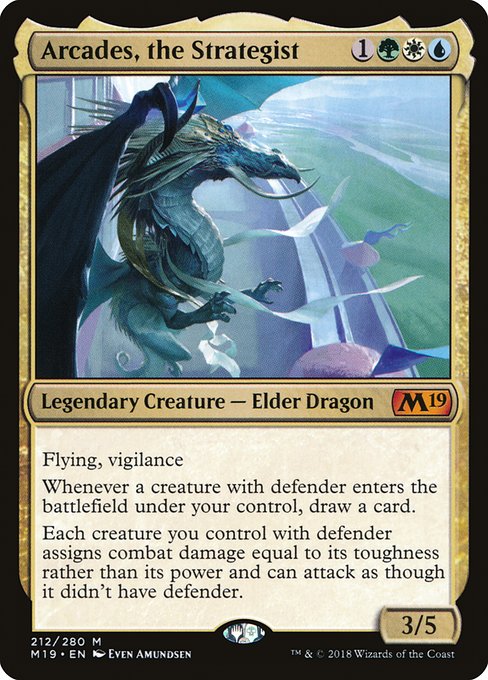
#4. Arcades, the Strategist
Arcades, the Strategist | Illustration by Even Amundsen
Arcades changes the rules for defenders. They can attack, assign combat damage using toughness, and draw a card when they enter. Cards designed as cheap blockers become aggressively costed threats that replace themselves.
Few commanders improve their worst-looking cards this dramatically, which is why Arcades ranks so highly. The weakness is equally clear: remove Arcades and many creatures turn back into Walls. Redundant toughness-matters effects and protection are mandatory.
High-synergy cards: Wall of Blossoms draws twice with Arcades, Tetsuko Umezawa, Fugitive can make low-power defenders unblockable, and High Alert keeps the deck attacking when Arcades is gone.
Best for: Players who want a focused, affordable creature deck that wins with cards other decks leave in the bulk box.
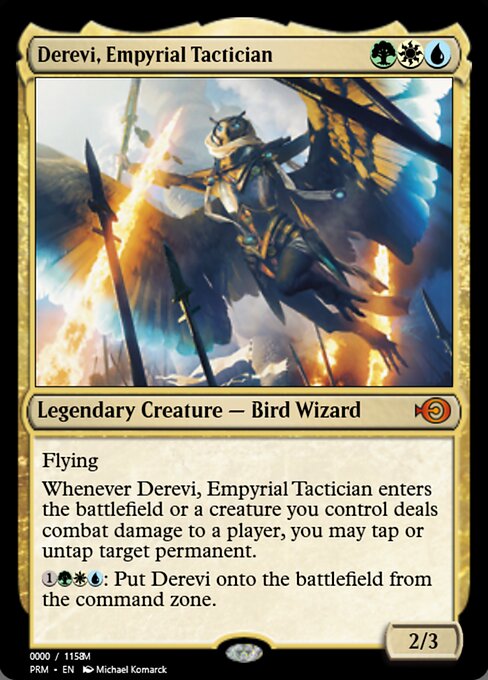
#3. Derevi, Empyrial Tactician
Derevi, Empyrial Tactician | Illustration by Michael Komarck
Derevi enters for four mana from the command zone without being cast, sidestepping commander tax. When she enters—or whenever one of your creatures deals combat damage to a player—you may tap or untap a permanent. Small evasive creatures can generate mana, untap engines, or keep opposing permanents locked down.
That ceiling comes with a reputation. Derevi can support cheerful Bird typal, but opponents often expect Stasis and resource denial. Even a fair build may receive high-power attention before it shows a single lock piece.
High-synergy cards: Nature's Will multiplies combat damage into mana denial and ramp, Edric, Spymaster of Trest rewards the same evasive attacks, and Stasis demonstrates the commander's notorious untap advantage.
Best for: Experienced pilots who value precision, combat triggers, and commanders that remain useful through repeated removal.
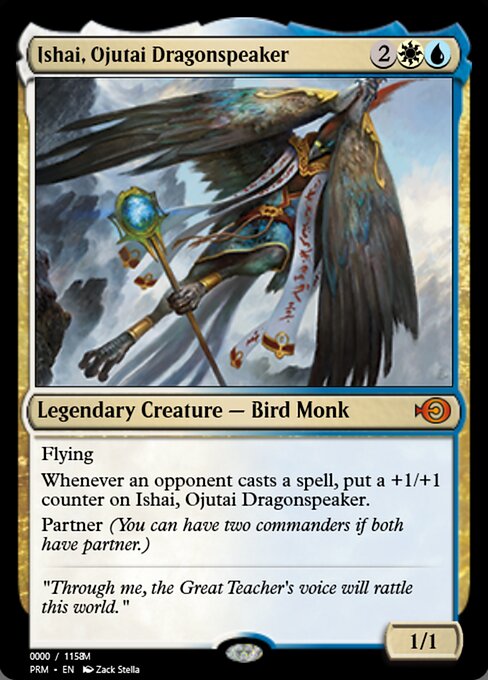
#2. Thrasios, Triton Hero and Ishai, Ojutai Dragonspeaker
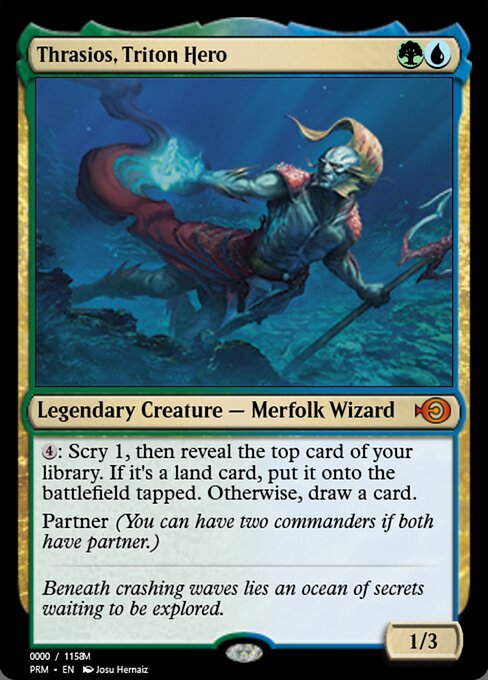
Ishai, Ojutai Dragonspeaker | Illustration by Zack StellaThrasios, Triton Hero | Illustration by Josu Hernaiz
These two cards both have partner, so their combined color identity is Bant. Thrasios is a two-mana outlet that turns excess or infinite mana into lands and cards. Ishai punishes a multiplayer table for casting spells by growing into a flying commander-damage threat without further investment.
The pair gives you two cheap engines and enormous freedom, which is both a strength and a weakness. It is easy to build a powerful deck that feels like generic Bant staples, and keeping track of two commander taxes matters after repeated removal.
High-synergy cards: Seedborn Muse gives Thrasios three extra activation windows, Training Grounds discounts his ability, and Kinnan, Bonder Prodigy increases mana production while adding another outlet.
Best for: High-power brewers who want an infinite-mana outlet, an independent combat plan, and maximum flexibility in the 98.
#1. Chulane, Teller of Tales
Chulane, Teller of Tales | Illustration by Victor Adame Minguez
Chulane asks you to do the thing green-white decks already want to do: cast creatures. Every creature spell draws a card and may put a land from your hand onto the battlefield. That single trigger solves both resource problems that normally slow creature decks, while blue supplies protection and combo tools.
His activated ability returns one of your creatures to hand, protecting it or letting you cast it again for another draw-and-land trigger. Cheap self-bouncing creatures can turn the engine into a loop, and ordinary mana creatures remain useful draws long after the opening turns.
Chulane's drawback is social and structural. Five mana is a real investment, and experienced tables know that leaving him alive can end the game quickly. The deck needs cheap protection and a plan that functions when opponents refuse to let the commander untap.
High-synergy cards: Shrieking Drake returns itself for repeated casts, Cloudstone Curio creates creature loops, and Lotus Cobra converts Chulane's extra land drops into the mana that keeps the chain moving.
Best for: Players who want the strongest all-around Bant creature engine and are comfortable becoming the table's immediate problem.
Which Bant commander should you build?
Choose Arcades if you want a focused deck with unusual cards, Tuvasa or Estrid for enchantments, Tidus or Yuna for counters, Galea for Voltron, and Roon for blink. Helga is the cleanest big-creature option. Derevi and the Thrasios–Ishai pair reward more technical, high-power play, while Chulane offers the strongest combination of cards, mana development, protection, and combo potential.
The important question is not whether Bant can generate value. It is what you want that value to accomplish. Pick a commander whose restrictions make your deck more interesting; Bant will supply enough raw efficiency on its own.
Frequently asked questions
What does Bant mean in MTG?
Bant is the green-white-blue color combination. In Commander, every card in the deck must fit within the commander's color identity, which includes mana symbols in the casting cost and rules text.
What is the best Bant commander for beginners?
Arcades, the Strategist is a strong starting point because its plan is visible and its core defenders are often inexpensive. Helga, Skittish Seer is also intuitive if the player already enjoys casting large creatures.
What is the best Bant commander for enchantments?
Tuvasa the Sunlit is the most direct enchantress-and-Voltron choice. Estrid, the Masked has the higher mana-combo ceiling, while Galea, Kindler of Hope is better when the deck mixes Equipment with Auras.
Can partner commanders make a Bant deck?
Yes. Thrasios has green-blue color identity and Ishai has white-blue color identity. Because both have partner, they can lead one deck whose combined identity is green, white, and blue.
Which Bant commander is best for high-power play?
Derevi, Thrasios paired with Ishai, and Chulane have the highest ceilings on this list. The correct choice depends on whether you want tap-and-untap control, an infinite-mana outlet with a backup attacker, or a creature-casting combo engine.
Sources and methodology
Card names, Oracle text, color identity, and Commander legality were checked against Scryfall's current Bant commander search on October 29, 2026. The partner cards and every named synergy card were checked separately.
Color-identity and deck-construction explanations follow the official Commander format rules. EDHREC's Bant commander index was used to identify widely built archetypes and current card associations, but deck counts did not determine the ranking.
For more original Commander rankings and deckbuilding guides, visit the ElderDecks article index.
Bant has access to efficient creatures, premium interaction, card draw, ramp, and protection—the ingredients of a deck that always seems to have an answer. The problem isn't finding a playable commander. It's choosing one that gives those colors an identity instead of becoming 99 good cards wearing a name tag.
The best Bant commanders turn ordinary game actions—casting creatures, attacking, placing counters, or playing enchantments—into cards, mana, and board position. This ranking covers 20 green-white-blue commander choices, from focused typal builds to engines that can push into high-power pods.
Chulane, Teller of Tales | Illustration by Victor Adame Minguez
How I ranked the best Bant commanders
This is an editorial ranking, not a list sorted by deck count. I weighed five things: engine strength, consistency, resilience, deckbuilding identity, and the commander's ability to help close a game. A narrow commander can outrank a generic value engine if it makes its strategy dramatically better, but a commander that needs three setup pieces loses ground.
Every featured card's current Oracle text, Bant color identity, and Commander legality were checked on October 29, 2026. The #2 entry is one legal partner pair and counts as a single commander choice.
Sophia brings Tiny along, then rewards your Dogs for connecting by making both Food and Clue tokens. That is a charming premise with a real engine hiding underneath it: artifact tokens become cards, life, sacrifice material, or counters for the entire pack.
The catch is that Sophia asks for three different pieces to cooperate. You need Dogs, a path through combat, and enough artifact-token support to make the payoff matter. A stalled battlefield can leave her producing much less than the broader Bant engines above her.
Morska gives you a Clue every upkeep, removes your maximum hand size, and grows whenever you draw your second card in a turn. The result can play as Clue control, artifact tokens, or an unexpectedly dangerous Voltron deck.
Morska is dependable rather than explosive. One free Clue per turn is useful, but cracking it costs mana, and the commander still needs evasion or protection before those +1/+1 counters become a win condition.
High-synergy cards:Academy Manufactor expands the token output, Teferi's Ageless Insight turns a Clue into two cards, and Detective of the Month rewards the same Clue-heavy plan.
Best for: Methodical players who enjoy keeping mana open, investigating, and turning incremental advantage into commander damage.
Roon is old-school Bant blink: fill the deck with creatures that do something when they enter, then reuse the best trigger every turn. His ability can also save one of your creatures or temporarily remove a blocker, which gives the deck more play than a pile of value creatures suggests.
Five mana, summoning sickness, and an additional two mana per activation make Roon slower than modern blink commanders. The creature also returns at the next end step, so he cannot immediately retrigger an enter-the-battlefield effect during your main phase.
High-synergy cards: Panharmonicon doubles the triggers, Teleportation Circle adds a free blink each end step, and Agent of Treachery converts repeated blinks into permanent theft.
Best for: Blink fans who prefer a toolbox game and do not mind advertising their engine from the command zone.
Galea lets you play Auras and Equipment from the top of your library, and Equipment cast that way arrives attached for free. That turns the top card into a second hand while sidestepping some of the enormous equip costs attached to Commander’s flashiest weapons.
She still has the traditional Voltron problem: one removal spell can strand several cards and reset your clock. Lands or unrelated spells on top also stop the engine until you manipulate the library.
When one of your nontoken creatures dies, Brenard can turn it into a 1/1 Food Golem copy. The original statistics disappear, but the abilities remain—and Brenard immediately gives the new Food Golem +2/+2 and trample. Creatures with enter, death, and sacrifice effects become especially sticky.
Exiling the original creature is part of Brenard's replacement plan, so you cannot recur that same card later. Graveyard hate is less painful than it looks, but token sweepers and exile removal can erase the copied board cleanly.
High-synergy cards:Solemn Simulacrum ramps, draws, and returns as another useful copy; Duplicant repeats its removal trigger; and Ashnod's Altar supplies the sacrifice outlet and mana.
Best for: Players who like sacrifice engines but want them wrapped in a strange, resilient Bant creature deck.
#15. Estrid, the Masked
Estrid, the Masked | Illustration by Johannes Voss
Estrid is one of the few planeswalkers that explicitly can be your commander. Her +2 untaps every enchanted permanent you control, which turns land Auras into a serious mana engine. Her Mask tokens give key permanents umbra armor, and the ultimate can rebuild a battlefield from the graveyard.
The deck is powerful when it untaps with several enchanted lands, but fragile when opponents remove those Auras or attack Estrid before she generates value. She also encourages elaborate combo lines that may be more bookkeeping than some tables want.
High-synergy cards:Wild Growth and Overgrowth make the +2 produce extra mana, while The Chain Veil can turn that mana into repeated planeswalker activations.
Best for: Enchantress players who enjoy sequencing, mana engines, and combo potential more than attacking early.
Mr. Foxglove attacks the player with the fullest hand and either refills yours to match or drops a creature from your hand directly onto the battlefield. The trigger only requires an attack, not combat damage, so even a chump attack can turn into an Eldrazi-sized problem.
That flexibility is also awkward. A full hand switches off the creature-cheating mode, while attacking the wrong opponent may draw too few cards to justify risking your commander. The deck needs large creatures, protection, and ways to manage its own hand.
Best for: Battlecruiser players who want huge creatures without committing the entire deck to conventional ramp.
#13. Tuvasa the Sunlit
Tuvasa the Sunlit | Illustration by Eric Deschamps
Tuvasa draws from the first enchantment you cast each turn and grows for every enchantment you control. She is simultaneously an enchantress engine and a commander-damage threat, so pillow-fort pieces and removal Auras quietly increase the pressure.
The draw trigger is capped at one enchantment per turn. You can work around that with flash, but Tuvasa is less explosive than engines that reward every enchantment. Her size also means little without evasion or protection.
Falco lets you look at the top card of your library and cast it by removing a counter from one of your creatures. Shield, +1/+1, flying, and even expendable negative counters can all become fuel, giving Bant counters a genuine card-advantage engine.
A land on top stops the show, and the deck can run out of removable counters after a few spells. Falco also enters protected by a shield counter, but spending that counter immediately makes him easier to kill.
Kellan rewards you whenever you cast from anywhere other than your hand. Each qualifying spell can cast a cheaper permanent from your hand for free; if you decline, a land can enter instead. Adventures, foretell, plot, flashback, rebound, and top-of-library casting all become value engines.
The deck can become mechanically scattered. Too many setup cards leave you with payoffs but nothing useful to cast, and Kellan does not trigger when a card is merely put onto the battlefield.
Yuna taps for any color and makes your next creature enter with two additional +1/+1 counters. More importantly, when another permanent with counters goes to the graveyard, she moves that many +1/+1 counters onto another creature. Board development and insurance live on the same card.
Yuna needs to survive a turn before tapping, and she does not draw cards by herself. Exile and bounce also avoid the graveyard trigger, so the counter-transfer plan is less universal than it first appears.
Choco turns attacking Birds into selection, cards, land ramp, and graveyard setup. You look at cards equal to the number of attacking Birds, keep one, put any lands among the rest onto the battlefield tapped, and bin what remains. Even a modest flock can produce several landfall triggers.
The deck needs Birds to attack safely before its engine starts. Nonland cards you do not keep go to the graveyard, which is useful only if the build includes recursion or deliberately exploits that setup.
High-synergy cards:Emeria Angel turns land drops into more Birds, Tireless Provisioner produces resources from the extra lands, and Scute Swarm converts the same ramp into a lethal board.
Best for: Landfall players who want an aggressive typal shell instead of another commander that simply plays extra lands.
Tidus moves a counter at the beginning of combat, then rewards creatures with counters for hitting a player by drawing a card and proliferating. Moving a counter can rescue it from a creature about to die, switch on a modified payoff, or place an unusual counter where it matters more.
Cheer triggers only once each turn, so going wide does not draw five cards. You also need both counters and a way through combat, which makes protection and evasion essential rather than optional.
Galadriel's Alliance ability offers three rewards when another creature enters: three green mana, a counter on every creature you control, or scry 2 followed by a draw. Each mode can be chosen only once per turn, but three creature entries give you the full package.
She is exceptional at snowballing and poor at rebuilding alone. A board wipe removes the creatures that turn her counters into pressure, while a removal spell before the second or third trigger can cut off the best part of the turn.
High-synergy cards:Emiel the Blessed repeatedly retriggers creatures, Scute Swarm supplies bodies from land drops, and Cathars' Crusade makes every arrival multiply the counters.
Ms. Bumbleflower turns every spell you cast into a counter and temporary flying for one creature. An opponent draws too, but the second resolution each turn also draws you two cards. Cheap interaction and cantrips let you trigger her on every turn cycle while growing a real aerial threat.
The gift is not cosmetic. Feeding opponents cards helps them find removal and win conditions, and the table may stop treating you as harmless once the second-spell engine becomes obvious.
Helga rewards every creature spell with mana value four or greater by drawing a card, gaining life, and growing herself. She then taps for mana equal to her power to cast more large or X-cost creatures. One successful turn can transform a three-mana Frog into the deck's largest mana source.
She is still a small creature that must tap. Removal before your untap step is a serious tempo loss, and a hand full of cheap utility creatures fails to trigger the engine.
Arcades changes the rules for defenders. They can attack, assign combat damage using toughness, and draw a card when they enter. Cards designed as cheap blockers become aggressively costed threats that replace themselves.
Few commanders improve their worst-looking cards this dramatically, which is why Arcades ranks so highly. The weakness is equally clear: remove Arcades and many creatures turn back into Walls. Redundant toughness-matters effects and protection are mandatory.
Derevi enters for four mana from the command zone without being cast, sidestepping commander tax. When she enters—or whenever one of your creatures deals combat damage to a player—you may tap or untap a permanent. Small evasive creatures can generate mana, untap engines, or keep opposing permanents locked down.
That ceiling comes with a reputation. Derevi can support cheerful Bird typal, but opponents often expect Stasis and resource denial. Even a fair build may receive high-power attention before it shows a single lock piece.
High-synergy cards:Nature's Will multiplies combat damage into mana denial and ramp, Edric, Spymaster of Trest rewards the same evasive attacks, and Stasis demonstrates the commander's notorious untap advantage.
These two cards both have partner, so their combined color identity is Bant. Thrasios is a two-mana outlet that turns excess or infinite mana into lands and cards. Ishai punishes a multiplayer table for casting spells by growing into a flying commander-damage threat without further investment.
The pair gives you two cheap engines and enormous freedom, which is both a strength and a weakness. It is easy to build a powerful deck that feels like generic Bant staples, and keeping track of two commander taxes matters after repeated removal.
Chulane, Teller of Tales | Illustration by Victor Adame Minguez
Chulane asks you to do the thing green-white decks already want to do: cast creatures. Every creature spell draws a card and may put a land from your hand onto the battlefield. That single trigger solves both resource problems that normally slow creature decks, while blue supplies protection and combo tools.
His activated ability returns one of your creatures to hand, protecting it or letting you cast it again for another draw-and-land trigger. Cheap self-bouncing creatures can turn the engine into a loop, and ordinary mana creatures remain useful draws long after the opening turns.
Chulane's drawback is social and structural. Five mana is a real investment, and experienced tables know that leaving him alive can end the game quickly. The deck needs cheap protection and a plan that functions when opponents refuse to let the commander untap.
High-synergy cards:Shrieking Drake returns itself for repeated casts, Cloudstone Curio creates creature loops, and Lotus Cobra converts Chulane's extra land drops into the mana that keeps the chain moving.
Best for: Players who want the strongest all-around Bant creature engine and are comfortable becoming the table's immediate problem.
Which Bant commander should you build?
Choose Arcades if you want a focused deck with unusual cards, Tuvasa or Estrid for enchantments, Tidus or Yuna for counters, Galea for Voltron, and Roon for blink. Helga is the cleanest big-creature option. Derevi and the Thrasios–Ishai pair reward more technical, high-power play, while Chulane offers the strongest combination of cards, mana development, protection, and combo potential.
The important question is not whether Bant can generate value. It is what you want that value to accomplish. Pick a commander whose restrictions make your deck more interesting; Bant will supply enough raw efficiency on its own.
Frequently asked questions
What does Bant mean in MTG?
Bant is the green-white-blue color combination. In Commander, every card in the deck must fit within the commander's color identity, which includes mana symbols in the casting cost and rules text.
What is the best Bant commander for beginners?
Arcades, the Strategist is a strong starting point because its plan is visible and its core defenders are often inexpensive. Helga, Skittish Seer is also intuitive if the player already enjoys casting large creatures.
What is the best Bant commander for enchantments?
Tuvasa the Sunlit is the most direct enchantress-and-Voltron choice. Estrid, the Masked has the higher mana-combo ceiling, while Galea, Kindler of Hope is better when the deck mixes Equipment with Auras.
Can partner commanders make a Bant deck?
Yes. Thrasios has green-blue color identity and Ishai has white-blue color identity. Because both have partner, they can lead one deck whose combined identity is green, white, and blue.
Which Bant commander is best for high-power play?
Derevi, Thrasios paired with Ishai, and Chulane have the highest ceilings on this list. The correct choice depends on whether you want tap-and-untap control, an infinite-mana outlet with a backup attacker, or a creature-casting combo engine.
Sources and methodology
Card names, Oracle text, color identity, and Commander legality were checked against Scryfall's current Bant commander search on October 29, 2026. The partner cards and every named synergy card were checked separately.
Color-identity and deck-construction explanations follow the official Commander format rules. EDHREC's Bant commander index was used to identify widely built archetypes and current card associations, but deck counts did not determine the ranking.
For more original Commander rankings and deckbuilding guides, visit the ElderDecks article index.
AI-generated article, published by an ElderDecks editor.