By ElderArticles · Updated 11/2/2026 · 17 min read
Discover the 20 best Azorius commanders in MTG, ranked by power, flexibility, synergy, weaknesses, and the blue-white strategies each leader supports.
Table of contents
Azorius commanders have a reputation problem. Mention blue-white at a Commander table and someone will immediately ask how many counterspells you brought.
That stereotype misses most of the interesting decks in the color pair. Azorius can fill the sky with Birds, turn lifegain into mill, copy artifacts, weaponize Walls, blink an entire battlefield, or let a smiling Rabbit draw everyone toward disaster.
The question is not whether white-blue commanders can control a game. It is which commander turns that control into a plan worth playing. This ranking counts down the 20 strongest and most distinctive choices, with the winner saved for the end.
Azorius Chancery | Illustration by John Avon
How We Ranked the Best Azorius Commanders
The ranking weighs engine strength, flexibility, resilience, deck-building depth, and ability to close a multiplayer game. Popularity helped identify commanders players actually build, but it did not determine the order. A famous commander can rank below a less common one if its strategy is narrower or easier to disrupt.
Every selection has white-blue color identity and was listed as Commander-legal by Scryfall on November 1, 2026. Unreleased cards were excluded, so this is a ranking of commanders that can legally lead a deck now rather than a preview-season forecast.
Azorius is the Ravnican name for white-blue, so this guide uses “Azorius commanders” and “blue-white commanders” interchangeably.
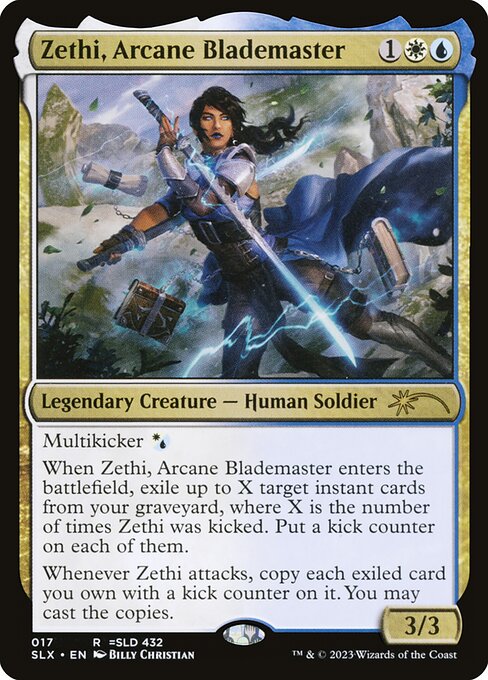
#20. Zethi, Arcane Blademaster
Zethi, Arcane Blademaster | Illustration by Billy Christian
Zethi turns the graveyard into a rack of reusable instants. Pay the multikicker when she enters, exile the best targets with kick counters, then cast copies whenever she attacks. A modest collection of interaction can become a repeatable combat engine instead of trading one-for-one forever.
AI-generated article, published by an ElderDecks editor.
High-synergy cards: Swords to Plowshares, Brainstorm, Silence, and Frantic Search give Zethi removal, selection, protection, and mana-positive turns.
The limitation: The first cast can be expensive, and an attack trigger is a fragile place to store your whole plan. Graveyard hate before Zethi enters also leaves you paying kicker for very little.
Who should play it: Choose Zethi if you want spellslinger gameplay that still has to enter combat.
#19. Kangee, Sky Warden
Kangee, Sky Warden | Illustration by Dan Murayama Scott
Kangee does one honest thing very well: it makes a squadron of evasive creatures hit much harder. The attack bonus applies to every attacking flier, not just Birds, while the blocking bonus lets the same army survive crack-back combat. Vigilance on Kangee helps sell that two-way plan.
High-synergy cards: Empyrean Eagle, Favorable Winds, Gravitational Shift, and Reconnaissance Mission turn a pile of cheap fliers into pressure and cards.
The limitation: Five mana is a lot for an anthem that needs a developed board. Removal before combat can turn a threatening attack into several undersized creatures flying into trouble.
Who should play it: Play Kangee for straightforward aerial combat without abandoning blue interaction.
#18. Will, Scion of Peace
Will, Scion of Peace | Illustration by Ryan Pancoast
Will converts life gained this turn into a generic-cost reduction for white and blue spells. One large lifegain event can turn a clumsy hand into an explosive main phase, especially when the deck is built around expensive draw spells and finishers rather than a hundred tiny triggers.
High-synergy cards: Soul Warden starts the engine early, Beacon of Immortality creates absurd discounts, Sphinx's Revelation refills the hand, and Aetherflux Reservoir rewards the same spell-heavy turns.
The limitation: Will must tap at sorcery speed, the discount cannot pay colored mana, and a removal spell before activation can strand an ambitious hand.
Who should play it: Pick Will if you want lifegain to fuel big turns rather than merely increase your life total.
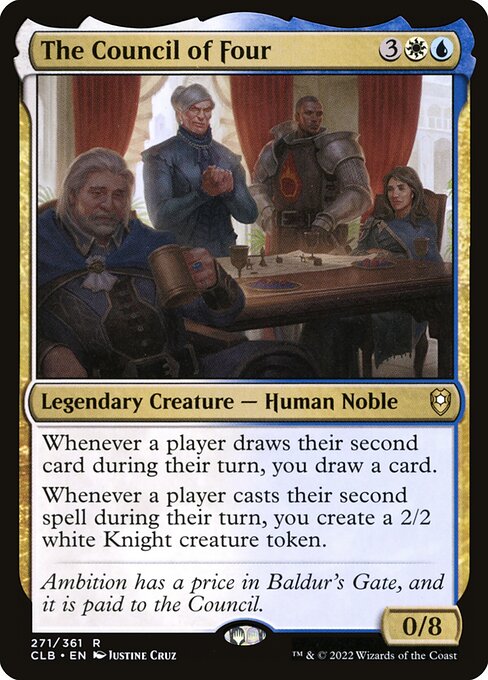
#17. The Council of Four
The Council of Four | Illustration by Justine Cruz
The Council watches the table play Magic and collects a tax in cards and Knights. A player's second draw during their own turn draws you a card; a player's second spell during their turn makes a 2/2. In a busy pod, that can mean several triggers before you untap.
High-synergy cards: Faerie Mastermind, Smuggler's Share, Trouble in Pairs, and Ledger Shredder increase the value of the same busy turns without forcing a hard lock.
The limitation: Five mana is slow, and the Council does nothing immediately unless someone is already drawing or double-spelling. Careful opponents can stagger their resources or remove it before a full turn cycle.
Who should play it: This is the Azorius commander for players who enjoy passive value and political table reading.
#16. Millicent, Restless Revenant
Millicent, Restless Revenant | Illustration by Denman Rooke
Millicent looks like a seven-mana commander until a few Spirits make affinity do its work. Once she arrives, nontoken Spirits replace themselves with flying tokens when they die or connect in combat. The deck can pressure life totals and rebuild through ordinary creature removal at the same time.
High-synergy cards: Rattlechains protects key Spirits, Supreme Phantom supplies an anthem, Skullclamp converts tokens into cards, and Mirror Entity turns the whole haunting into a finisher.
The limitation: Exile sweepers ignore the death trigger, and a slow opening full of expensive Spirits can leave Millicent stranded in the command zone.
Who should play it: Choose Millicent if you want a resilient tribal deck with more texture than a simple flying anthem.
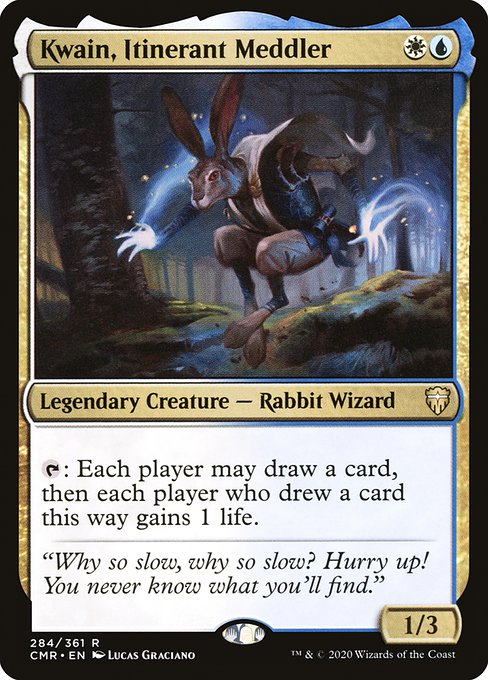
#15. Kwain, Itinerant Meddler
Kwain, Itinerant Meddler | Illustration by Lucas Graciano
Kwain offers everyone a card and a point of life, but the deck builder decides whether that is hospitality or a trap. Untap effects can accelerate the table, political builds can buy goodwill, and alternate-win decks can turn all that drawing into a clock.
High-synergy cards: Smothering Tithe converts opposing draws into mana, Psychic Corrosion mills with your draws, Approach of the Second Sun supplies a clean win, and Laboratory Maniac punishes an empty library.
The limitation: Giving three opponents fresh cards is dangerous when your payoff is not already online. Kwain can help the fastest deck find its combo before your friendly plan matters.
Who should play it: Play Kwain if you enjoy negotiation, group hug, and win conditions hiding behind a smile.
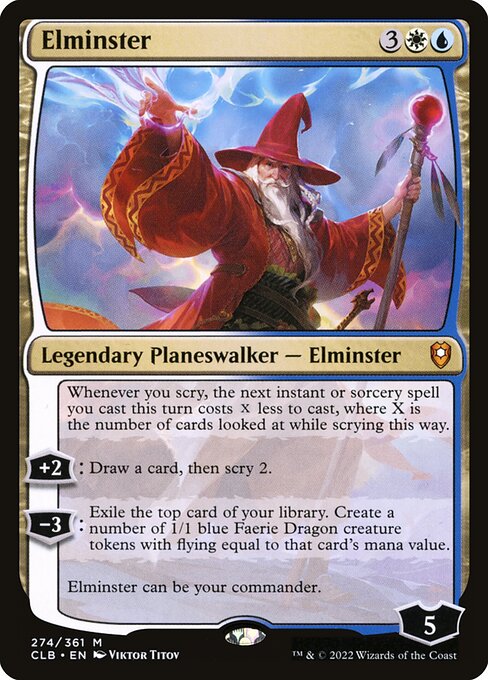
#14. Elminster
Elminster | Illustration by Viktor Titov
Elminster rewards a deck that knows what sits on top of its library. Scrying discounts the next instant or sorcery by the number of cards examined, while the minus ability turns a high-mana-value top card into a flock of Faerie Dragons. The tension between casting the expensive spell and exiling it for tokens is the fun part.
High-synergy cards: Scroll Rack sets up the top card, Mystic Speculation repeatedly scries, Temporal Mastery benefits from setup, and Shark Typhoon turns discounted spells into another army.
The limitation: Five mana for a planeswalker invites the table to attack immediately. Poor top-deck control makes the minus ability unreliable, and token production does not protect Elminster before activation.
Who should play it: Pick Elminster if you like manipulating the library and making informed gambles.
#13. Niko, Light of Hope
Niko, Light of Hope | Illustration by Aurore Folny
Niko arrives with two Shards, then can temporarily turn every Shard into a copy of one nonlegendary creature you control. The original creature is exiled and returns at the next end step, so the activation also reuses its enter-the-battlefield ability. This is blink with a strange, explosive middle step.
High-synergy cards: Spirited Companion keeps cards moving, Skyclave Apparition handles permanents, Cloudblazer rewards every return, and Mirror Entity gives copied creature tokens a dangerous combat ceiling.
The limitation: Niko needs a worthwhile creature, enough Shards, and an untap. Token removal and enchantment sweepers can dismantle the setup before the copying turn arrives.
Who should play it: Choose Niko if familiar blink decks feel too automatic and you want more sequencing decisions.
#12. Plagon, Lord of the Beach
Plagon, Lord of the Beach | Illustration by GOSSAN
Plagon draws for every creature you control whose toughness exceeds its power when it enters. Then, for a single hybrid mana, one of those defensive bodies can assign combat damage using toughness. Walls stop being scenery and start ending games.
High-synergy cards: Wall of Omens draws while building the count, Charix, the Raging Isle supplies enormous toughness, High Alert globalizes the combat rule, and Slaughter the Strong can spare most of your board.
The limitation: Plagon's draw is an enter trigger rather than a repeatable engine. The deck also looks harmless until it suddenly does not, which can make a single combat step carry too much of the plan.
Who should play it: Play Plagon if you want defenders, unusual card evaluation, and a commander that rewards a lopsided stat line.
#11. Kastral, the Windcrested
Kastral, the Windcrested | Illustration by Jesper Ejsing
Kastral lets Birds that connect with a player draw a card, grow the entire flock, or return a Bird from hand or graveyard with a finality counter. Because the trigger is tied to each damaged player, spreading attackers can produce several choices in one combat.
High-synergy cards: Empyrean Eagle pumps the flock, Aven Interrupter supplies interaction on wings, Steel-Plume Marshal rewards wide attacks, and Reconnaissance Mission adds another card-draw layer.
The limitation: Five mana and a combat-damage condition give opponents plenty of warning. A pillow-fort effect or well-stocked skies can shut down the engine without removing Kastral.
Who should play it: Choose Kastral for Bird typal when you want recursion and cards, not just another anthem.
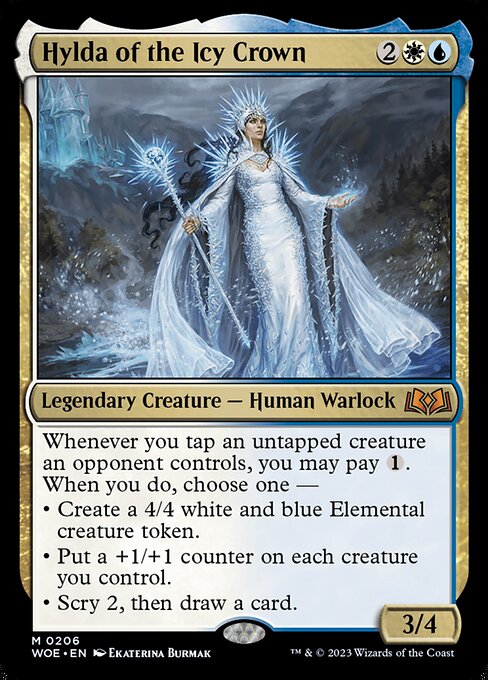
#10. Hylda of the Icy Crown
Hylda of the Icy Crown | Illustration by Ekaterina Burmak
Hylda turns tapping an opponent's untapped creature into a menu: make a 4/4, grow your whole team, or scry two and draw. Azorius already likes to keep attackers under control; Hylda makes that defensive work advance your own board.
High-synergy cards: Opposition converts spare creatures into triggers, Icy Manipulator works repeatedly, Court Street Denizen taps blockers as white creatures enter, and Blustersquall can generate a dramatic end step.
The limitation: Every reward costs another mana, and Hylda only cares when you tap a creature that was untapped. Effects that merely keep something tapped do not keep paying you.
Who should play it: Pick Hylda if you want tap-down control that eventually wins through creatures.
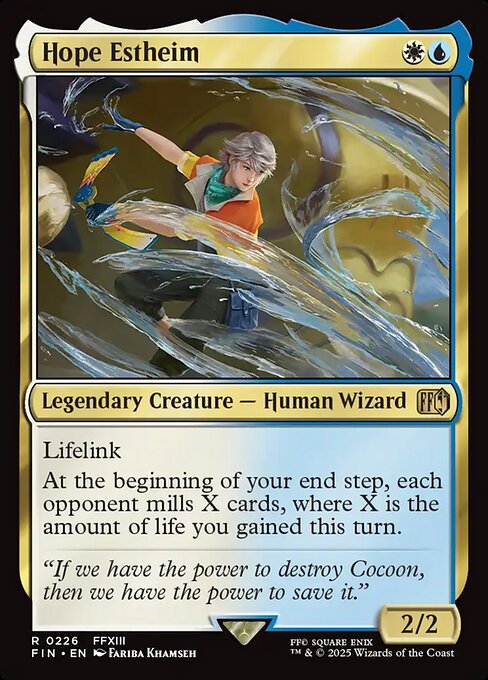
#9. Hope Estheim
Hope Estheim | Illustration by Fariba Khamseh
Hope is a two-mana lifelinker that mills every opponent at your end step for the life you gained that turn. The commander supplies the colors, a small trigger, and a clear conversion rate: lifegain is no longer padding, it is damage to three libraries at once.
High-synergy cards: Soul Warden starts accumulating life, Authority of the Consuls slows attackers, Alhammarret's Archive doubles lifegain, and Drogskol Reaver turns the same events into cards.
The limitation: Filling graveyards can help reanimator and escape decks, while one piece of lifegain prevention can switch off the plan. Hope also needs repeated large gains to finish 99-card libraries.
Who should play it: Choose Hope if you want an inexpensive commander and a noncombat lifegain payoff.
#8. Mendicant Core, Guidelight
Mendicant Core, Guidelight | Illustration by Zezhou Chen
Mendicant Core begins as a cheap artifact commander whose power scales with your board. At max speed, each artifact spell can be copied for one additional mana. Copying a mana rock is useful; copying a high-impact artifact can take over the game.
High-synergy cards: Ornithopter helps establish the board, Sai, Master Thopterist produces bodies, Thought Monitor refills the hand, and Cyberdrive Awakener converts the artifact pile into lethal attackers.
The limitation: The copy engine is locked behind max speed, so missing combat damage to an opponent delays the payoff. Artifact sweepers also erase the commander’s power and most of its support at once.
Who should play it: Play Mendicant Core if you want artifact swarm with a visible build-up rather than immediate combo pressure.
#7. Lavinia, Azorius Renegade
Lavinia, Azorius Renegade | Illustration by Steven Belledin
Lavinia punishes spells that outrun the mana system. Opponents cannot cast oversized noncreature spells before their land count catches up, and spells cast without spending mana are countered. At two mana, she changes the rules before explosive decks can establish themselves.
High-synergy cards: Drannith Magistrate closes another casting route, Dovin's Veto protects the lock, Rule of Law limits recovery turns, and Knowledge Pool creates a famously severe lock with Lavinia.
The limitation: Lavinia attracts attention immediately, and the Knowledge Pool line can produce games nobody enjoys. Creature-heavy decks may ignore much of her text and simply attack.
Who should play it: Choose Lavinia only if your group welcomes proactive disruption and you are comfortable becoming the first target.
#6. Heliod, the Radiant Dawn
Heliod, the Radiant Dawn | Illustration by Victor Adame Minguez
The front face recovers a non-God enchantment from the graveyard. The transformed Heliod gives every spell flash and reduces generic costs for each card opponents drew that turn. A symmetrical draw effect can suddenly become a private mana engine.
High-synergy cards: Howling Mine supplies steady discounts, Windfall creates one enormous window, Smothering Tithe converts the same draws into mana, and Consecrated Sphinx ensures you do not run out of spells.
The limitation: Transforming costs four mana or life and can only happen at sorcery speed. Without opposing draws, the back face is mostly a flash enabler, so the deck must create its own windows.
Who should play it: Pick Heliod if you enjoy draw politics, enchantment recursion, and casting an entire turn at instant speed.
#5. Urza, Lord Protector
Urza, Lord Protector | Illustration by Ryan Pancoast
Urza reduces artifact, instant, and sorcery spells by one generic mana. That quiet sentence improves nearly every turn, and the option to meld with The Mightstone and Weakstone gives the deck a spectacular late-game objective without requiring it to be the only plan.
High-synergy cards: The Mightstone and Weakstone enables the meld, Foundry Inspector compounds artifact discounts, Isochron Scepter exploits cheap instants, and Sensei's Divining Top becomes much easier to loop.
The limitation: The reduction never pays colored costs, and the meld asks for a named six-mana artifact plus seven more mana. Chasing the planeswalker too aggressively can make an otherwise efficient deck stumble.
Who should play it: Choose Urza if you want high-powered artifact-spellslinger with a cinematic backup plan.
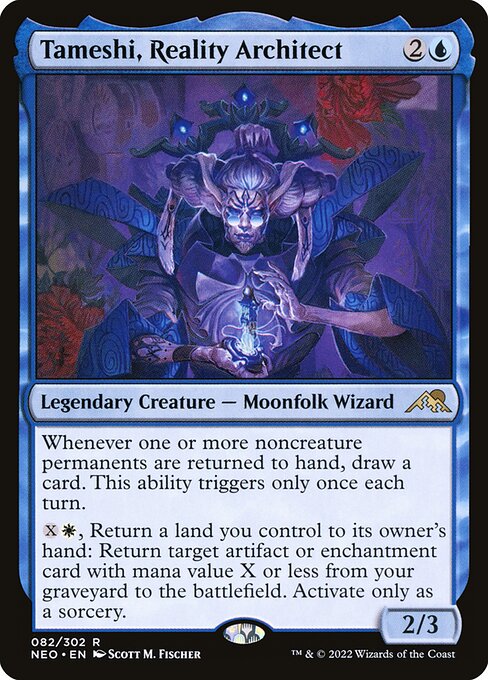
#4. Tameshi, Reality Architect
Tameshi, Reality Architect | Illustration by Scott M. Fischer
Tameshi draws once each turn when one or more noncreature permanents return to a hand. His activated ability then bounces one of your lands to return an artifact or enchantment from the graveyard. Cheap permanents become reusable tools, while land drops become a resource you deliberately pick up and replay.
High-synergy cards: Lotus Bloom can return for zero mana, Urza's Saga leaves a valuable target behind, Seal of Cleansing answers problems repeatedly, and Expedition Map turns recursion into land tutoring.
The limitation: Returning lands can cost real tempo, and the recursion ability is sorcery speed. Tameshi rewards exact sequencing; casual autopilot builds often end a turn with plenty of value and not enough mana.
Who should play it: Play Tameshi if you enjoy graveyard engines, utility permanents, and technical lines.
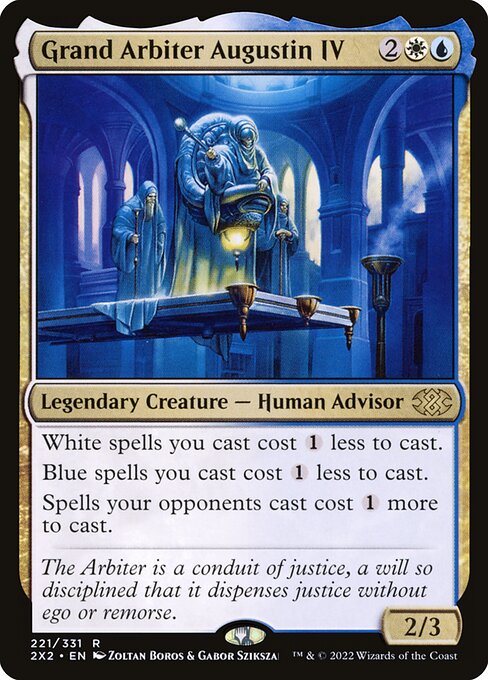
#3. Grand Arbiter Augustin IV
Grand Arbiter Augustin IV | Illustration by Zoltan Boros & Gabor Szikszai
Grand Arbiter makes your white and blue spells cheaper while charging every opponent one extra mana for theirs. In a four-player game, that exchange is brutally efficient. Your interaction becomes easier to hold up as every opposing turn becomes slightly more awkward.
High-synergy cards: Smothering Tithe compounds the mana gap, Approach of the Second Sun offers a compact win, Cyclonic Rift resets boards, and Rule of Law makes every taxed decision more consequential.
The limitation: The commander’s reputation enters the game before the card does. Expect early attacks and removal even if your list is relatively gentle; opponents cannot afford to assume it is.
Who should play it: Choose Grand Arbiter for deliberate resource control, but discuss the intended power level before shuffling up.
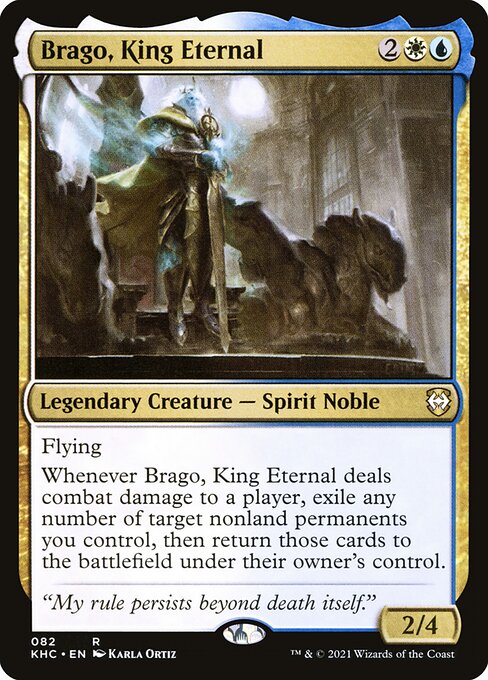
#2. Brago, King Eternal
Brago, King Eternal | Illustration by Karla Ortiz
Brago blinks any number of your nonland permanents whenever he hits a player. Mana rocks untap, creatures repeat their enter triggers, planeswalkers return ready to activate again, and temporary removal such as Oblivion Ring can be rearranged. One clean attack can rebuild an entire turn.
High-synergy cards: Panharmonicon doubles creature and artifact triggers, Strionic Resonator can create loops with enough mana rocks, Agent of Treachery steals permanents repeatedly, and Lightning Greaves helps Brago attack on schedule.
The limitation: Brago must connect in combat, and the table knows exactly how much damage one trigger can cause. Fog effects, flying blockers, and instant-speed removal all hit the same pressure point.
Who should play it: Play Brago if you want the deepest blink toolbox and do not mind wearing a target.
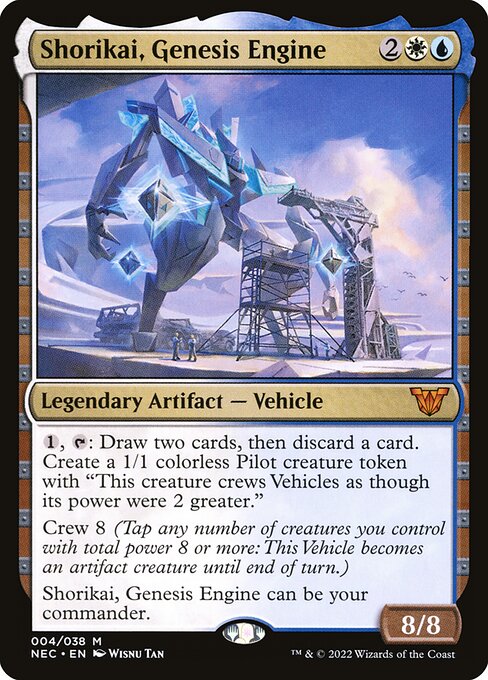
#1. Shorikai, Genesis Engine
Shorikai, Genesis Engine | Illustration by Wisnu Tan
Shorikai pays one mana and taps to draw two cards, discard one, and make a Pilot. That is selection, graveyard setup, and a creature from a commander that usually is not a creature itself. It survives most creature sweepers and can operate without ever risking combat.
High-synergy cards: Unwinding Clock creates extra activations, Manifold Key untaps the Vehicle, Tezzeret the Seeker finds artifacts and untaps Shorikai, and Supreme Verdict clears creatures while leaving the engine behind.
The limitation: Crew 8 is a serious cost if you actually want to attack, and artifact removal still answers the commander cleanly. Repeated looting can also empty the library in a long game without a reshuffle plan.
Who should play it: Shorikai takes the top spot because it is powerful without being narrow: Vehicles, control, reanimator, combo, and artifact value all receive the same reliable engine.
Which Azorius Commander Should You Choose?
Start with the kind of game you want to create. Kangee and Kastral reward combat. Millicent supplies tribal resilience. Niko, Brago, and Tameshi turn small permanents into complicated value engines. Hope and Plagon make unusual stats into win conditions. Lavinia and Grand Arbiter are the clearest choices when your group actively enjoys stax and resource denial.
For a flexible first Azorius deck, Shorikai is the safest recommendation. Brago offers a higher-maintenance blink engine, while Urza connects artifacts and spells without forcing one narrow card type.
You can test any of these commanders in the ElderDecks Commander deck builder before buying the list. Goldfish several opening hands and check whether the deck actually advances its plan before turn five. Azorius decks are excellent at answering problems, but a hand containing only answers eventually loses to the problem nobody can answer.
Frequently Asked Questions
What is the best Azorius commander?
Shorikai, Genesis Engine is our best overall Azorius commander because it provides cheap, repeatable card selection, token production, and graveyard setup while remaining a noncreature artifact until crewed. Brago and Grand Arbiter can create more oppressive board states, but Shorikai fits a wider range of power levels and strategies.
What is the best Azorius commander for beginners?
Kangee, Sky Warden is the simplest combat option, while Shorikai is the strongest flexible engine. Beginners who choose Shorikai should start with Vehicles and artifact value before adding complicated combo lines.
Are all Azorius decks control decks?
No. Azorius has excellent removal and counterspells, but commanders such as Kastral, Millicent, Kangee, Plagon, and Hope are proactive tribal, combat, toughness, or mill decks. Interaction should protect the plan rather than replace it.
Which Azorius commander is best for artifacts?
Shorikai is the most flexible artifact commander here. Mendicant Core is better for copying artifact spells after reaching max speed, while Urza, Lord Protector rewards a mix of artifacts, instants, and sorceries.
Which Azorius commanders should casual groups approach carefully?
Lavinia, Azorius Renegade and Grand Arbiter Augustin IV can restrict opponents before their decks function. Brago and Tameshi can also produce repetitive loops. Those commanders are legal, but a quick pregame conversation prevents a strategy mismatch.
Final Verdict
Azorius is at its best when control is a means rather than the entire identity of the deck. The memorable builds use white-blue interaction to protect something specific: a flock of Birds, a wall of high-toughness creatures, an artifact engine, a blink chain, or a dangerously generous Rabbit.
Pick the engine you actually want to assemble, then add only enough permission to keep it alive. That creates a deck opponents can understand, interact with, and still fear when it untaps.
Card names, Oracle text, white-blue color identity, and Commander legality were checked against Scryfall on November 1, 2026. Rankings are ElderDecks editorial judgments, not claims of tournament win rate.
Azorius commanders have a reputation problem. Mention blue-white at a Commander table and someone will immediately ask how many counterspells you brought.
That stereotype misses most of the interesting decks in the color pair. Azorius can fill the sky with Birds, turn lifegain into mill, copy artifacts, weaponize Walls, blink an entire battlefield, or let a smiling Rabbit draw everyone toward disaster.
The question is not whether white-blue commanders can control a game. It is which commander turns that control into a plan worth playing. This ranking counts down the 20 strongest and most distinctive choices, with the winner saved for the end.
Azorius Chancery | Illustration by John Avon
How We Ranked the Best Azorius Commanders
The ranking weighs engine strength, flexibility, resilience, deck-building depth, and ability to close a multiplayer game. Popularity helped identify commanders players actually build, but it did not determine the order. A famous commander can rank below a less common one if its strategy is narrower or easier to disrupt.
Every selection has white-blue color identity and was listed as Commander-legal by Scryfall on November 1, 2026. Unreleased cards were excluded, so this is a ranking of commanders that can legally lead a deck now rather than a preview-season forecast.
Azorius is the Ravnican name for white-blue, so this guide uses “Azorius commanders” and “blue-white commanders” interchangeably.
Zethi turns the graveyard into a rack of reusable instants. Pay the multikicker when she enters, exile the best targets with kick counters, then cast copies whenever she attacks. A modest collection of interaction can become a repeatable combat engine instead of trading one-for-one forever.
High-synergy cards:Swords to Plowshares, Brainstorm, Silence, and Frantic Search give Zethi removal, selection, protection, and mana-positive turns.
The limitation: The first cast can be expensive, and an attack trigger is a fragile place to store your whole plan. Graveyard hate before Zethi enters also leaves you paying kicker for very little.
Who should play it: Choose Zethi if you want spellslinger gameplay that still has to enter combat.
Kangee does one honest thing very well: it makes a squadron of evasive creatures hit much harder. The attack bonus applies to every attacking flier, not just Birds, while the blocking bonus lets the same army survive crack-back combat. Vigilance on Kangee helps sell that two-way plan.
The limitation: Five mana is a lot for an anthem that needs a developed board. Removal before combat can turn a threatening attack into several undersized creatures flying into trouble.
Who should play it: Play Kangee for straightforward aerial combat without abandoning blue interaction.
Will converts life gained this turn into a generic-cost reduction for white and blue spells. One large lifegain event can turn a clumsy hand into an explosive main phase, especially when the deck is built around expensive draw spells and finishers rather than a hundred tiny triggers.
The limitation: Will must tap at sorcery speed, the discount cannot pay colored mana, and a removal spell before activation can strand an ambitious hand.
Who should play it: Pick Will if you want lifegain to fuel big turns rather than merely increase your life total.
The Council watches the table play Magic and collects a tax in cards and Knights. A player's second draw during their own turn draws you a card; a player's second spell during their turn makes a 2/2. In a busy pod, that can mean several triggers before you untap.
The limitation: Five mana is slow, and the Council does nothing immediately unless someone is already drawing or double-spelling. Careful opponents can stagger their resources or remove it before a full turn cycle.
Who should play it: This is the Azorius commander for players who enjoy passive value and political table reading.
Millicent looks like a seven-mana commander until a few Spirits make affinity do its work. Once she arrives, nontoken Spirits replace themselves with flying tokens when they die or connect in combat. The deck can pressure life totals and rebuild through ordinary creature removal at the same time.
High-synergy cards: Rattlechains protects key Spirits, Supreme Phantom supplies an anthem, Skullclamp converts tokens into cards, and Mirror Entity turns the whole haunting into a finisher.
The limitation: Exile sweepers ignore the death trigger, and a slow opening full of expensive Spirits can leave Millicent stranded in the command zone.
Who should play it: Choose Millicent if you want a resilient tribal deck with more texture than a simple flying anthem.
Kwain offers everyone a card and a point of life, but the deck builder decides whether that is hospitality or a trap. Untap effects can accelerate the table, political builds can buy goodwill, and alternate-win decks can turn all that drawing into a clock.
The limitation: Giving three opponents fresh cards is dangerous when your payoff is not already online. Kwain can help the fastest deck find its combo before your friendly plan matters.
Who should play it: Play Kwain if you enjoy negotiation, group hug, and win conditions hiding behind a smile.
#14. Elminster
Elminster | Illustration by Viktor Titov
Elminster rewards a deck that knows what sits on top of its library. Scrying discounts the next instant or sorcery by the number of cards examined, while the minus ability turns a high-mana-value top card into a flock of Faerie Dragons. The tension between casting the expensive spell and exiling it for tokens is the fun part.
The limitation: Five mana for a planeswalker invites the table to attack immediately. Poor top-deck control makes the minus ability unreliable, and token production does not protect Elminster before activation.
Who should play it: Pick Elminster if you like manipulating the library and making informed gambles.
Niko arrives with two Shards, then can temporarily turn every Shard into a copy of one nonlegendary creature you control. The original creature is exiled and returns at the next end step, so the activation also reuses its enter-the-battlefield ability. This is blink with a strange, explosive middle step.
High-synergy cards:Spirited Companion keeps cards moving, Skyclave Apparition handles permanents, Cloudblazer rewards every return, and Mirror Entity gives copied creature tokens a dangerous combat ceiling.
The limitation: Niko needs a worthwhile creature, enough Shards, and an untap. Token removal and enchantment sweepers can dismantle the setup before the copying turn arrives.
Who should play it: Choose Niko if familiar blink decks feel too automatic and you want more sequencing decisions.
Plagon draws for every creature you control whose toughness exceeds its power when it enters. Then, for a single hybrid mana, one of those defensive bodies can assign combat damage using toughness. Walls stop being scenery and start ending games.
The limitation: Plagon's draw is an enter trigger rather than a repeatable engine. The deck also looks harmless until it suddenly does not, which can make a single combat step carry too much of the plan.
Who should play it: Play Plagon if you want defenders, unusual card evaluation, and a commander that rewards a lopsided stat line.
Kastral lets Birds that connect with a player draw a card, grow the entire flock, or return a Bird from hand or graveyard with a finality counter. Because the trigger is tied to each damaged player, spreading attackers can produce several choices in one combat.
The limitation: Five mana and a combat-damage condition give opponents plenty of warning. A pillow-fort effect or well-stocked skies can shut down the engine without removing Kastral.
Who should play it: Choose Kastral for Bird typal when you want recursion and cards, not just another anthem.
Hylda turns tapping an opponent's untapped creature into a menu: make a 4/4, grow your whole team, or scry two and draw. Azorius already likes to keep attackers under control; Hylda makes that defensive work advance your own board.
High-synergy cards: Opposition converts spare creatures into triggers, Icy Manipulator works repeatedly, Court Street Denizen taps blockers as white creatures enter, and Blustersquall can generate a dramatic end step.
The limitation: Every reward costs another mana, and Hylda only cares when you tap a creature that was untapped. Effects that merely keep something tapped do not keep paying you.
Who should play it: Pick Hylda if you want tap-down control that eventually wins through creatures.
Hope is a two-mana lifelinker that mills every opponent at your end step for the life you gained that turn. The commander supplies the colors, a small trigger, and a clear conversion rate: lifegain is no longer padding, it is damage to three libraries at once.
The limitation: Filling graveyards can help reanimator and escape decks, while one piece of lifegain prevention can switch off the plan. Hope also needs repeated large gains to finish 99-card libraries.
Who should play it: Choose Hope if you want an inexpensive commander and a noncombat lifegain payoff.
Mendicant Core begins as a cheap artifact commander whose power scales with your board. At max speed, each artifact spell can be copied for one additional mana. Copying a mana rock is useful; copying a high-impact artifact can take over the game.
The limitation: The copy engine is locked behind max speed, so missing combat damage to an opponent delays the payoff. Artifact sweepers also erase the commander’s power and most of its support at once.
Who should play it: Play Mendicant Core if you want artifact swarm with a visible build-up rather than immediate combo pressure.
Lavinia punishes spells that outrun the mana system. Opponents cannot cast oversized noncreature spells before their land count catches up, and spells cast without spending mana are countered. At two mana, she changes the rules before explosive decks can establish themselves.
The limitation: Lavinia attracts attention immediately, and the Knowledge Pool line can produce games nobody enjoys. Creature-heavy decks may ignore much of her text and simply attack.
Who should play it: Choose Lavinia only if your group welcomes proactive disruption and you are comfortable becoming the first target.
#6. Heliod, the Radiant Dawn
Heliod, the Radiant Dawn | Illustration by Victor Adame Minguez
The front face recovers a non-God enchantment from the graveyard. The transformed Heliod gives every spell flash and reduces generic costs for each card opponents drew that turn. A symmetrical draw effect can suddenly become a private mana engine.
High-synergy cards:Howling Mine supplies steady discounts, Windfall creates one enormous window, Smothering Tithe converts the same draws into mana, and Consecrated Sphinx ensures you do not run out of spells.
The limitation: Transforming costs four mana or life and can only happen at sorcery speed. Without opposing draws, the back face is mostly a flash enabler, so the deck must create its own windows.
Who should play it: Pick Heliod if you enjoy draw politics, enchantment recursion, and casting an entire turn at instant speed.
#5. Urza, Lord Protector
Urza, Lord Protector | Illustration by Ryan Pancoast
Urza reduces artifact, instant, and sorcery spells by one generic mana. That quiet sentence improves nearly every turn, and the option to meld with The Mightstone and Weakstone gives the deck a spectacular late-game objective without requiring it to be the only plan.
The limitation: The reduction never pays colored costs, and the meld asks for a named six-mana artifact plus seven more mana. Chasing the planeswalker too aggressively can make an otherwise efficient deck stumble.
Who should play it: Choose Urza if you want high-powered artifact-spellslinger with a cinematic backup plan.
Tameshi draws once each turn when one or more noncreature permanents return to a hand. His activated ability then bounces one of your lands to return an artifact or enchantment from the graveyard. Cheap permanents become reusable tools, while land drops become a resource you deliberately pick up and replay.
The limitation: Returning lands can cost real tempo, and the recursion ability is sorcery speed. Tameshi rewards exact sequencing; casual autopilot builds often end a turn with plenty of value and not enough mana.
Who should play it: Play Tameshi if you enjoy graveyard engines, utility permanents, and technical lines.
Grand Arbiter makes your white and blue spells cheaper while charging every opponent one extra mana for theirs. In a four-player game, that exchange is brutally efficient. Your interaction becomes easier to hold up as every opposing turn becomes slightly more awkward.
The limitation: The commander’s reputation enters the game before the card does. Expect early attacks and removal even if your list is relatively gentle; opponents cannot afford to assume it is.
Who should play it: Choose Grand Arbiter for deliberate resource control, but discuss the intended power level before shuffling up.
Brago blinks any number of your nonland permanents whenever he hits a player. Mana rocks untap, creatures repeat their enter triggers, planeswalkers return ready to activate again, and temporary removal such as Oblivion Ring can be rearranged. One clean attack can rebuild an entire turn.
High-synergy cards: Panharmonicon doubles creature and artifact triggers, Strionic Resonator can create loops with enough mana rocks, Agent of Treachery steals permanents repeatedly, and Lightning Greaves helps Brago attack on schedule.
The limitation: Brago must connect in combat, and the table knows exactly how much damage one trigger can cause. Fog effects, flying blockers, and instant-speed removal all hit the same pressure point.
Who should play it: Play Brago if you want the deepest blink toolbox and do not mind wearing a target.
Shorikai, Genesis Engine | Illustration by Wisnu Tan
Shorikai pays one mana and taps to draw two cards, discard one, and make a Pilot. That is selection, graveyard setup, and a creature from a commander that usually is not a creature itself. It survives most creature sweepers and can operate without ever risking combat.
The limitation: Crew 8 is a serious cost if you actually want to attack, and artifact removal still answers the commander cleanly. Repeated looting can also empty the library in a long game without a reshuffle plan.
Who should play it: Shorikai takes the top spot because it is powerful without being narrow: Vehicles, control, reanimator, combo, and artifact value all receive the same reliable engine.
Which Azorius Commander Should You Choose?
Start with the kind of game you want to create. Kangee and Kastral reward combat. Millicent supplies tribal resilience. Niko, Brago, and Tameshi turn small permanents into complicated value engines. Hope and Plagon make unusual stats into win conditions. Lavinia and Grand Arbiter are the clearest choices when your group actively enjoys stax and resource denial.
For a flexible first Azorius deck, Shorikai is the safest recommendation. Brago offers a higher-maintenance blink engine, while Urza connects artifacts and spells without forcing one narrow card type.
You can test any of these commanders in the ElderDecks Commander deck builder before buying the list. Goldfish several opening hands and check whether the deck actually advances its plan before turn five. Azorius decks are excellent at answering problems, but a hand containing only answers eventually loses to the problem nobody can answer.
Frequently Asked Questions
What is the best Azorius commander?
Shorikai, Genesis Engine is our best overall Azorius commander because it provides cheap, repeatable card selection, token production, and graveyard setup while remaining a noncreature artifact until crewed. Brago and Grand Arbiter can create more oppressive board states, but Shorikai fits a wider range of power levels and strategies.
What is the best Azorius commander for beginners?
Kangee, Sky Warden is the simplest combat option, while Shorikai is the strongest flexible engine. Beginners who choose Shorikai should start with Vehicles and artifact value before adding complicated combo lines.
Are all Azorius decks control decks?
No. Azorius has excellent removal and counterspells, but commanders such as Kastral, Millicent, Kangee, Plagon, and Hope are proactive tribal, combat, toughness, or mill decks. Interaction should protect the plan rather than replace it.
Which Azorius commander is best for artifacts?
Shorikai is the most flexible artifact commander here. Mendicant Core is better for copying artifact spells after reaching max speed, while Urza, Lord Protector rewards a mix of artifacts, instants, and sorceries.
Which Azorius commanders should casual groups approach carefully?
Lavinia, Azorius Renegade and Grand Arbiter Augustin IV can restrict opponents before their decks function. Brago and Tameshi can also produce repetitive loops. Those commanders are legal, but a quick pregame conversation prevents a strategy mismatch.
Final Verdict
Azorius is at its best when control is a means rather than the entire identity of the deck. The memorable builds use white-blue interaction to protect something specific: a flock of Birds, a wall of high-toughness creatures, an artifact engine, a blink chain, or a dangerously generous Rabbit.
Pick the engine you actually want to assemble, then add only enough permission to keep it alive. That creates a deck opponents can understand, interact with, and still fear when it untaps.
Card names, Oracle text, white-blue color identity, and Commander legality were checked against Scryfall on November 1, 2026. Rankings are ElderDecks editorial judgments, not claims of tournament win rate.
AI-generated article, published by an ElderDecks editor.